
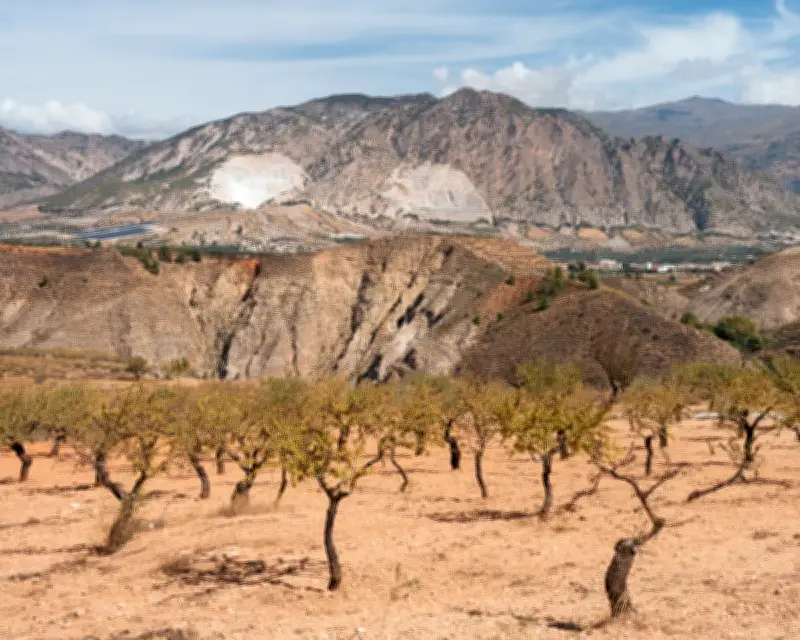
The European Commission is preparing to rewrite the EU's flagship water protection law to speed up the development of critical minerals mines, despite analysis showing many are located in drying and water-stressed regions.
Water-intensive mining in drought-prone areas
Mining requires large volumes of water for ore processing, dust suppression, waste management and mine dewatering. While modern projects recycle water, they still need significant amounts, adding pressure to already strained rivers, aquifers and water supplies in water-stressed regions.
Analysis by Watershed Investigations, shared with the Guardian, found that more than half of the 33 planned new or expanded mines designated as 'strategic projects' under the EU's Critical Raw Materials Act are in areas that have been drying over the past two decades, according to Nasa satellite data. Nearly half are in zones that experienced drought conditions in the past three months, and a quarter are in regions deemed water-stressed.
Spain, Portugal and Greece most affected
Six of the strategic mines are planned for highly water-stressed areas in Spain, with others in Portugal and Greece. All three countries rank among the top 10 EU nations with the worst water scarcity, according to the European Environment Agency. In 2024, Spain's Catalonia declared a state of emergency over its worst ever drought, and water-use restrictions were imposed in Andalucía. In 2022, 96% of Portugal experienced 'extreme' or 'severe' drought conditions, according to the EU's Earth observation programme.
Some projects have sparked fierce opposition. The environmental organisation Ecologistas en Acción is challenging the European Commission's decision to grant strategic status to all six Spanish mines, arguing it failed to properly consider risks to water resources, biodiversity and protected areas.
Growing demand for critical minerals
Global demand for critical minerals has tripled since 2010 as countries race to build AI infrastructure, electric vehicles, renewable energy technologies and defence systems. It is expected to more than double by 2030, with graphite, lithium and cobalt need projected to rise nearly 500% by 2050 from 2020 levels. Concerned about import dependence, the EU designated 47 mining, processing and recycling projects as 'strategic projects', including 33 mines. The designation fast-tracks permitting and is designed to accelerate development.
Industry push for water law changes
In a move that has alarmed environmental groups, Brussels is preparing to revise the Water Framework Directive (WFD), the EU's key law protecting rivers, groundwater and wetlands, to remove permitting bottlenecks for strategic minerals. Euromines, the trade association for Europe's mining and metals industry, has been pushing for longer deadlines for water quality targets, amendments to the 'no deterioration' rule, and greater legal certainty for mining projects.
A Euromines spokesperson said: 'Our overarching priority remains constructive engagement with policymakers to ensure strong environmental safeguards alongside legal clarity and predictability for permitting authorities.' The European Commission defended its choice of mines, saying strategic projects were assessed by independent experts and must comply with EU environmental law. A spokesperson said the WFD review would consider ways to improve access to critical raw materials while protecting the environment and human health.
Environmental warnings
Sara Johansson, a water policy manager at the European Environmental Bureau, called the plans reckless. She said the mining industry had 'not presented a shred of evidence' that the WFD was creating bottlenecks for mining projects. 'Dismantling those protections undermines Europe's water resilience and leaves taxpayers, farmers and communities to pay – both with their health and their wallets,' Johansson said.
Prof Kaveh Madani, director of the UN University Institute for Water, Environment and Health, warned: 'Fast-tracking mining in water-stressed regions by weakening safeguards is a form of Russian roulette. It may look like an economic booster in the short term, but one serious failure in the wrong location can neutralise many of the promised gains – especially when the damage to people, rivers, aquifers and ecosystems is long-lasting or irreversible.'
Several companies contacted disputed suggestions their projects would place undue pressure on water resources, pointing to environmental assessments, closed-loop water recycling systems, monitoring programmes and regulatory oversight.



