
As the Netherlands faces increasingly hot summers, residents are turning to innovative solutions to beat the heat, from mobile jungles to shadow art. The Dutch, known for their ingenuity, are finding creative ways to cool down their cities and homes as climate change brings more frequent heatwaves.
Mobile jungles bring shade to streets
In Rotterdam, a project called "Mobile Jungle" has introduced portable green walls and planters that can be moved around the city to provide shade and reduce temperatures. These mobile installations, filled with trees and shrubs, can be repositioned based on the sun's path, creating cool spots in public squares and along streets. According to the city council, the initiative helps lower local temperatures by up to 5 degrees Celsius.
The mobile jungles are part of a broader effort to green the city and combat the urban heat island effect, where concrete and asphalt absorb and retain heat. "We need to adapt our cities to become more resilient to heat," said a spokesperson for the Rotterdam municipality. "These mobile jungles are a flexible tool that can be deployed where they are needed most."
Shadow art as a cooling tool
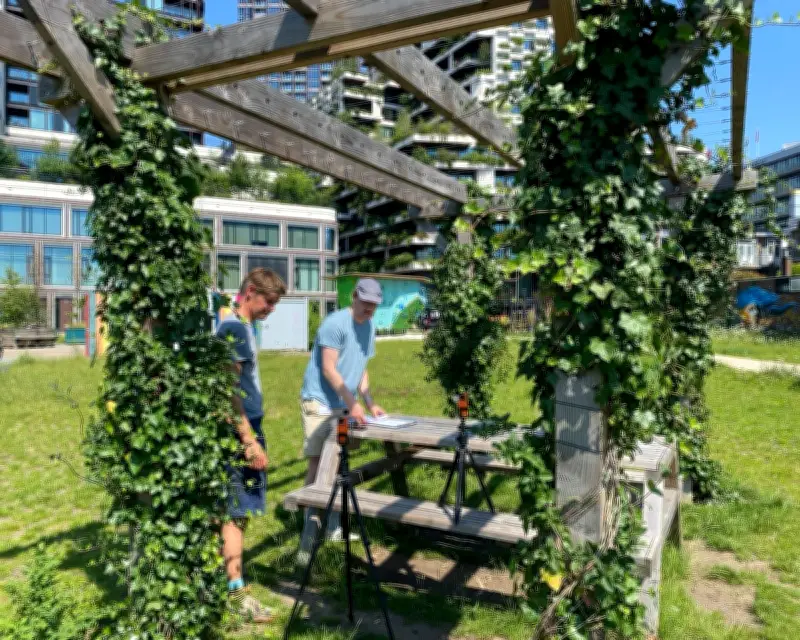
In Amsterdam, artists and architects are using shadow art to create temporary shade structures. Large-scale installations, such as canopy-like sculptures and reflective surfaces, cast shadows that cool public spaces. One project, called "Shadow Pavilion," uses a lattice of wooden slats to create a dappled shade that reduces ground temperatures by up to 10 degrees Celsius, according to measurements by the University of Amsterdam.
The shadow art not only provides relief from the sun but also raises awareness about heat adaptation. "It's a way to make the invisible visible," explained artist Jeroen van der Wielen, who designed one of the installations. "People can see and feel the difference shade makes, and it encourages them to think about how we can design our cities differently."
Community efforts and government support
Local communities are also taking action. In The Hague, residents have started a "green roof" initiative, covering flat roofs with plants to insulate buildings and reduce heat absorption. The city provides subsidies for green roofs, which can lower indoor temperatures by up to 4 degrees Celsius. According to the municipality, more than 1,000 homes have participated in the program since its launch in 2023.
The Dutch government has recognized the urgency of heat adaptation. The National Heat Plan, updated in 2025, includes measures such as planting more trees, creating water features, and installing reflective materials on buildings. The plan aims to reduce heat-related mortality, which has increased during recent heatwaves. Data from the Dutch National Institute for Public Health and the Environment shows that heat-related deaths rose by 20% between 2018 and 2024.
Long-term strategies for a hotter future
Looking ahead, Dutch cities are incorporating heat resilience into urban planning. New developments must include green spaces and water elements, and existing neighborhoods are being retrofitted with cooling infrastructure. The city of Utrecht, for example, is creating "cooling corridors"—strips of greenery and water that channel cool air from the outskirts into the city center.
These efforts reflect a broader shift in how the Netherlands approaches climate adaptation. "We can't just rely on air conditioning," said a climate adaptation expert at the University of Wageningen. "We need systemic changes that make our cities naturally cooler. The Dutch have always been good at managing water; now we need to become good at managing heat."
With temperatures expected to rise further, the Dutch are proving that creativity and community action can make a difference. From mobile jungles to shadow art, these initiatives offer a glimpse of how cities around the world might adapt to a warmer climate.



