
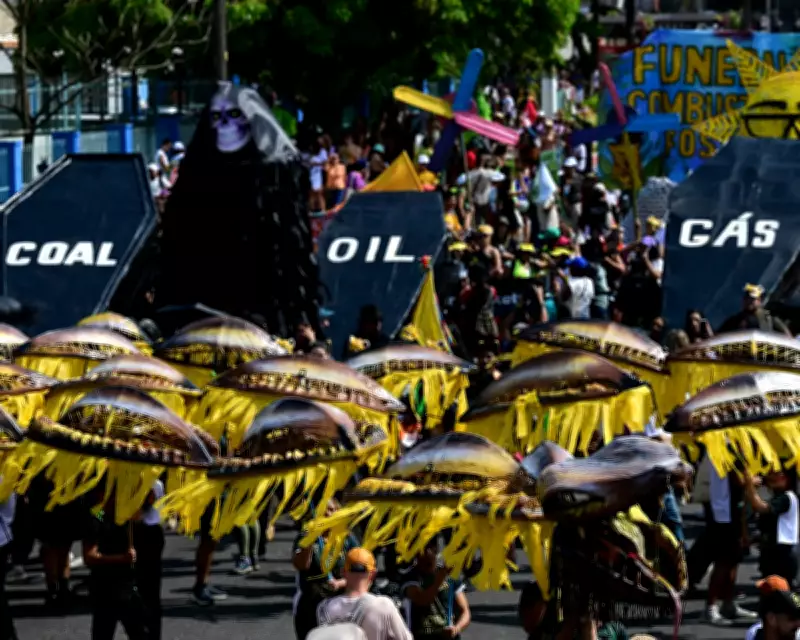
Colombia Convenes Global Climate Coalition to Overcome Fossil Fuel Impasse
In a bold move to break the persistent deadlock in global climate negotiations, Colombia is spearheading a groundbreaking international conference aimed at accelerating the transition away from fossil fuels. The Santa Marta conference, co-hosted with the Netherlands and supported by more than 50 countries, represents a significant departure from the stalled progress of traditional UN climate summits.
Frustration with UN Climate Talks Sparks New Initiative
The conference, scheduled for April 28-29 in Santa Marta, Colombia, emerges from deep frustration with the United Nations Framework Convention on Climate Change (UNFCCC) process, where discussions about fossil fuels have been consistently blocked or omitted from final agreements. Last year's climate summit concluded without any mention of fossil fuels in its official outcome document, despite overwhelming scientific consensus about their role in climate breakdown.
"We knew the challenges of dependency on fossil fuels," said Irene Vélez Torres, Colombia's environment minister, who will preside over the talks. "This conference comes at the best possible moment."
A Coalition of the Willing Emerges
Colombia, as the largest coal and fourth biggest oil exporter in the Americas, brings unique credibility to the initiative. The country has decided to stop licensing new coal, oil, or gas exploration and is actively developing alternative industries including renewable energy, tourism, and agriculture.
The conference has attracted 54 confirmed participating countries representing approximately one-fifth of global fossil fuel production and one-third of demand. Notable attendees include the United Kingdom, European Union, Canada, Australia, Turkey, Nigeria, Angola, Mexico, and Brazil. However, some of the world's largest economies and polluters—including the United States, China, India, Russia, and Gulf petro states—will be absent.
"Whatever nations have not yet taken that decision, then this is not the space for them," Vélez stated firmly. "We are not going to have boycotters or climate denialists at the table."
Global Energy Crisis Adds Urgency
The conference's timing proves particularly prescient as nations worldwide grapple with soaring fuel prices and energy market instability following recent geopolitical conflicts. The oil crisis, sparked by military actions in the Middle East, has highlighted the vulnerabilities of fossil fuel dependency, affecting not just energy bills but also food prices, consumer inflation, and business stability.
"There is a straight line of connection between the fossil fuel economy and armed conflicts at the global scale," Vélez emphasized, noting that fossil fuel dependency frequently leads to war and global conflict.
Complementing Rather Than Replacing UN Processes
Tzeporah Berman, founder of the Fossil Fuel Non-Proliferation Treaty Initiative, clarified that the Santa Marta conference is intended to complement rather than replace annual UN climate summits. "The UNFCCC plays a vital role in climate governance and will continue to do so," she said. "However, it's a consensus-based process and has become deadlocked on the core issue of fossil fuels."
Governments first agreed to "transition away from fossil fuels" at the COP28 UN climate summit in Dubai in 2023 but have taken no concrete steps to implement this commitment. The Santa Marta conference aims to provide the practical framework missing from previous agreements.
Tangible Outcomes and Future Plans
The conference will produce two significant reports: one from leading scientists detailing how countries can practically implement the energy transition, and another from finance experts from the Global South outlining funding mechanisms for developing nations. A second conference is already planned for next year in Tuvalu.
Colombia and the Netherlands are also convening a "people's summit" within the conference to ensure Indigenous peoples and marginalized groups have a strong voice in the proceedings. Organizers expect 2,800 representatives from Indigenous communities, African-descendant groups, youth, women, and other social movements.
"Indigenous people are at ground zero," said Oswaldo Muca Castizo, general coordinator of the National Organization of Indigenous Peoples of the Colombian Amazon. "We have to be a fundamental part of the conference."
Financial Mechanisms and Global Cooperation
Finance remains a critical concern for developing countries seeking to transition to clean energy. Maina Talia from the government of Tuvalu emphasized the need for "a financial mechanism that can actually reach out to our shores, securing technology transfer that doesn't come with debt."
Carola Mejia of the climate justice network Latindadd noted alarming shifts in government spending priorities due to recent conflicts, with international cooperation financing decreasing 21% in one year as military budgets increased. "Santa Marta must be a milestone for a future based on peace and solidarity," she urged.
A Fork in the Road for Humanity
Vélez described the current moment as "un parte caminos"—a fork in the road for humanity. "The right side of history is to go greener, to go more sustainable, to go more interconnected," she asserted. "These decisions can be challenging in terms of energy provision, but are the best and maybe the only way for humanity to survive."
As nations worldwide face the compounded crises of climate breakdown and energy insecurity, Colombia's initiative represents a potentially transformative approach to global climate governance—one that prioritizes action over endless negotiation and creates space for those genuinely committed to change.



