
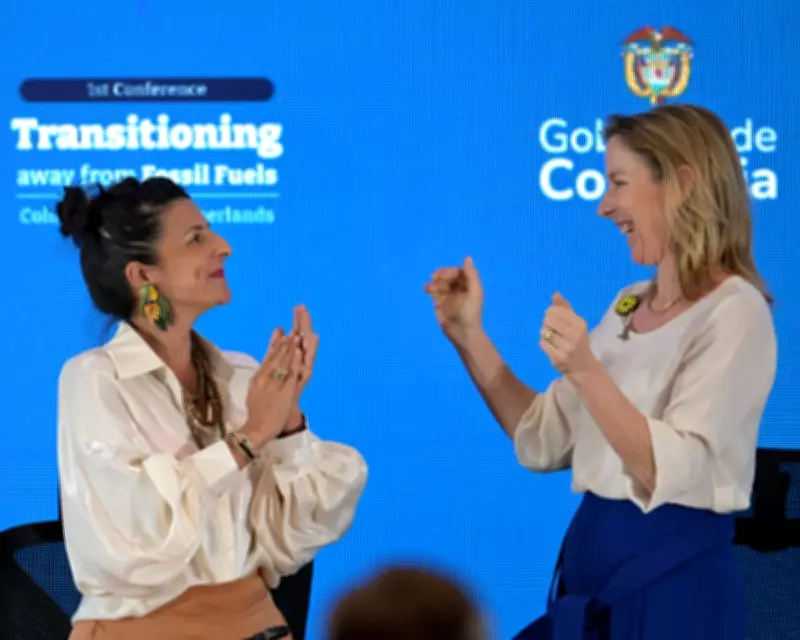
In a landmark climate meeting in Colombia, nearly 60 countries have agreed to develop national 'roadmaps' to end the production and use of fossil fuels. The voluntary plans form the bedrock of a new initiative to wean the world off coal, oil and gas, following two days of intensive talks in Santa Marta.
A Departure from Traditional Climate Negotiations
This approach marks a departure from the annual UN climate negotiations, which have run for over three decades as greenhouse gas emissions continue to rise. While most of the world's biggest emitters are absent from the 59-nation group, other countries are invited to join. Irene Vélez Torres, Colombia's environment minister and chair of the talks, emphasized the need for concrete action: 'We decided not to resign ourselves to an economy built on the destruction of life. The transition away from fossil fuels could no longer remain a slogan but must become a concrete, political and collective endeavour.'
Focus on Trade, Debt, and Demand
Colombia and the Netherlands, co-hosts of the inaugural conference on transitioning away from fossil fuels, convened discussions on trade, debt, producer countries' dependence on fossil fuel exports, and ways to reduce demand. In the preceding days, activists, Indigenous leaders, scientists, and other experts gathered to discuss the social and economic impacts of fossil fuels and how to curb demand.
Composition of the Coalition
With the US, China, India, Russia, and petrostates like Saudi Arabia, Qatar, and the UAE absent, attendance was limited to countries willing to commit to a phaseout. This 'coalition of the willing' represents more than half of global GDP, nearly a third of energy demand, and a fifth of fossil fuel supply. Almost half of the participating countries are fossil fuel producers, expected to outline how they intend to wind down output. However, there are no stipulations on how plans should be structured or deadlines for completing the transition.
National Roadmaps and Support Mechanisms
Colombia published a draft roadmap during the conference and established a scientific panel to advise countries. France became the first developed country to release a national roadmap to phase out fossil fuels. Stientje van Veldhoven, the Netherlands' minister for climate and green growth, noted: 'We see the roadmaps as the tool for the ambition with which they came here. There will be different speeds between countries – we should allow for this and acknowledge that countries start from a different position, have different challenges, so that it cannot be one size fits all.'
Addressing Gaps in the Paris Agreement
Vélez said that existing climate plans under the Paris agreement, known as nationally determined contributions (NDCs), are insufficient as roadmaps because they only address domestic emissions, allowing fossil fuel producers to sidestep the climate impact of their exports. Participants agreed to support poorer countries with expertise, scrutinize fossil fuel subsidies, and collaborate on trade policy and financial reform, including helping poor and vulnerable countries tackle debt and raise finance for the transition.
Future Conferences and Global Impact
A second conference will take place early next year on the Pacific island of Tuvalu, co-hosted by Ireland. Tuvalu's minister for home affairs, climate and environment, Maina Talia, encouraged governments to draft roadmaps before the next conference, warning that without concrete plans, they risk losing an opportunity. The Santa Marta conference was prompted by frustration with UN climate summits, where consensus rules have often allowed fossil fuel interests to block direct discussion of the need to phase out coal, oil and gas. However, participating governments have said they will work closely within the UN system to bring about global progress at the Cop31 UN climate conference in November.
Reactions and Praise
Tzeporah Berman, founder and chair of the Fossil Fuel Non-Proliferation Treaty Initiative, called Santa Marta 'a historic breakthrough – the first time we bring together a group of nations willing to act. We are building a coalition of ambitious countries willing to lead and break the consensus deadlock that has paralysed concrete action on fossil fuels in the UN negotiations.' Observers praised the constructive nature of the talks. Fatima Eisam-Eldeen from the University of Barcelona said: 'For too long, multilateral climate forums have felt like rooms where everyone speaks, but no one understands. Santa Marta broke that pattern. It spoke the language of hope.' Kirtana Chandrasekaran from Friends of the Earth International called for governments to replace fossil fuels with renewable energy, emphasizing the need for systemic change away from corporate dominance towards bottom-up, decentralized renewables that ensure energy sovereignty for all.



