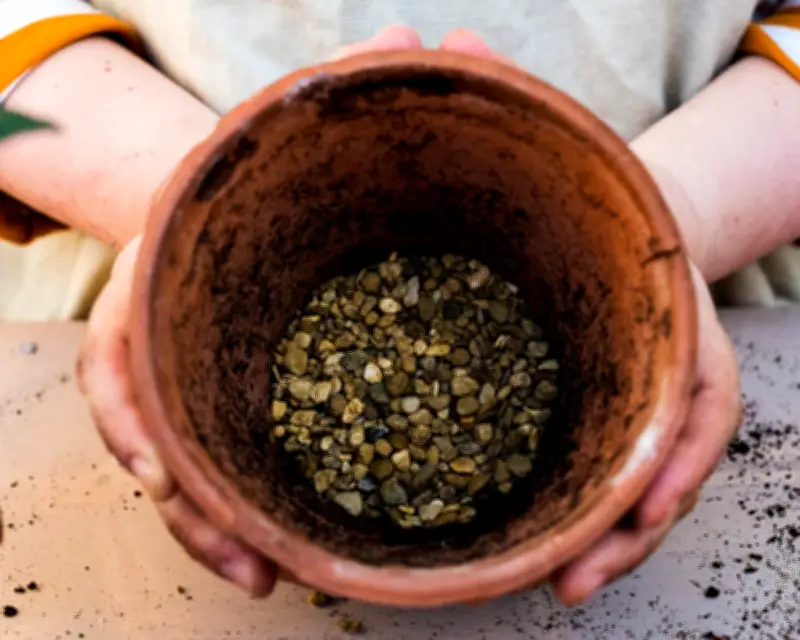
For decades, gardeners and houseplant enthusiasts have placed a layer of gravel or pebbles at the bottom of pots to improve drainage. But according to horticultural experts, this common practice may actually be counterproductive.
Why the gravel layer doesn't work
Contrary to popular belief, adding gravel or broken pottery at the base of a container does not enhance drainage. Instead, it can create a perched water table, where water accumulates in the soil just above the gravel layer, leading to waterlogged roots and potential rot. The principle is similar to a sponge resting on a layer of stones: the sponge remains wet because the water cannot easily move into the air gaps between the stones.
According to Dr. Linda Chalker-Scott, a horticulturist at Washington State University, the myth likely persists because it seems logical that water would drain more easily through coarse material. However, water moves from finer-textured soil to coarser gravel only when the soil is saturated, and even then, the interface between soil and gravel actually impedes drainage.
Better alternatives for healthy roots
Instead of a gravel layer, experts recommend using a well-draining potting mix throughout the entire pot. Adding perlite, coarse sand, or vermiculite to standard potting soil improves aeration and drainage uniformly. Additionally, ensuring that pots have adequate drainage holes is crucial. If a decorative pot lacks holes, it is best to use it as a cachepot, placing the plant in a functional nursery pot inside.
Another tip is to avoid overpotting: using a pot that is too large for the plant can lead to excess soil that stays wet for too long. Choose a pot that is only slightly larger than the root ball.
When gravel can be useful
While gravel at the bottom is not beneficial for drainage, it can serve other purposes. A layer of gravel can add weight to a lightweight pot, preventing it from tipping over. It can also be used to elevate a smaller pot inside a larger decorative container to bring the plant to a desirable height. However, for drainage, the best approach is to focus on the potting mix and pot design.
As the Royal Horticultural Society advises, always use pots with drainage holes and avoid blocking them with gravel or pot shards. Instead, place a piece of mesh or a coffee filter over the holes to keep soil from washing out while allowing water to escape freely.