World Book Day Sparks Heated Debate Among UK Educators and Parents
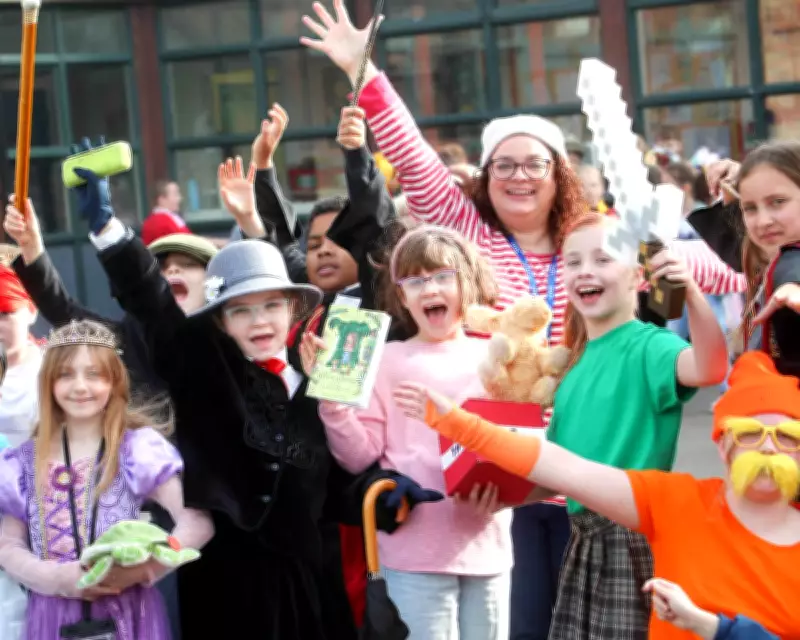
As children across the United Kingdom and Ireland donned costumes for World Book Day on Thursday, a significant controversy emerged behind the festive scenes. Primary schools throughout England are increasingly moving away from traditional dressing-up activities, according to educational experts, due to growing concerns that costume competitions might actually undermine the core mission of promoting reading for pleasure.
Divergent Perspectives on Annual Celebration
The annual literary celebration has revealed deep divisions within school communities, with passionate arguments emerging from both teachers and parents about the event's true value and unintended consequences.
Laura, a parent from Warwickshire, expressed frustration with current approaches: "Schools really need to do a better job of World Book Day. They either seem to just say dress up and get a herd of footballers and Disney princesses, or make it really academic, like getting the pupils to dress up as an adjective. Neither is right; it should be fun, but book focused."
She proposed alternative activities that could better serve the day's educational purpose:
- Encouraging children to write stories about their favorite characters without formal marking
- Organizing costume-making sessions during school hours
- Implementing creative reading activities like mad libs and book treasure hunts
The Hidden Costs and Stresses
Paul, a parent and former teacher from the West Midlands, highlighted significant socioeconomic concerns: "While I support the intention behind World Book Day, to encourage reading for pleasure, in practice it has become yet another point of stress for parents, regardless of income."
He observed that costume competitions have become increasingly competitive, with many outfits reflecting last-minute purchases from supermarkets rather than genuine literary connections. More troublingly, he noted increased absence rates among children receiving free school meals on non-uniform days during his teaching career up to 2015.
"Talking to the parents," Paul explained, "it was obvious that part of this was just the cost implication of trying to find costumes and having to stitch them together."
Creative Opportunities Versus Practical Realities
Laura, a 41-year-old parent from Oxfordshire, offered a more positive perspective: "I think it's a bit of fun. My parents didn't have a lot of money when I was young, and I was brought up to be creative, so I see World Book Day as an opportunity to flex those muscles once again."
She acknowledged her privileged position of having more free time than many parents and described sourcing costumes from secondhand platforms like Vinted and charity shops. However, she admitted to a last-minute purchase of an orange T-shirt for a tiger costume this year when her usual methods failed.
Educational Effectiveness Questioned
Martin Lowe, a 66-year-old retired primary school teacher from Berwick-upon-Tweed, shared insights from his teaching career spanning 2007 to 2020: "Pupils and staff dressed up for every World Book Day during my time as a teacher, but increasingly the children dressed up as film characters."
He noted the difficulty in preventing this trend given the prevalence of book tie-ins in children's film merchandising. Now volunteering at a school reading to children who aren't read to at home, Lowe suggested: "I think doing that is probably a better strategy than dressing up."
Lowe advocated for more consistent reading practices in schools: "World Book Day does plug reading, though I think that the teacher reading a story every day for 15 minutes before home time would be more beneficial. But when I was a teacher the curriculum didn't allow this, and neither did Sats pressure."
Systemic Challenges in Reading Promotion
Ian Butterworth, a 66-year-old recently retired primary school teacher from Shrewsbury, questioned the event's overall impact based on his experience working in socially deprived areas: "In my experience, it has very little noticeable effect on the promotion or the enjoyment of reading."
He argued for more fundamental changes: "It's far better to free teachers from curriculum overload and give them time and liberty to actually read a top-quality 'class book' and give children time every day to read and chat about stimulating books."
The Parent-Teacher Perspective
Kerry, a 43-year-old parent and teaching assistant from Swindon, Wiltshire, offered a dual perspective from both roles: "As a parent, it's stressful because children decide days in advance what they want to wear and it's usually too late to successfully fulfil those ambitious dreams."
She observed limited educational benefits: "I have rarely seen World Book Day actually encouraging the reading of the books the children dress up as characters from. It has certainly never encouraged my own children to read more, only to demand more stuff."
Even the free books distributed through the program often go unread, Kerry noted, ending up donated back to schools or gathering dust at home. She found more success through personal modeling: "Simply being more involved in reading to my children and then seeing me read for pleasure has had a bigger impact on them wanting to read."
Broader Implications for Educational Policy
The World Book Day debate reflects larger tensions in modern education between festive engagement and substantive learning outcomes. As schools in Shepton Mallet, Somerset, and across the nation celebrated with events at institutions like St Paul's school, the underlying questions about educational priorities, socioeconomic equity, and effective reading promotion strategies remained unresolved.
This annual celebration continues to serve as a microcosm of broader educational challenges, highlighting the complex balance between creating enjoyable school experiences and ensuring meaningful academic development for all students regardless of their family's resources or circumstances.