Private School Enrolments Surge in Melbourne's Growth Corridors
In Melbourne's rapidly expanding western suburbs, a significant educational shift is unfolding as families increasingly opt for private schooling over public education. This trend is most pronounced in urban growth areas where new communities are forming, creating what experts describe as a deepening crisis in educational equity across Australia.
The Funding Disparity Driving Educational Choices
Recent data from the Australian Bureau of Statistics reveals a stark divergence in enrolment patterns. Between 2016 and 2025, government school enrolments grew by just 5%, while Catholic schools saw 8% growth and independent schools experienced a remarkable 31% increase. This shift coincides with what education researchers identify as decades of inadequate funding for public institutions alongside substantial government support for private alternatives.
Emma Rowe, an associate professor of education at Deakin University, explains that this trend results directly from governments failing to meet funding targets for public schools while simultaneously directing substantial resources toward private institutions. "The effect of capital funding cannot be underestimated," Rowe emphasizes, describing the growing inequity as "a national crisis."
Research from the Australian Education Union highlights the dramatic funding gap. In 2023, public schools receiving capital funding averaged grants of $75,492, representing less than 7% of the average $1,098,334 provided to private schools. This disparity manifests in visible infrastructure differences that significantly influence parental decisions.
Caroline Springs: A Microcosm of Australia's Educational Divide
The Melbourne suburb of Caroline Springs exemplifies this national trend. When Ana Mulipola and her husband Walter moved to the area 22 years ago, they were essentially pioneers in a developing community. As their family grew alongside the suburb, they chose Catholic education for their three boys, initially for religious reasons but ultimately for what Mulipola describes as "common values."
Now paying approximately $5,000 annually per child for Catholic secondary education, Mulipola represents a growing demographic of parents investing in private schooling despite the financial burden. "I said, 'we're not paying all this money for you to just muck around'," she recalls telling her children about their educational responsibilities.
The Infrastructure Factor in Parental Decision-Making
Rowe identifies school facilities as a primary driver of parental choices. "The one big thing that gets parents in the door, absolutely without a doubt, is the buildings," she observes. "They walked into that school and they were blown away by the gym facilities, or the football pitch, or the fact that it has a concert hall."
This phenomenon is particularly evident in Melbourne's western growth corridors. The City of Melton, which includes Caroline Springs, recorded the second-largest growth in independent school enrolments nationally last year with 558 additional students. The adjacent City of Wyndham led with 1,175 new independent school enrolments.
Southern Cross Grammar: A Case Study in Private School Expansion
Southern Cross Grammar, an independent private school in Caroline Springs, illustrates the rapid growth of private education in these areas. Emerging from the collapse of ICA Melton College in 2010, the school has expanded from 46 students in 2011 to 930 this year, with plans to cap enrolment at 980 students.
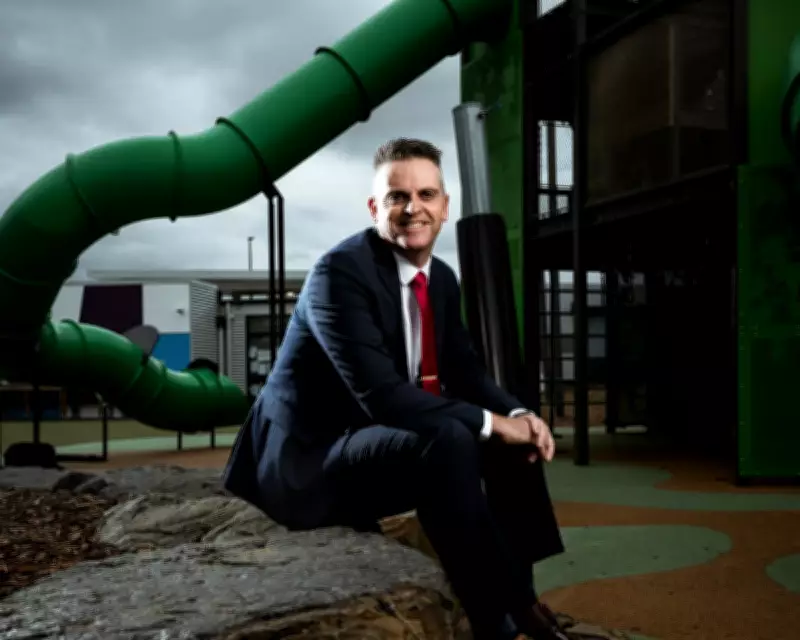
Principal Brayden Stone acknowledges both the success and the challenges this growth presents. "We're only two years away from maximum numbers, which, as you can imagine, is a great problem to have," Stone notes. "But also, it is a problem for those in the local area that want access to independent schools."
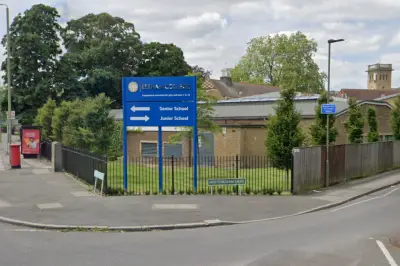
The school shares a block with St George Preca Catholic Primary School and Springside Primary public school, creating a tangible representation of Australia's three-tiered education system within a single neighborhood.
The Financial Realities of Private Education
For families like Tania Tkatchyk's, who send four children to Southern Cross Grammar at an annual cost of approximately $55,000, the decision represents a significant financial commitment. "We knew that we were able to provide that financially and it was a no-brainer for us really," Tkatchyk explains. "We want to give them the best opportunity, academically, that we can afford to give them."
Research from Independent Schools Australia indicates that word-of-mouth recommendations drive most parental school choices, with 54% of parents recommending independent schools based on perceived educational excellence. However, among those who don't recommend private education, 68% cite school fees as the primary deterrent.
Socioeconomic Segregation in the Classroom
The funding disparity creates visible socioeconomic stratification even within the same suburban block. At Springside Primary public school, 27% of students come from the most disadvantaged socioeconomic quartile. This percentage drops to 19% at St George Preca Catholic Primary and plummets to just 3% at Southern Cross Grammar.
Trevor Cobbold, national convener of Save Our Schools, argues that parents recognize these disparities. "All the research around the world shows that money matters," Cobbold states. "That makes a huge difference in terms of who you can employ and the material resources you can bring to bear in the classroom. People are not silly. They can see it, and they talk to other parents."
The Broader Implications for Australian Society
Rowe warns against framing education as merely a consumer choice. "Presenting schooling as a matter of parental choice is a problem because it turns a right into a commodity," she argues. "Education shouldn't be seen as a consumerist good because it's too closely linked to social mobility, life outcomes, a healthy democracy."
As Melbourne's outer suburbs continue to expand, the educational divide appears likely to widen without significant policy intervention. The concentration of disadvantaged students in underfunded public schools alongside the rapid growth of well-resourced private institutions creates what researchers describe as a two-tiered system with profound implications for social cohesion and equal opportunity.
For families in growth corridors like Caroline Springs, the choice between educational pathways represents not just personal preference but participation in a broader structural shift that is reshaping Australian education from the classroom outward.