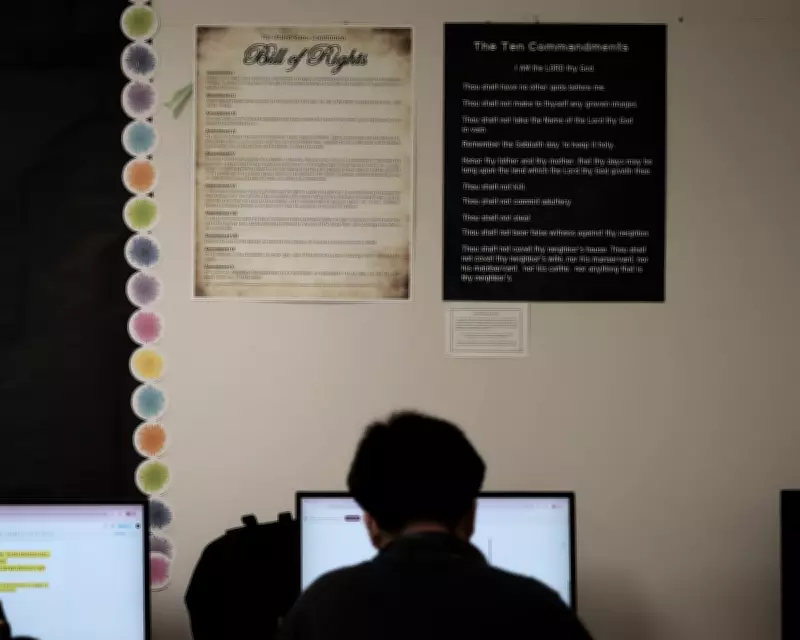
Texas Enacts Controversial Law on Ten Commandments in Schools
The state of Texas has passed a new law mandating that all public school classrooms must prominently display the Ten Commandments. This legislation, which has ignited a fierce national debate, requires the biblical text to be posted in a conspicuous location within every classroom, from elementary to high school levels. Supporters argue that the measure promotes moral values and historical literacy, while critics contend it violates the constitutional separation of church and state.
Details of the Legislative Mandate
The law specifies that the Ten Commandments must be displayed in a durable, easily readable format, such as a framed poster or plaque. School districts are responsible for funding and implementing the displays, with the state providing guidelines but no direct financial assistance. Proponents, including conservative lawmakers and religious groups, assert that the Commandments are a foundational document of Western law and ethics, relevant to civic education.
Legal and Educational Implications
Legal experts predict that the law will face immediate challenges in court, citing previous Supreme Court rulings that have limited religious displays in public schools. Opponents, including civil liberties organizations and some educators, warn that it could marginalize non-Christian students and create a divisive atmosphere in classrooms. They argue that it undermines the principle of religious neutrality in public institutions, potentially leading to costly litigation for school districts.

Broader Context and Reactions
This move is part of a broader trend in some states to incorporate religious elements into public education, reflecting ongoing cultural and political tensions. Reactions have been polarized, with some parents and community members praising the law as a return to traditional values, while others express concern about its impact on religious diversity and academic freedom. The debate highlights deep-seated issues about the role of religion in American public life and education policy.