Lifeline Musical: A Powerful Fusion of Science and Theater in London
The floor of the United Nations General Assembly Building in New York has hosted global music superstars like Abba, Beyoncé, and BTS. Now, joining this prestigious list is an unexpected entry: a foot-stomping, folk-infused Scottish musical about the discovery of penicillin. This remarkable production, titled Lifeline, has become a cultural phenomenon that bridges the worlds of arts, science, and global politics.
The Science Behind the Show
Lifeline presents an energetic and imaginative stage account of the life of Alexander Fleming, the Scottish bacteriologist who discovered penicillin in 1928. The musical weaves together Fleming's personal journey from rural Scotland to the battlefields of World War I and his laboratory at St Mary's Hospital in London with a modern love story set in contemporary Edinburgh. What makes this production particularly unique is its incorporation of a Greek chorus composed of real-life scientists who break the fourth wall to explain their work and the urgent crisis of antimicrobial resistance.
The show's creator, Robin Hiley, artistic director and CEO of Charades theatre company, first encountered the subject of antimicrobial resistance during a dinner conversation with infectious disease researcher Dr. Meghan Perry. "She cornered me and said: 'Can you do a show about antimicrobial resistance?'" Hiley recalls with a laugh. "I thought: 'Great, that sounds just like all the West End shows at the moment.'"
An Unlikely Partnership
The musical has sparked an improbable friendship between Hiley and Professor Sally Davies, the former chief medical officer for England who now serves as the UK's special envoy on antimicrobial resistance. Davies became an enthusiastic champion of the production after seeing its initial 2018 Edinburgh Fringe run under the title "The Mould That Changed the World."
"There's a subsection of people who feel a shiver down their spine when they hear music or look at art because it gets through to them. That's me," says Davies from her study at Trinity College, Cambridge. "I get shivers when things work. It just grips people, it's not like anything else. I've seen books that pull people in a bit but something about a musical is amazingly powerful if the songs are right."
From Edinburgh to the United Nations
Following successful runs in Edinburgh and Washington, D.C., Lifeline has now opened in London for a five-week engagement at Southwark Playhouse Elephant. The production's journey to international prominence has been remarkable. Six months before its Washington opening in 2022, Davies and Hiley embarked on a tour of ambassadorial residences and consulates, generating funding and engaging policymakers who could influence national approaches to antibiotic use.
"We had this plan to get it to the US as a soft power in Sally's work," Hiley explains. "I was turning up to sing at these posh dinners. I was the show, there in my kilt." This diplomatic outreach culminated in a high-level meeting at the United Nations in 2024, attended by heads of state and global leaders.
The Urgent Message of Antimicrobial Resistance
At its core, Lifeline addresses one of medicine's most pressing crises: antimicrobial resistance and the deadly global threat of drug-resistant infections, commonly known as superbugs. In his prophetic 1945 Nobel Prize acceptance speech, Fleming himself warned that the ready availability of antibiotics and the practice of underdosing could eventually lead to resistant infections. Today, forecasters estimate that antimicrobial resistance will be directly responsible for 39 million deaths by 2050.
"This is very like climate change: it's incredibly complex, it involves every system," Davies explains. "Some people call it a slow pandemic. Lifeline and the team have re-energized the conversation. Now, whenever there's a big meeting around the world, they come to me and Robin and ask: 'Can you play some of your songs?'"
The Creative Process and Scientific Collaboration
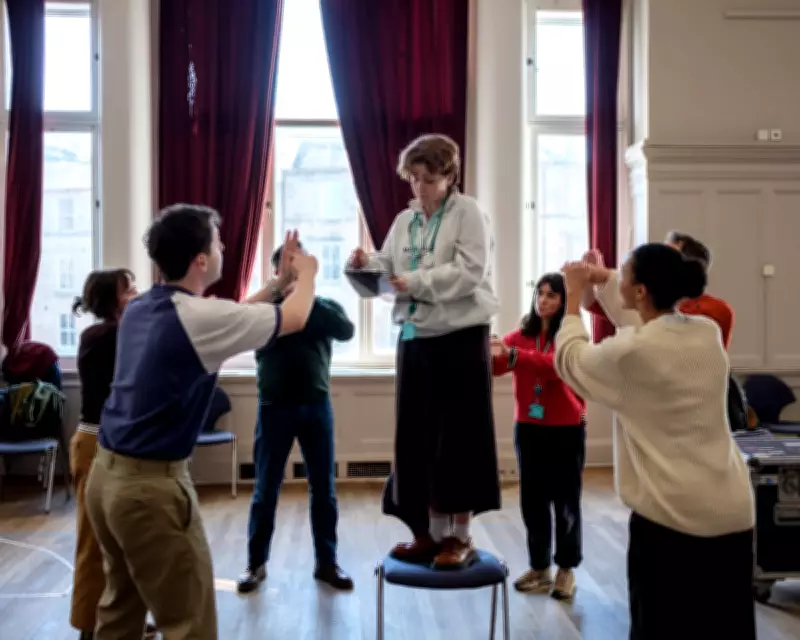
Hiley's musical background includes years of touring with folk-rock bands before founding Charades. For Lifeline, he collaborated with book writer Becky Hope-Palmer to create a score that blends folk influences with contemporary musical theater. The production features a rotating chorus of 60 real-life scientists—including doctors, nurses, veterinarians, dentists, and researchers—who perform alongside the professional cast.
"They give us an integrity," says Hiley, who considers Lifeline "a heartfelt love letter to the medical community past, present and future." In London, the production received an overwhelming response from the scientific community, with 500 people signing up for chorus auditions. "We've actually got quite a lot of medics who trained in musical theater and stepped sideways so they're now locum doctors," Hiley notes.
Personal Connections and Global Impact
The production has created personal connections that extend beyond the theater. Davies experienced the show's relevance firsthand when her goddaughter died in 2022 at age 38 from a drug-resistant infection. Later, when Davies herself was hospitalized with bowel cancer, her husband's immediate concern reflected the musical's themes: "He said: 'Oh no, Lifeline in real life.'"
For Hiley, the journey from creating a musical about a scientific topic to becoming an advocate for global health has been transformative. "People turn to me and ask about this problem, which at the beginning felt absurd," he reflects. "Now, I feel a responsibility to say to them: get out of your silo. This is a problem on a global scale, I'm just singing a song about it."
The Future of Arts-Science Collaboration
Both Hiley and Davies believe that collaborations between the arts and sciences represent an underutilized resource for addressing complex global challenges. "Of course we should do more of this," Davies asserts. "There's no doubt that the arts reach people in different ways and for complex issues like these we have to use them. The arts help make things part of our life whether it's written or visual work or, on this occasion, musical theater which brings all of that together."
Hiley sees musical theater as particularly well-suited to humanizing scientific stories. "There's a human story at the heart, regardless of whether it's the gay community in 1980s New York where Rent is set or the American battlefields in the 1800s in Hamilton," he observes. "Any of this is just human stories. I feel like there's a certain responsibility of the creatives to be sticking to their guns and making things that point people in the right direction."
As Lifeline continues its London run through May 2nd, the production stands as a testament to the power of creative collaboration across disciplines. By bringing together Fleming's century-old discovery with contemporary concerns about antimicrobial resistance, the musical demonstrates how theater can illuminate scientific issues while entertaining audiences and inspiring action on one of humanity's most significant health challenges.