Imeneo Review: Handel's Mischievous Operetta Handled with Wit and Care
In a captivating production at the Festival Theatre, Cambridge Buddhist Centre, the Cambridge Handel Opera Company brings Handel's mid-career novelty operetta Imeneo to life with exhilarating flair. This piece, often overshadowed by more famous works, emerges as a self-referential gem that playfully subverts operatic traditions.
A Fresh Take on Handel's Intimate Comedy
While operas featuring young lovers frequently draw comparisons to Mozart's Così fan tutte, Imeneo aligns more closely with the whimsical spirit of A Midsummer Night's Dream. Handel, writing in the 1740s as Italian opera waned in popularity, crafted this intimate comedy of duty and desire without the cynicism of his contemporaries. Instead, Imeneo revels in meta-theatrical games, poking fun at opera's own conventions.
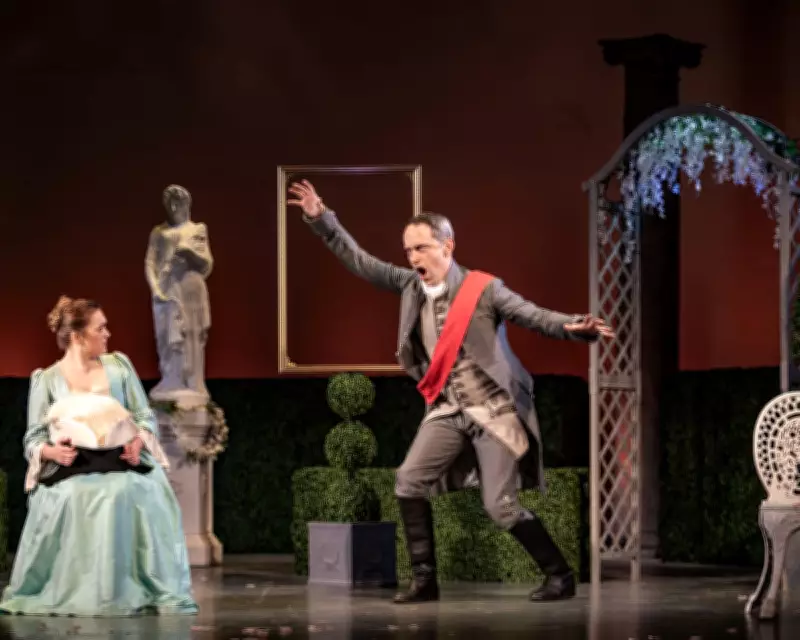
Director Guido Martin-Brandis and the company expertly capture this knowing charm. The staging features a minimalist set with Ionic columns hinting at an Athenian setting, complemented by an 18th-century fantasy of topiary and trellis, complete with wisteria that nods playfully to modern dramas like Bridgerton. Here, low necklines and even lower stakes set the tone for a delightful romp.
Plot and Performance Highlights
The story revolves around Rosmene, portrayed vibrantly by Ellie Neate, who must choose between marrying her rescuer Imeneo, played by Timothy Nelson, or her lover Tirinto, sung by Bethany Horak-Hallett. A subplot involves Rosmene's sister Clomiri, captivatingly performed by Lisa Dafydd, and their father Argenio, turned into an irrepressible comic turn by Trevor Eliot Bowes. Handel spins this conflict with delicious precision, lulling audiences into familiar rhythms before upending expectations in a surprising ending.
Music director Julian Perkins conducts from the harpsichord on stage, integrating the musicians into the action. Characters interact with the band, and Trui Malten's lighting design enhances the breaking of the fourth wall. With minimal props—a chair, gilded frames, and hats—the cast displays endless invention, balancing artifice and sincerity beautifully.
Musical Execution and Cast Excellence
Perkins breathes life into Handel's score, though on opening night, the orchestra showed occasional timidity with sagging violins. Nonetheless, the cast shines brightly. Neate's Rosmene grows in power through the final scene, Dafydd delivers sweetly sung determination, and Horak-Hallett's glossy mezzo matches Nelson's handsome baritone. This production proves that Handel's operatic afterthought can scrub up well as a main event, running until 28 March.