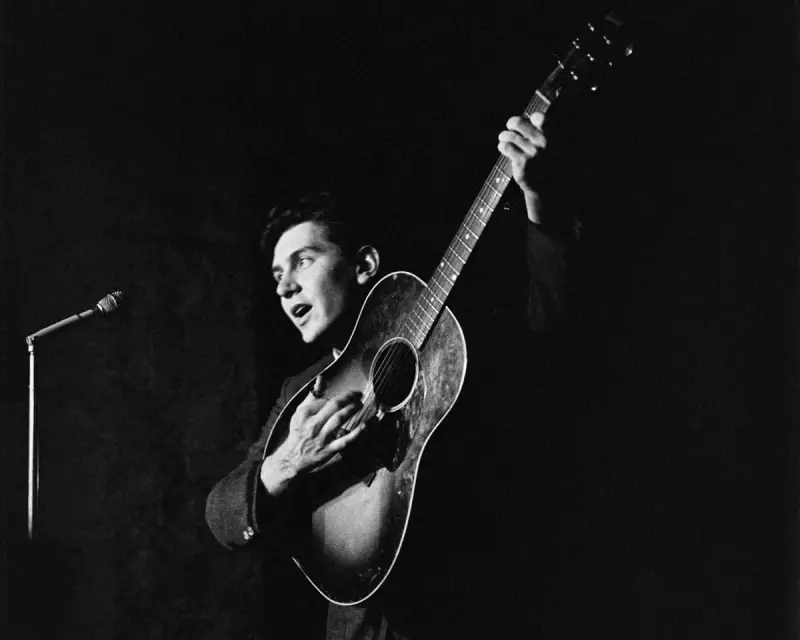
More than five decades after its release, a scathing protest song by the late American folk musician Phil Ochs is striking a powerful chord with contemporary political observers. The song's critique of US foreign policy is being cited as eerily prescient in light of recent global events.
A Song for Its Time, and Ours
Phil Ochs, the influential protest singer who died in 1976, released 'Cops of the World' in 1966. The track, dripping with Ochs's characteristic sardonic wit, lampooned American imperialism and its frequent disregard for international law. A reader from Cardiff notes that while the song perfectly captured the zeitgeist of the 1960s, its message feels, sadly, even more pertinent in today's geopolitical climate.
Modern Parallels: From the G8 to 'Big Stick' Diplomacy
This sense of historical repetition is echoed in several pointed reader letters. One correspondent from Glasgow raises the question of international alliances, specifically the G7 forum. Originally the G8 including Russia, the group changed after Russia's annexation of Crimea in 2014. The reader provocatively asks if, following certain foreign policy actions, a further reduction to a 'G6' might be considered.

Another letter, from Surbiton, draws a direct rhetorical comparison between two American presidents. It contrasts President Theodore Roosevelt's 1901 foreign policy maxim—'speak softly and carry a big stick'—with the current approach, which the reader characterises as using a loudspeaker to bludgeon weaker nations.
Readers' Satirical Takes on Current Affairs
The correspondence extends into sharp satire regarding specific ongoing situations. A reader from East Yorkshire suggests the west would only prove its serious intent regarding Venezuela if the Tony Blair Institute were to deploy 'loafers on the ground', a wry comment on interventionist think-tanks.
Further acerbic observations include a query from Kent about the legalities of a citizen's arrest on a rogue state leader, and a note from Nottingham wondering if FIFA's president will demand the return of a peace prize in light of certain controversies. The collection closes with a timeless warning from Lancashire, reminding readers that evil triumphs when good people stand by.
The resurfacing of Ochs's work in public discourse underscores how the core themes of power, intervention, and accountability remain stubbornly unresolved. The letters collectively paint a picture of a public drawing lines from the past to the present, using the music and critiques of one era to interrogate the politics of another.