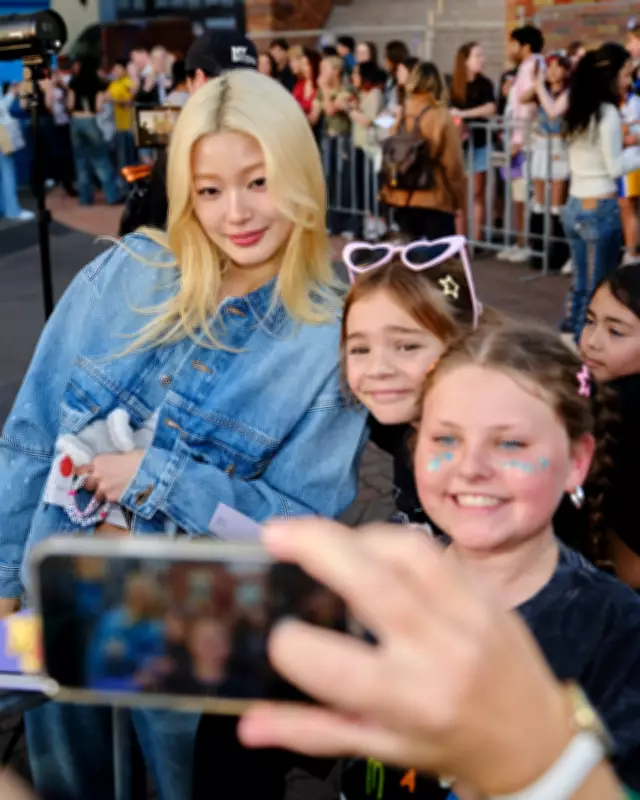
Ten-year-old Luna and 12-year-old Asha were among the first Eyekons – the term for Katseye fans, akin to Swifties and Beliebers – to arrive at Sydney’s Luna Park on Wednesday. Their parents drove two hours from Wollongong, and though they hadn’t won tickets to the girl group’s first Australian appearance – a Q&A at the park’s Big Top – they came anyway, hoping for a glimpse of their idols.
“I love Katseye,” Luna says. “They inspire me, because I actually do singing lessons myself. They make me more confident to go on stage.” Asha adds: “I can get very insecure and they make me feel more confident. I love them so much.”
Billed as a Global Sensation
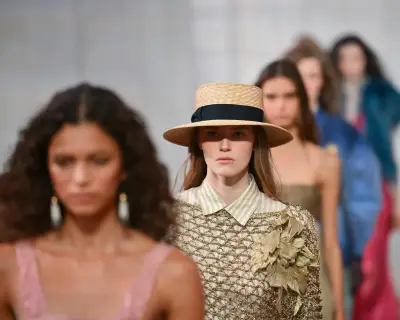
Katseye, created in partnership between K-pop giant Hybe (the Korean conglomerate behind BTS) and US record label Geffen, pairs American pop sensibilities with hard-hitting choreography, branding, and relentless perfectionism. The band’s background is notably diverse: Filipino-American, Cuban-Venezuelan, Indian Tamil-Sri Lankan, Swedish-Chinese-Singaporean, Swiss-Ghanaian, and South Korean.

Their latest single, Pinky Up, is a high-octane techno-pop ode to haters that name-drops Socrates and samples the techno classic Meet Me at the Love Parade. Another single, Gnarly (2025), caught fans by surprise with its pugnacious hyperpop style and nonsensical wordplay, matched by an equally overstimulating music video.
Divisive Yet Addictive
The effect is exhausting, exhilarating, and divisive. While the New York Times praised Gnarly for “deconstructing” K-pop, a scathing viral X post labeled the song “skibidi toilet music” – a label some Eyekons don’t necessarily dispute.
“Sometimes that’s what I want!” laughs Emily, 25, who traveled from Brisbane with her friend Talitha. “Gnarly came out during a difficult period. Katseye brought the fun back into my life… Whenever life is too much, I just put on Katseye.”
Catharsis aside, the music is also fun to dance to. Luna and Asha whiled away the day practicing Katseye’s choreography with new friends, even as hope faded. “I didn’t think it would happen,” Luna says. “But I got to meet them! I cried! And we met Evie, and we’re friends now.”
Mega-Famous Despite Controversy
No matter the opinion on their music, Katseye is undeniably famous. In August, their turbo Lollapalooza set in Chicago broke daytime crowd records with 85,000 attendees. They earned a Grammy nomination for Best New Artist, landed a viral Gap commercial, and played Coachella last month. They’ve also weathered their first major controversy: in February, member Manon Bannerman announced a hiatus to “focus on her health and wellbeing.”
Before the Q&A, 12-year-old Maisie summed up many Eyekons’ feelings: “I love Pinky Up’s chaos-y vibe. But I don’t like the part where Manon’s not in it.” Her mother hinted it was a sore topic, but the mood lifted when the five active members – Daniela Avanzini, Lara Raj, Yoonchae Jeung, Sophia Laforteza, and Megan Skiendiel (all under 23) – appeared near the waiting fans, perfectly timed with the Sydney sunset.
Divide-and-Conquer Fan Engagement
For 15 minutes, Katseye kept up the pace, taking selfies, signing autographs, and chatting with Eyekons – a mix of Gen Z girls, LGBTQ+ fans in Y2K outfits, teens in school uniforms, and pre-teens with parents. The scene was chaotic but organized: fans penned in a semi-circle got moments with each member, thanks to a drill-like precision that suggests practice.
Overstimulation is Katseye’s MO, and they succeeded, even if it was overwhelming for some. “Let’s fangirl over here,” one mother said, guiding her crying daughter to a quieter spot.
The Q&A: Pre-Approved but Beloved
The Q&A itself, with questions pre-approved and delivered by journalist Tait McGregor, revealed little of note to outsiders. But for true Eyekons, every clip was cherished. As the event ended, fans left with memories and merchandise, their devotion undimmed.