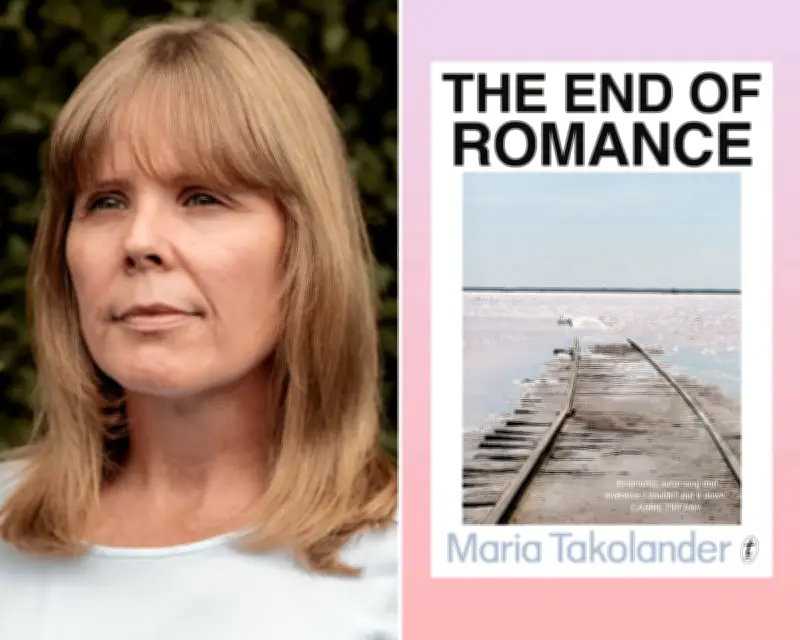
In her latest book, 'The End of Romance', Maria Takolander delivers a sharp and provocative critique of romantic love, arguing that the narratives we cherish are often tales of power, delusion, and disappointment. The book, published by Scribe, challenges readers to reconsider the cultural scripts that shape our expectations of love and relationships.
A Dismantling of Romantic Myths
Takolander, a Finnish-Australian writer and academic, draws on literature, philosophy, and personal experience to expose the flaws in our collective love stories. She contends that romance, as commonly understood, is a construct that serves to maintain unequal power dynamics and unrealistic standards. According to the author, the 'happily ever after' trope is not only misleading but potentially harmful.
The book is structured as a series of essays that dissect various aspects of romance, from courtship rituals to the idealization of partners. Takolander uses examples from classic and contemporary literature, as well as pop culture, to illustrate how these narratives perpetuate myths that leave individuals feeling inadequate or trapped.

Personal and Critical Insights
Takolander intersperses her analysis with personal anecdotes, lending an intimate tone to the scholarly critique. She writes about her own experiences with love and heartbreak, using them as case studies to examine broader societal patterns. This blend of the personal and the critical makes the book accessible and engaging, even as it challenges deeply held beliefs.
One of the key arguments in 'The End of Romance' is that the pursuit of romantic love often leads to a form of self-deception. Takolander suggests that people are conditioned to ignore red flags and to prioritize the idea of being in love over actual compatibility or mutual respect. She cites research showing that couples who report high levels of romantic passion often have less stable relationships in the long term.
Reactions and Implications
Critics have praised the book for its originality and courage. Writing in The Guardian, reviewer Bee Rowlatt noted that 'Takolander's prose is both elegant and incisive, making a compelling case for rethinking our most intimate narratives.' The book has sparked conversations about the role of literature in shaping romantic expectations and whether alternative models of love are possible.
Takolander does not offer easy solutions, but she encourages readers to question the stories they tell themselves and to seek relationships based on authenticity rather than scripted roles. 'The End of Romance' is not a manifesto against love, but an invitation to love more honestly and freely, without the burden of impossible ideals.
A Timely Critique
In an era of dating apps and social media, where romantic interactions are increasingly mediated by technology, Takolander's critique feels particularly relevant. She argues that the commodification of romance has only intensified the pressure to perform and conform to idealized versions of love. The book serves as a necessary counterpoint to the relentless positivity of self-help guides and romantic comedies.
'The End of Romance' is a thought-provoking read for anyone who has ever wondered why love so often falls short of expectations. It is a reminder that the stories we inherit are not inevitable, and that we have the power to write new ones.