Review / Books
'Locked in a loop': how Henrietta Moraes' life was a colourful tragedy
Muse to Bacon and Freud, and habitué of The Colony Rooms, 'mistress of mayhem' lived off others foolish enough to fall for her charm, says Fiona Green
Friday, 8th May — By Fiona Green

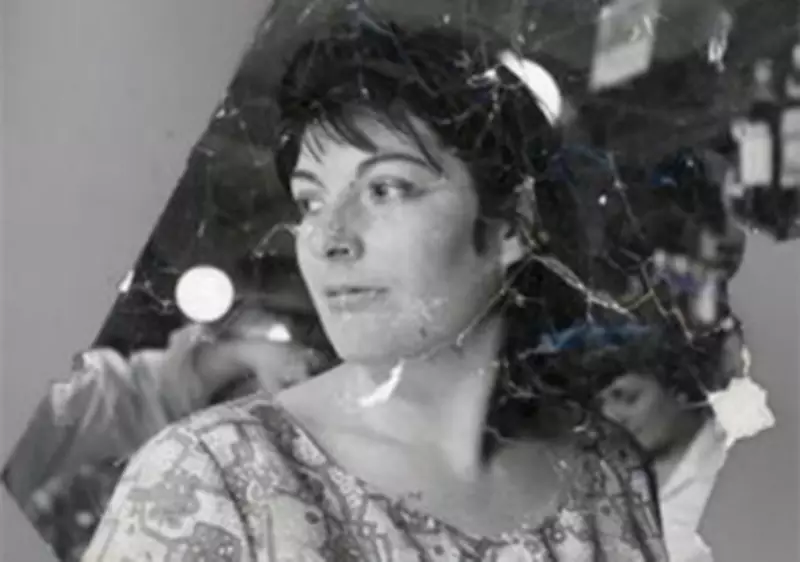
Henrietta Moraes [John Deakin]
SOHO has always held a kind of mystery and magical allure by its very reputation; so also the name Henrietta Moraes for me – living as she was, in its racy confines – and my predecessor in the lives of two of my lovers. She was also muse to Lucien Freud and Francis Bacon, and assistant to Marianne Faithfull. So when my tutor at art school suggested we meet in Soho on a weekend away, I excitedly jumped at the chance.
It was 1962, and the world had just avoided a nuclear war from the Cuban Missile Crisis, Marilyn Monroe was sadly found dead, and Nelson Mandela had been arrested in South Africa. I was nearly 18. The same age that Hen, as Henrietta was called, came to Soho. I was taken to The Colony Club, a louche establishment run by a woman called Muriel Belcher, of whom the French describe as a 'jolie laide' or 'pretty ugly' due to her striking, quirky features.
The Colony Club, I learned, was Henrietta's party venue but she wasn't there on this occasion. This 'Mistress of Mayhem' biography of her from Darren Coffield's pen is so alive and well researched, a real tour de force, we could be forgiven for thinking that he too was of this time, and had been a part of Moraes' inner circle.
After this first visit, I returned frequently to London and stayed with poet Elizabeth Smart, who became a surrogate mother to me and to the artist Robert MacBryde, who slept under the stairs at Elizabeth's apartment near Bayswater, every time I was there.
Fiona Green and her husband Martin Green
Soon I met the man who was to become my husband. Martin Green had recently ended a relationship with Henrietta, who he had met years before. I was curious, as both Henrietta and I had been born in India, where our fathers had been in the Indian forces but where her childhood had been marinaded in extreme cruelty, while mine had been a happier source of love.
Martin told me that he had met Hen at David Archer's bookshop, where she was working, and he was publisher. They had had a passionate time together before she persuaded him to go to Ireland to meet her children and marry. The artist Francis Bacon paid for their pre-honeymoon trip. His three portraits of Henrietta's head and shoulders, making his small triptych from three of the finest portraits of all his work.
Once there, the drugs took over and Martin, horrified at what he was about to take on, took flight. Desperate, Hen begged his mother to intercede on her behalf, but she wisely stood back.
The next time Hen's name arose was when we went to Martin's old friend Johnny Moynihan's party. We were studiously kept apart – I was pregnant with our first child, so this was probably sensible, but I was disappointed.
Our house in Fitzrovia was always filled with artists and writers from Martin's publishing house in Bloomsbury, and following the Irish writers came musicians. I was into drink but naïve about drugs so Hen and her drug taking and cat burgling in Piccadilly were aspects of her life I didn't see.
She died in London in 1999 aged 67. Her life was nightmarish in the extreme and I have come to the conclusion that the saddest part of her story is that of the casualties of her mayhem: her two children, who had to tolerate such an unpredictable hippy existence as she lived so casually and arrogantly off others foolish enough to fall for her charm… and those in her orbit, like the painter John Minton, who killed themselves.
Yet, in spite of this damage, Darren demonstrates so eloquently how Henrietta 'seemed locked in a loop, unable to break free from her own inevitable world's end'.
• Hen, Mistress of Mayhem: A Portrait of Henrietta Moraes. By Darren Coffield, The History Press, £25