From Refugee Camp to Literary Stardom
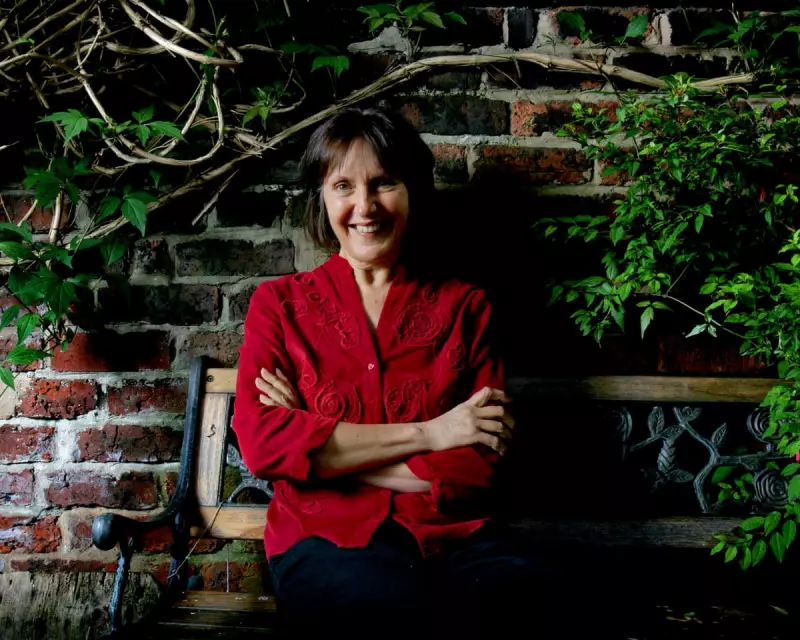
Marina Lewycka, the award-winning British-Ukrainian novelist who captured hearts with her comic debut A Short History of Tractors in Ukrainian, has died at age 79 from a degenerative brain condition. Her passing marks the end of an extraordinary literary journey that saw her transform from an unpublished writer in her late 50s to a million-copy bestselling author.
A Life Shaped by Displacement
Lewycka's life began in circumstances far removed from literary fame. She was born in 1946 in a British-run displaced persons camp in Kiel, Germany, to Ukrainian parents who had been forced labourers under the Third Reich. Her father Peter was an engineer and inventor, while her mother Halyna was a trained veterinarian.
The family eventually settled in Britain, first living in what she described as "idyllic" East Sussex with social reformer Rosalind Dobbs, before moving to Oxfordshire and eventually South Yorkshire. This refugee background never left her, and she often described herself as "a bit of human flotsam washed up on a faraway shore."

At school in South Yorkshire, she "badly wanted to be an English girl" but maintained her Ukrainian heritage by speaking the language at home with her parents. This bilingual upbringing, she later recalled, taught her to "listen carefully" - a skill that would later serve her writing beautifully.
Unexpected Literary Success
Before her breakthrough, Lewycka had accumulated 36 carefully preserved rejection slips for her earlier, more philosophical fiction. She worked variously as an adult education teacher, Open University tutor, and supply teacher before joining Sheffield Hallam University as a lecturer in journalism and public relations.
Her fortunes changed when she enrolled in a creative writing MA at Sheffield Hallam University, which counted as staff development. Her tutors, including poet Sean O'Brien and novelist Jane Rogers, encouraged her work. The turning point came when external examiner Bill Hamilton, a literary agent, recognised her talent and secured her a deal with Penguin.
A Short History of Tractors in Ukrainian, published when she was in her late 50s, became an instant sensation, selling over a million copies and winning the Bollinger Everyman Wodehouse award for comic fiction. The novel was also shortlisted for the prestigious Orange Prize.
The book drew inspiration from her family history, particularly her father's work for the International Harvester tractor company in Doncaster. What began as planned memoir based on taped interviews with her mother evolved into inventive fiction when she realised "I was going to have to make stuff up."
Legacy of Warmth and Humanity
Lewycka developed a unique literary voice that blended serious themes of displacement and trauma with exuberant comedy. She believed that humour "sees us through hard times and keeps us in touch with our essential humanity."
Her subsequent novels - including Two Caravans (2007), We Are All Made of Glue (2009), and The Lubetkin Legacy (2016) - created what amounted to a comic unofficial history of postwar Britain, seen from its margins. Her work celebrated multicultural Britain while revealing the "hidden worlds" of global upheaval behind everyday life.
Despite her success, she remained grounded, continuing part-time teaching to stay connected to how young people spoke. Interviewers often found themselves treated to warming bowls of borscht in her Sheffield home.
In later years, she faced challenges from multiple system atrophy, a rare neurological condition that affected her speech, balance and movement. Yet even when writing about this degenerative disease, she noted that "people's spontaneous kindness often brings tears to my eyes."
Her final novel, The Good, the Bad and the Little Bit Stupid (2020), tackled Brexit with her characteristic warm-hearted satire. Like Zadie Smith and Hanif Kureishi, her work rejoiced in Britain's multicultural voices while resolving conflicts into uplifting comedy.

Marina Lewycka is survived by her partner, historian Donald Sassoon, and her daughter Sonia, an epidemiologist. Her legacy endures as a writer who transformed personal and historical trauma into fiction that celebrated our shared humanity with wit, warmth and irresistible comedy.