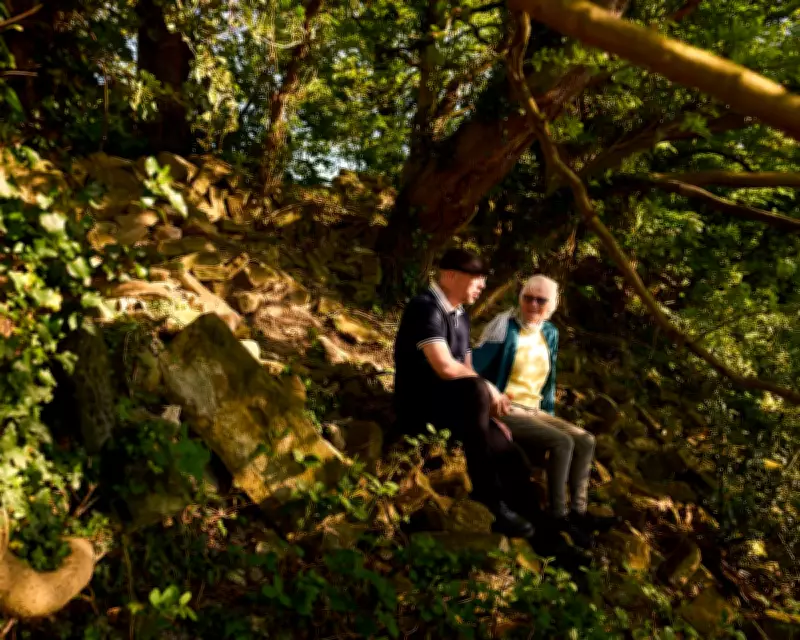
John Whitaker and Barbara Phipps stood on a collapsed section of the wall, a photograph by Christopher Thomond captures the scene. Yorkshire's WallFest has been launched to protect the crumbling boundary wall of what is considered the world's first nature reserve.
The Visionary Behind the Wall
In the 1820s, pioneering environmentalist Charles Waterton constructed a 9-foot-high, 3-mile-long wall around the parkland and lake of Walton Hall near Wakefield. This fox- and poacher-proof barrier enclosed what could be the world's first nature reserve, completed 200 years ago in Yorkshire. Waterton, an eccentric and controversial figure, installed nest boxes, special banks for sand martins, and innovative bird hides. He even offered locals sixpence for every hedgehog brought into his reserve.
After completing the wall and banning hunting and shooting, Waterton recorded 5,000 wildfowl on his lake and 123 bird species, including herons and kestrels, which were widely persecuted at the time. Hedgehogs and weasels reportedly roamed freely like rabbits through his reserve.
WallFest: Celebrating and Preserving a Legacy
Now, the overlooked achievements of this innovative reserve and its crumbling wall are being remembered through WallFest, a programme of 60 community events organized by a charity dedicated to protecting the wall. The events, held throughout May in Walton, West Yorkshire, and at Waterton's former home (now a hotel), aim to raise funds for wall repairs. The programme includes a short film supported by David Attenborough.
“We’re keen to raise the profile of the first nature reserve in the world,” said John Smith, chair of trustees of Friends of Waterton’s Wall. “Waterton was a pioneering environmentalist, probably the first in this country. We also want to highlight the wall and preserve our heritage for future generations.”
Waterton's Environmental Journey
Waterton's environmentalism began after experiencing the rainforests of Guyana, where he managed his father's sugar plantations. Returning to industrializing West Yorkshire, he was dismayed by polluted waterways, stripped woodlands, and unhealthy workers. He became famous with his 1825 book, Wanderings in South America, detailing his wildlife discoveries. He once rode a caiman to subdue it after capture.
Unlike his contemporaries, Waterton abhorred shooting and fought armed poachers, using dummy birds made of metal and wood to protect real ones. His nature reserve attracted 17,000 visitors annually. He provided what might be the first country park in the “grotto,” offering free entry, tea, and entertainments, and invited poor neighbors to fish for food.
He presciently recognized nature's mental health benefits, bringing patients from a nearby institution for parkland outings. Waterton also launched one of the first environmental legal actions against a soap works for releasing pollutants that killed trees and damaged his lake.
The Man Behind the Vision
Despite his visionary work, Waterton is often remembered for his eccentricity. He climbed trees into his 80s, created bizarre taxidermy, could scratch behind his ear with his big toe, and devised a failed flying machine. According to Barbara Phipps, a local resident and biographer, his portrayal as “an amusing and strange fellow” (in Darwin's words) was partly due to his Catholicism, which excluded him from mainstream careers.
John Whitaker, a curator at Wakefield council and charity trustee, also attributes Waterton's lack of acclaim to his Catholicism. “He spent his life as an ‘eccentric’ Catholic, made a lot of noise, and made friends and enemies. He was a marginalized aristocrat, massively affectionate, incredibly progressive, but hugely contradictory.”
Addressing the Past: Slavery and the Wall
As a young man, Waterton managed plantations in British Guiana worked by enslaved people owned by his father. Waterton did not inherit the plantations nor receive compensation after the Slavery Abolition Act. His family home and estate were acquired before the plantations, according to Whitaker. “He wrote that slavery can never be defended, but the fact is, he did manage them.” The charity actively discusses this history.
The charity has repaired one wall section. Waterton, who saved money by not drinking alcohol, spent the equivalent of £3 million on the wall. An estimated 65% of the wall still stands, but ivy—another unfashionable species he championed—is causing damage. “Our aim is to protect what is left,” said Whitaker. “There’s so much character in it. But it’s like painting the Forth Bridge.”
Waterton died in 1865, aged 82, having survived malaria, cholera, and a shipwreck off Italy. His final diary entry noted two nightingales singing melodiously in the park. “It is particularly poignant,” wrote Whitaker, “because we don’t get nightingales nesting around here any more.”