Uruguay's Controversial WWII Relic: The Nazi Eagle Salvage
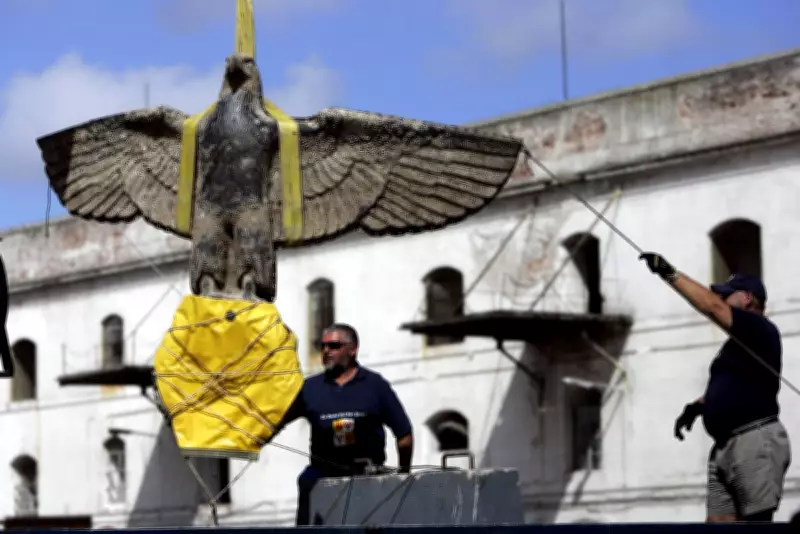
For nearly two decades, Uruguay has grappled with an unusual dilemma emerging from the depths of the River Plate: what to do with a massive bronze Nazi eagle sculpture salvaged from a sunken German battleship. The artifact, weighing half a tonne and featuring a swastika in its talons, represents one of the most contentious historical finds in South American waters.
The Battle of the River Plate Legacy
The sculpture originally adorned the stern of the Admiral Graf Spee, a 610-foot German "pocket" battleship that patrolled the South Atlantic during the early days of World War II. Following severe damage from British and New Zealand cruisers in December 1939, the ship limped into Montevideo harbor where its captain scuttled the vessel after evacuating the 1,000-man crew.
For nearly 70 years, the eagle lay submerged in the murky waters of the River Plate until an international recovery team led by British marine archaeologist Mensun Bound located and salvaged it in 2006. "Diving in the River Plate is quite dangerous," Bound recalled. "The currents are absolutely furious between tides, and the visibility is probably the worst I've ever known. You're swimming in liquid mud."
From Display to Storage: A Symbolic Journey
Initially displayed in a Montevideo hotel lobby, the sculpture attracted thousands of visitors but also generated controversy with reports of people making Nazi salutes and spitting at the artifact. Within weeks, the Uruguayan government intervened, removing the eagle to military storage at Cerro fortress where it remains today in a crate.
"The government didn't want the site to become a place of pilgrimage or to risk it falling into the hands of neo-Nazis," explained researcher Daniel Acosta y Lara, who participated in the recovery expedition. The decision reflected growing concerns about the symbol's potential misuse and the ethical implications of displaying Nazi iconography.
Conflicting Proposals for a Controversial Artifact
As the 20th anniversary of the recovery approaches in 2026, Uruguay continues to debate the eagle's fate. Former president Luis Lacalle Pou briefly proposed melting down the sculpture and recasting it as a dove of peace in 2023, but backtracked following public outcry.
Meanwhile, former gubernatorial candidate Teresa Marzano has advocated for transforming the eagle into a tourist attraction in Punta del Este, approximately 80 miles from Montevideo. Her proposal involves mounting the sculpture on a ship's stern replica with a viewing platform for up to 100 visitors. "My project would transform the eagle into a kind of tourist icon," Marzano stated, though critics question the appropriateness of displaying the symbol in a resort town.
Museum Display vs. Public Exhibition
Acosta y Lara argues for museum exhibition with proper historical context, noting that a similar Nazi eagle removed from a Berlin building is displayed at London's Imperial War Museum. "It doesn't belong there," he said of the Punta del Este proposal, emphasizing that no part of the Battle of the River Plate occurred near the resort town.
Fabian Schamis, executive director of the Jewish Community of Punta del Este, emphasized the importance of contextual display: "The appropriate places for its exhibition would be a museum or any space that clearly provides a historical context that allows people to understand it properly... Otherwise, it should not be displayed at all."
Legal and Ethical Complexities
The eagle has also become entangled in legal disputes between the Uruguayan government and businessman Alfredo Etchegaray, who financed much of the recovery expedition and is seeking £18.7 million in compensation. This financial dimension adds another layer of complexity to decisions about the artifact's future.
Marzano presented her tourism proposal to the government in December 2024 and claims it is advancing internally, though no formal response has been issued. She maintains that her project would promote education while boosting tourism: "Our country is deeply republican and democratic and respects all religions... We must ensure that future generations understand what happened."
As Uruguay continues to weigh historical preservation against ethical considerations, the Nazi eagle remains in military storage—a silent testament to World War II history and a symbol of the ongoing challenges nations face when confronting difficult historical artifacts.