Thomas Jefferson's Racial Contradictions Explored in New Historical Work
A new book by Pulitzer Prize-winning historian Annette Gordon-Reed delves into the complex and often contradictory racial views of Thomas Jefferson, the third US president and a founding father. Titled Jefferson on Race: A Reader, the volume compiles Jefferson's own writings, both personal and public, offering a raw look at his thoughts on race throughout his life.
Slavery as a Constant Presence from Birth to Death
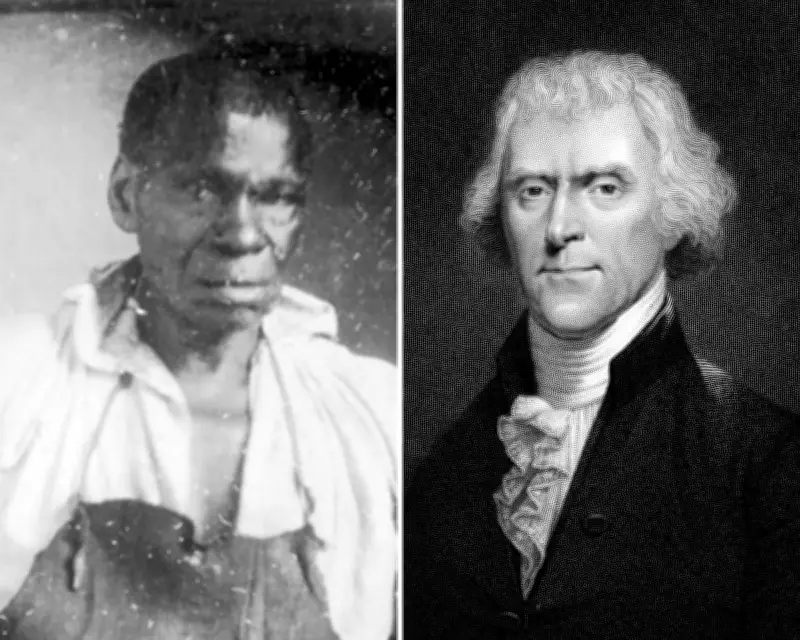
Jefferson's life was bookended by slavery. Born into a slave-owning family in Virginia, his earliest memory involved being carried by an enslaved man on a 50-mile journey. Evidence suggests a Black woman likely served as his wet nurse, as his mother did not breastfeed. At his death, an enslaved man, John Hemmings, built his casket. Jefferson owned more than 610 people in his lifetime, making slavery an omnipresent force that starkly contrasted with his famous declarations of liberty.
Letting Jefferson Speak for Himself
In an interview with The Guardian, Gordon-Reed explained that her book aims to provide a complete picture of how Jefferson dealt with race. "It gives people as complete a picture as possible of race as it was lived in his time," she said. The collection includes his conscious writings on race and unconscious moments, covering interactions with Black and Native American people.
Contradictions and Self-Perception
Jefferson is notorious for writing that "all men are born free" while enslaving hundreds. Gordon-Reed noted that he saw himself as a progressive person, more enlightened than his fellow Virginians. "He talked about other people's prejudices as if he didn't have those same prejudices," she observed. His attitudes were inconsistent, showing different facets in various settings, but his self-image as a liberal on slavery remained a constant.
Unique Among Founders in Foresight
Unlike other founders such as George Washington or James Madison, Jefferson extensively wrote about race and foresaw long-term racial conflicts. He believed a multiracial society without conflict was impossible and predicted tensions if emancipation occurred. "He's talking about things that we're very interested in now, while the other founders were not to the same extent," Gordon-Reed emphasized.
Jefferson's Potential View of Modern America
If Jefferson were alive today, Gordon-Reed speculated he would admire America's scientific and technological advancements but struggle with gender equality, as he held traditional views on women's roles. On race, she suggested he might accept societal changes if supported by the majority, but his primary pride would lie in the nation's scientific leadership.
The Inescapable Grip of Slavery
Gordon-Reed argued that Jefferson knew slavery was wrong but lacked the emotional strength to end it. "Slavery bounded his life from the beginning to the very end," she stated. After early legislative efforts failed, he focused on founding the United States, hoping future generations would abolish slavery without war, a stance she finds unsatisfactory but reflective of his priorities.
Surprising Discoveries and Omissions
The research revealed unexpected informal interactions Jefferson had with free African Americans, such as hiring one to manage his property. However, Gordon-Reed regretted omitting the Northwest Ordinance of 1784, which he drafted to prevent slavery's spread in new territories, a key example of his anti-slavery efforts.
This book adds a nuanced layer to the ongoing debate about Jefferson's legacy, highlighting the profound contradictions that continue to resonate in American history.