Possible Discovery of Legendary Musketeer's Remains Sparks Archaeological Excitement
Archaeologists working in the Netherlands have made a potentially groundbreaking discovery that could rewrite literary and historical records. During repair work at the Church of St Peter and St Paul in Maastricht's Wolder district, workers uncovered a skeleton that experts believe may belong to Charles de Batz-Castelmore, the 17th-century French soldier who inspired Alexandre Dumas' legendary character d'Artagnan from The Three Musketeers.
Decades-Long Search Culminates in Church Discovery
Wim Dijkman, a retired archaeologist who has dedicated 28 years to searching for the musketeer's final resting place, was immediately summoned to the site when the skeleton was discovered beneath a collapsed section of the church floor. The real-life d'Artagnan died during the siege of Maastricht in 1673, and for over three centuries, the location of his burial has remained one of history's enduring mysteries.
"I immediately called Wim because he has been working on d'Artagnan for more than 20 years," explained Deacon Jos Valke, who first reported the discovery to local media. The skeleton was found in a particularly significant location - buried under the altar in consecrated ground, a placement that aligns with historical accounts of where important figures were interred.
Compelling Evidence Points to Famous Warrior
Several intriguing clues have strengthened the case that this skeleton might indeed be the legendary musketeer. Archaeologists discovered a French coin from the appropriate historical period within the grave, and perhaps most tellingly, a musket ball was found at chest level, matching historical descriptions of how d'Artagnan met his end.
"The indications are very strong," Valke emphasized, noting how these findings correspond with documented accounts of the soldier's death. The skeleton has since been carefully removed from the church and transported to an archaeological institute in Deventer for further examination and preservation.
Scientific Verification Through DNA Analysis
On March 13th, researchers extracted a DNA sample from the skeletal remains, which is currently undergoing analysis at a specialized laboratory in Munich. This scientific process represents the next crucial step in verifying the skeleton's identity. The DNA will be compared against samples provided by living descendants of d'Artagnan's father to determine whether there's a genetic match.
Dijkman, while acknowledging the tremendous historical significance of the potential discovery, maintains a scientist's cautious perspective. "I'm always very cautious, I'm a scientist," he stated, emphasizing that definitive conclusions must await laboratory results. Despite this professional reserve, he admitted that "it is an incredibly exciting story, after all."
International Interest and Historical Context
The investigation has attracted attention from archaeological communities across Europe, transforming into what Dijkman describes as "a top-level investigation" involving multiple international experts. "All kinds of analyses and investigations are under way both domestically and abroad," he confirmed, highlighting the collaborative effort to establish the skeleton's identity with absolute certainty.
Charles de Batz-Castelmore achieved posthumous fame that far surpassed his military accomplishments when Dumas published The Three Musketeers in 1844. Dumas drew inspiration from Gatien de Courtilz de Sandras' 1700 work Mémoires de M. d'Artagnan, transforming the historical figure into one of literature's most enduring characters.
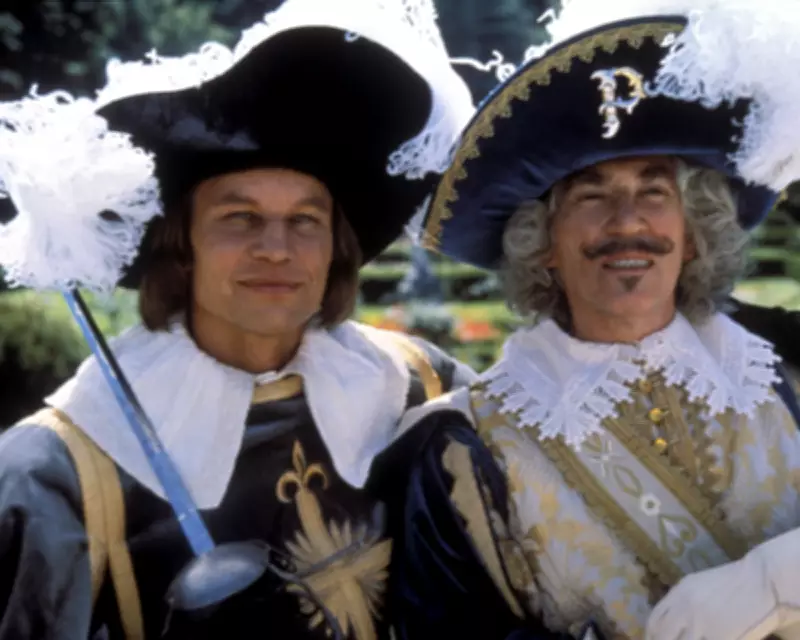
Over the past century, d'Artagnan has been portrayed on screen by numerous actors including Douglas Fairbanks, Michael York, Chris O'Donnell, Logan Lerman, and most recently François Civil. The character's cultural impact extends even to animation, where he was reimagined as the sword-wielding beagle protagonist in the 1980s series Dogtanian and the Three Muskehounds.
The potential discovery in Maastricht represents more than just archaeological interest - it connects physical evidence to a figure who has captivated imaginations across generations through literature, film, and popular culture. As scientists await DNA results, historians and enthusiasts alike watch with anticipation, hoping that after 353 years, one of history's most famous soldiers may finally have been found.