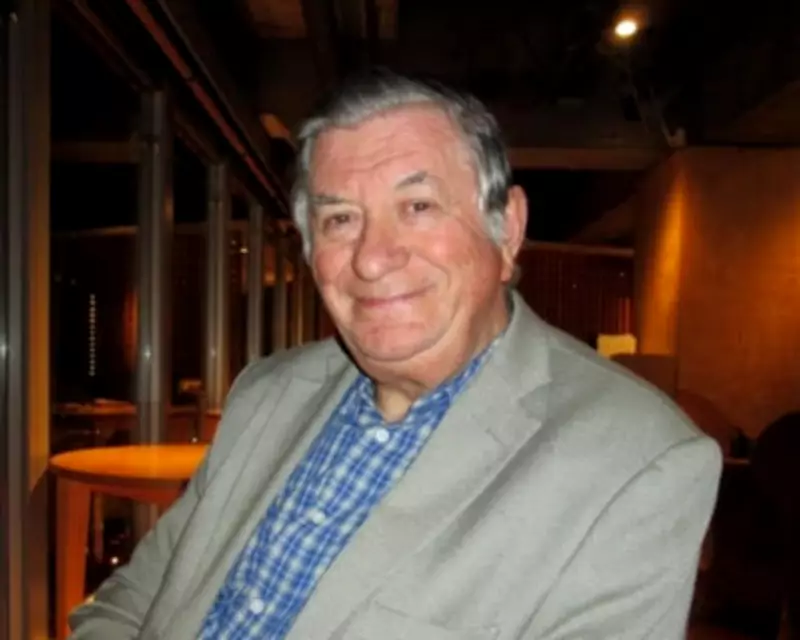
Ken Eason, an eminent academic who specialised in studying how the introduction of computer technology affects managers and employees in organisations, often with unexpected consequences, has died aged 83.
Early Life and Education
Ken was born in Luddenham, Kent, to Toby and Milly (nee Sillcock), who were both farm workers. After attending the Canterbury Technical School for boys, he gained a National Certificate in Chemistry from Borough Polytechnic (now London South Bank University) in 1961. He then joined the National Coal Board to train as a chemist at Betteshanger colliery in Kent. After a move to the Electricity Generating Board in London, he went on to study for a psychology degree at Brunel University, following which, in 1969, he became an occupational psychologist at EMI Electronics.
Career at Loughborough University
Ken stayed at EMI for only a year before becoming a research fellow at Loughborough University, where he soon became involved in the formation in 1970 of the university's Human Sciences and Advanced Technology (HUSAT) Institute. HUSAT carried out some of the earliest research on human-computer interaction. He was the institute's deputy director until succeeding its founder, Brian Shackel, as its director in 1992, holding that position until Husat was disbanded in 1996. Thereafter, he was professor of cognitive ergonomics at Loughborough until his retirement in 2002.
Later Work and Contributions
After retiring, Ken worked in a private capacity as a consultant at the Bayswater Institute in London until 2013, advising on a variety of research projects for the NHS, mainly in relation to the implementation of IT. In 1988, he laid out many of his theories and observations in his book Information Technology and Organisational Change.
Recognition and Awards
Ken was awarded an honorary DSc from the Chalmers University of Technology in Gothenburg, Sweden, and is the only person to have twice received the Bartlett Medal of the UK Chartered Institute of Ergonomics and Human Factors, individually in 1985 and then for his work at Husat in 1992.
Personal Life and Legacy
Ken was described as a kind, good-natured man who was always ready to provide advice to colleagues and students. He is survived by his wife, Judy (nee Allen), whom he married in 1969, their children, Claire and Michael, and grandchildren, Isaac and Kyra.