For centuries, an enslaved boy known only as "Jersey" appeared in a Joshua Reynolds portrait, his story untold. Now, new research has begun to unveil his identity, military service, and potential path to freedom.
Background of the Painting
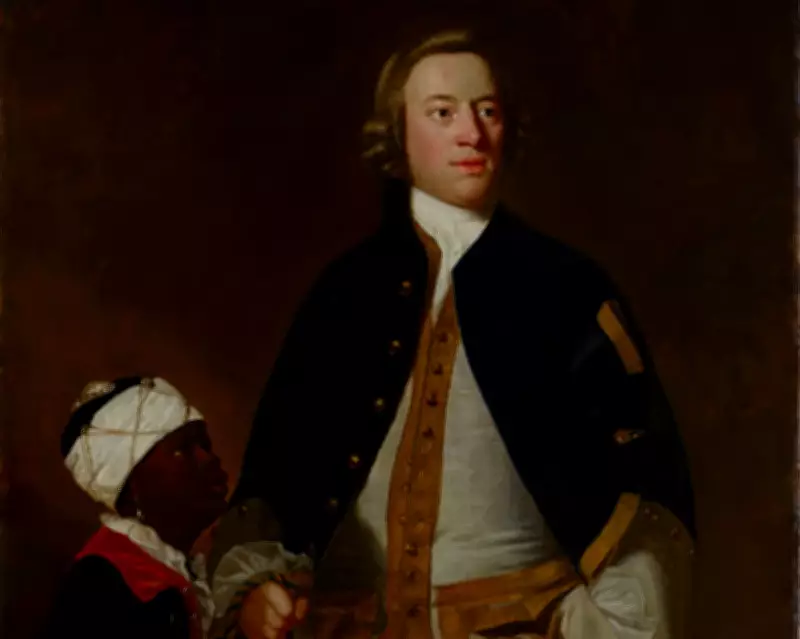
The painting, completed around 1748, depicts the boy alongside his "master," naval officer and MP Paul Henry Ourry. While Ourry gazes authoritatively into the distance, the child looks up tentatively. The artwork hangs in the saloon at Saltram, a National Trust Georgian mansion in Plympton, Devon, titled Lieutenant, later Captain, Paul Henry Ourry, MP (1719-1783) with an enslaved child known as "Jersey" (dates unknown).
Research Uncovers New Details
Mark Brayshay, a volunteer researcher at Saltram, and Katherine Gazzard, a curator at Royal Museums Greenwich, delved into admiralty records, letters, muster books, and captains' logs. They found Jersey listed as "Boston Jersey" on ships where Ourry served. His surname likely derived from Ourry's birthplace in the Channel Islands, while his first name may reference a prior residence in Boston, Massachusetts.
Further discoveries included a baptismal record on July 30, 1752, probably in a Westminster chapel, where he was christened George Walker—possibly an earlier name. The certificate describes "A Certain Black Boy Called Boston Jersey Baptised by the name of George Walker aged fifteen," indicating he was about 11 when Reynolds painted him.
Naval Service and Possible Freedom
A 1751 muster list appears to classify Jersey as a crew member rather than Ourry's servant. Brayshay noted, "Later, his name appears as one of 10 crew members due for discharge 'per paybook.' This could imply that Jersey was in receipt of Royal Navy pay, but it is also possible that the sums owing actually went to Ourry."
Jersey was discharged from another ship in summer 1753 and then vanished from records. Theories include being sold or granted freedom to join another vessel. Historian David Olusoga commented, "This project asks us to look more closely at a familiar past, revealing a life long obscured."
Technical Analysis of the Portrait
New examinations of the painting revealed Reynolds' initial plan for an elaborate natural setting, later replaced by a plain brown background. Restoration removed old varnish and non-original paint, using reversible inpainting to preserve original materials. Zoe Shearman, Saltram's property curator, said, "Jersey's sensitively painted facial features are revealed more sharply, as are the beautiful details on his clothing."
Exhibition Details
The painting will be displayed from May 9 in Saltram's saloon alongside a companion Reynolds portrait, Captain the Honourable George Edgcumbe, 1720-95, until November 1. This marks the first time in two centuries the two artworks are shown together, both commissioned by the Corporation of Plympton. The Edgcumbe portrait features HMS Salisbury—where Ourry and Jersey served—in the distance.
This research not only illuminates Jersey's life but also challenges historical silences, recognizing individuals often rendered invisible.