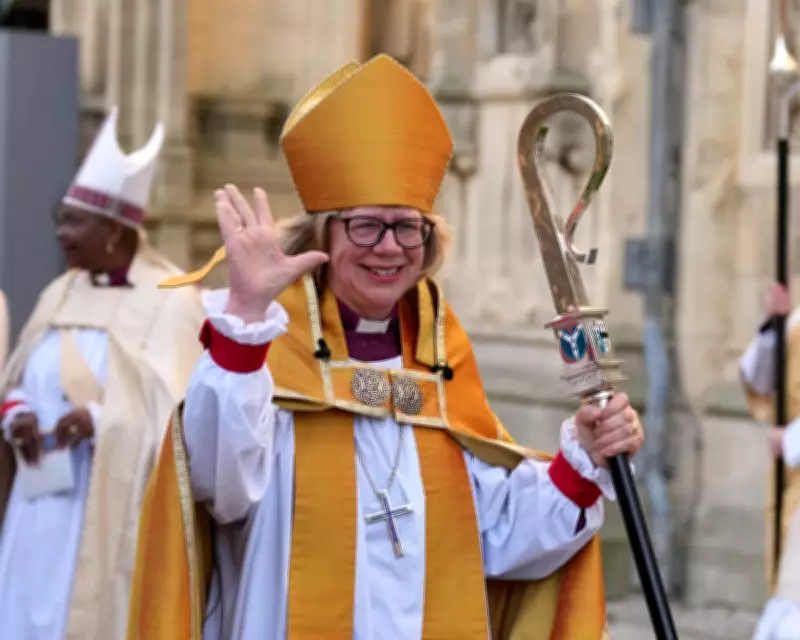
In a historic ceremony at Canterbury Cathedral, Sarah Mullally was formally installed as the new Archbishop of Canterbury, becoming the first woman to hold the position as spiritual head of the Church of England. During her inaugural sermon, Mullally directly addressed the profound pain experienced by victims and survivors of abuse within church communities, marking a significant moment of acknowledgment and commitment to change.
A Historic Installation with Solemn Acknowledgments
The grand installation ceremony, traditionally called an enthronement, saw Mullally officially become the de facto leader of the Church of England and the global Anglican communion spanning 165 countries with approximately 85 million members. Among the 2,000 distinguished guests were the Prince and Princess of Wales representing King Charles, Prime Minister Keir Starmer, and Opposition Leader Kemi Badenoch, alongside representatives from Anglican provinces worldwide and ecumenical partners including Roman Catholic, Eastern Orthodox, and Coptic Orthodox churches.
Addressing Institutional Failures
In her powerful first sermon, Mullally emphasized that the church must not overlook or minimize the suffering of those harmed through actions, inactions, and failures within Christian communities. "Today and every day, we hold victims and survivors in our hearts and in our prayers," she declared, adding that the institution must remain "committed to truth, compassion, justice and action." This acknowledgment comes following criticism of her predecessor Justin Welby, who resigned after facing scrutiny for his handling of allegations against John Smyth, one of the church's most prolific abusers.
The 64-year-old former nurse, who celebrates her birthday this Thursday, made history through her appointment. Reflecting her background in healthcare, Mullally invited nurses and carers from Canterbury hospitals and hospices to attend the ceremony. Instead of traditional ceremonial robes, she wore the silver buckle from her nurse's belt as a symbolic connection to her previous vocation.
Ceremonial Rituals and Symbolic Moments
The installation service occurred on the Feast of the Annunciation, commemorating when the Virgin Mary learned she would bear the son of God. This followed Mullally's six-day pilgrimage on foot from St. Paul's Cathedral in London to Canterbury, during which she reported that "my heart and spirits were lifted immeasurably by the people young and old we encountered, even though my aching feet and limbs tell a different story."
Ancient Traditions and Modern Inclusions
The ceremony began with elaborate processions of bishops, senior clergy, church officials, and global representatives, followed by the reading of a mandate from King Charles instructing the installation to proceed. In keeping with ancient ritual, Mullally used her pastoral staff to knock three times on the cathedral's great west door. When local schoolchildren asked "Who are you and why do you request entry?" she responded: "I am Sarah, a servant of Jesus Christ, and I come as one seeking the grace of God, to travel with you in his service together."
Women played prominent roles throughout the 90-minute service, with Mullally hugging female representatives after signing an ecumenical document witnessed by leaders from other churches. The solemnity was punctuated by vibrant musical performances from the mainly-female African Choir of Norfolk, who sang in Swahili, while readings and prayers were delivered in multiple languages including Urdu, Spanish, and Bemba.
Formal Installation and Future Commitments
Mullally was led to the 13th-century Chair of St. Augustine, positioned near the shrine of murdered 12th-century Archbishop Thomas Becket in the cathedral's Trinity chapel. After being formally installed as Primate of All England by the cathedral's dean, the congregation applauded as Mullally appeared visibly moved. Attendees were invited to contribute to a collection supporting the cathedral's maintenance, which costs £30,000 daily.
Reflections on Historic Significance
In a BBC interview marking her installation, Mullally reflected on her historic appointment: "Once I try and get my head round being the archbishop, I recognize the significance of being the first female archbishop, but I am also aware of the women who have supported me in my ministry, and also the men as well." She noted that the service deliberately featured "women's voices right the way through it, so there's something about celebrating women, but also being able to say to other people, in a sense, it's entirely possible for you to follow your dreams and what you want to do."
Regarding safeguarding and accountability, Mullally emphasized that "light should be shone" on the church's actions, stating that "the more senior we are, the more light should be shone." This commitment to transparency and justice represents a significant shift in addressing past failures while charting a new course for the Church of England under its first female spiritual leader.