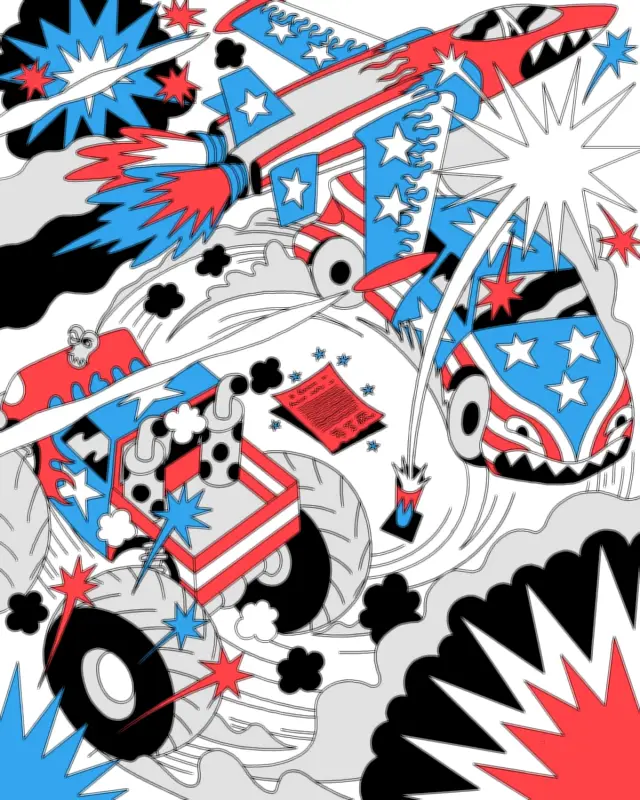
The United States is marking its 250th birthday with ear-splitting pyrotechnics, fighter jet flyovers, and a planned Indy car race on the National Mall, but the Declaration of Independence—the document that launched the nation—has been curiously absent from the lead-up celebrations. Ted Widmer, author of The Living Declaration: A Biography of America's Founding Text, argues that the declaration's timeless language on equality, rights, and consent of the governed remains as potent as ever, serving as a check on government overreach and a beacon for change.
A Document of Revolutionary Ideas
Written over a few weeks in the summer of 1776 by Thomas Jefferson and edited by the Continental Congress, the Declaration of Independence was a revolutionary argument. It listed 27 grievances against King George III, who was described as “unfit to be the ruler of a free people” with the character of “a Tyrant.” The declaration's bold claim that “all men are created equal” and its assertion that governments derive their just powers from the consent of the governed marked a radical departure from the top-down power structures of other nations.
John Adams called it a “revolution,” meaning an intellectual sea change, not merely a war. The document's language has been repurposed by various movements throughout history, from abolitionists and women's suffragists to labor leaders and civil rights activists. Abraham Lincoln described the declaration as an “electric cord” tying Americans together, a “beacon” to guide them, and a “fountain” to drink from.
Declaration's Enduring Impact Through History
Black leaders like Lemuel Haynes and James Forten cited the declaration to argue for a better version of the United States. In 1848, the Seneca Falls convention drafted a version reading “all men and women are created equal.” During the Civil War, both sides claimed the declaration's authority—Jefferson Davis for secession, Abraham Lincoln for human equality. Lincoln's Gettysburg Address returned to the declaration's themes, suggesting its unfinished “propositions” were finally becoming real for all Americans.
The 13th, 14th, and 15th amendments fortified Lincoln's argument, giving the declaration nearly unassailable legal standing. The 14th amendment begins with the word “all,” affirming birthright citizenship. In the 20th century, Franklin D. Roosevelt used the declaration to frame the “four freedoms” during World War II, and Martin Luther King Jr. called it a “promissory note” that had turned into a “bad check” in his 1963 March on Washington speech.
Declaration's Role in Modern Politics
Conservatives have also claimed the declaration's legacy. Presidents Theodore Roosevelt and Calvin Coolidge delivered speeches translating its words into paeans to patriotism and free enterprise. The anti-abortion movement has gravitated toward “life, liberty and the pursuit of happiness,” and the Tea Party movement drafted a 2010 version attacking “the tyranny of government.” On January 6, 2021, some rioters claimed it was “1776” all over again.
Ronald Reagan, in 1986, gave two speeches—one celebrating an inclusive America at the Statue of Liberty's centennial, and another warning that “the only permanent danger to the hope that is America, comes from within.” Barack Obama cited the declaration in a 2015 Rose Garden speech on marriage equality.
The 250th Celebration: Noise Without Substance?
Widmer notes that the 250th celebrations—including a 250-foot arch in Washington and a $1.776 billion slush fund—fit into a category of “history” that is actually anti-historical. He draws a parallel to Edward Gibbon's History of the Decline and Fall of the Roman Empire, which described Romans desecrating their ancestors' memory by repurposing stones for private villas. John Adams predicted that future governments might destroy records they found uncomfortable, but Lincoln understood that the declaration has a power all its own, not easily erased.
As Widmer concludes, “It remains alive, and a fountain that we can return to when thirsty. Far from a relic, it's a document that unscrolls a little more for each generation, as a perpetual ‘rebuke and stumbling-block' to tyranny.” He urges Americans to heed King's words: “Be true to what you said on paper.”