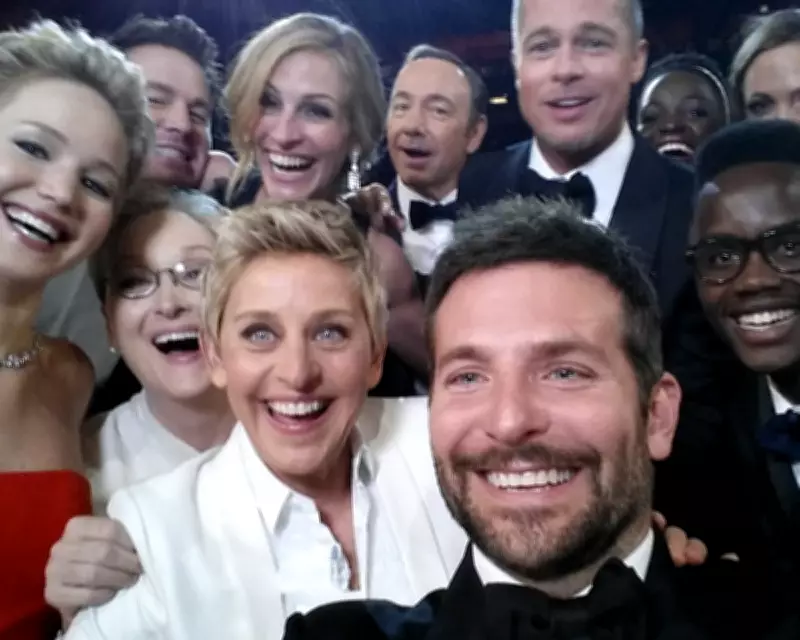
At the 2014 Academy Awards, a single photograph captured a defining moment in popular culture. Bradley Cooper, nominated for best supporting actor, held the camera for a selfie that featured an array of A-list celebrities, including Jennifer Lawrence, Channing Tatum, Meryl Streep, Ellen DeGeneres, Julia Roberts, Kevin Spacey, Brad Pitt, Lupita Nyong’o, Junior Nyong’o, and Angelina Jolie. This image, posted on DeGeneres' Twitter account, quickly became the most retweeted tweet of its time, symbolizing a shared cultural experience that now seems increasingly rare.
The Peak of Monoculture
In 2014, the Oscars television audience reached 43.74 million viewers in the United States, a figure that has since plummeted to approximately 18 million. This decline is not merely about ratings; it reflects a broader shift in how we consume media. The Oscars selfie arrived at a pivotal juncture when social media platforms were gaining dominance, yet broadcast audiences for major events remained robust. It represented what many cultural analysts call the "peak of monoculture"—a time when a single cultural moment could captivate millions simultaneously.
The Fragmentation of Pop Culture
Following 2014, the media landscape underwent a dramatic transformation. The explosion of streaming services like Netflix, which released 597 new originals in a single recent year, alongside platforms such as Disney+, Apple TV, Prime Video, and HBO, has diversified entertainment options. Additionally, the rise of YouTube and TikTok has personalized content consumption, leading to algorithmic scrolling that tailors experiences to individual preferences.

The COVID-19 pandemic in the 2020s further accelerated this fragmentation by reducing shared physical and media spaces. As a result, popular culture has shattered into countless pieces, akin to a delicate vase dropped from a great height. The days of 40 million viewers tuning into an awards ceremony and collectively sharing a star-studded selfie are likely gone, replaced by isolated digital bubbles.
Implications for Shared Experiences
This shift raises questions about the future of communal cultural moments. Without widespread events like the Oscars selfie, what remains to discuss at social gatherings? The water cooler conversations of yesteryear, centered on universal TV shows or viral tweets, are giving way to niche interests and personalized content feeds.
In essence, the Oscars selfie of 2014 serves as a poignant reminder of a bygone era. It was a fleeting instance where celebrity, technology, and mass media converged to create a shared spectacle. Today, as we navigate an era of endless choice and algorithmic curation, that moment stands as both a celebration and a farewell to monoculture.