A new film starring Jude Law as Vladimir Putin has sparked analysis for how closely its narrative aligns with the mythologised version of the Russian leader long promoted by the Kremlin's propaganda machine.
The Cinematic Construction of a 'Reluctant' Leader
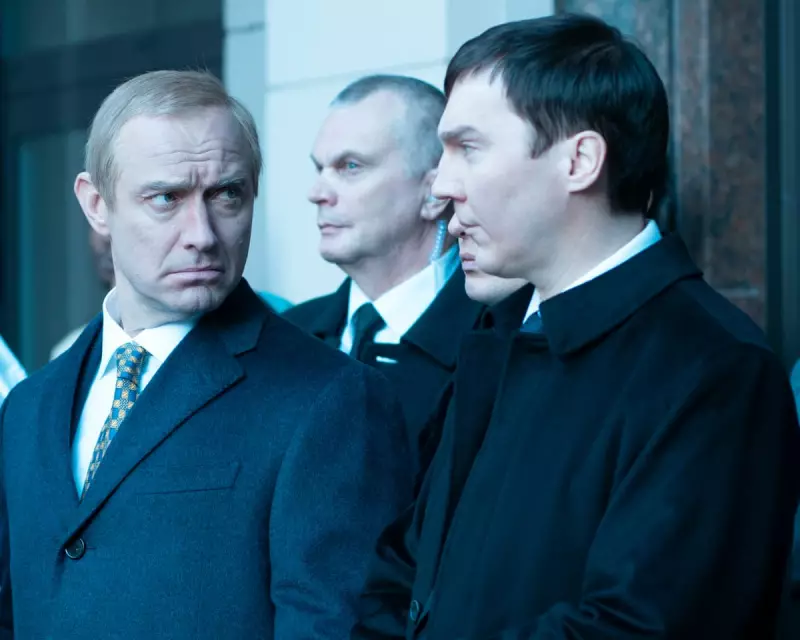
In The Wizard of the Kremlin, directed by French filmmaker Olivier Assayas and based on Giuliano da Empoli's novel, Jude Law portrays Russia's president as a cool, strategic figure. The film suggests Putin was chosen for the role because he was "young, athletic and a spy", with oligarch Boris Berezovsky and spin doctor Vadim Baranov (played by Paul Dano) effectively begging him to take the job. Putin is depicted as a reluctant leader who prefers to wield power from the shadows.
This portrayal, however, is a creation far removed from historical reality. According to exiled Russian journalist Natasha Kiseleva and experts like journalist Roman Badanin, no such dramatic recruitment ever occurred. The presidency was a calculated selection process, not a destiny-driven summons.

The Reality Behind the Rise: A 'Manageable' Candidate
In the late 1990s, the group known as 'The Family', which included Berezovsky, Boris Yeltsin's relatives, and key aides, sought a successor they could control. Their priority was self-preservation and protecting their interests from potential legal repercussions.
Roman Badanin, author of The Tsar Himself, explains that Putin simply fitted the specific parameters. "Berezovsky was a political animal and wanted someone the public would understand, preferably from the security services," Badanin states. The candidate could not be a communist or a liberal perceived as too pro-Western. Putin, a loyal state servant with a low public profile, was perfect.
Property developer Shalva Chigirinsky, a close friend of Berezovsky, corroborates this. He recalls questioning the choice in the summer of 1999, noting Putin's lack of political charisma. Berezovsky allegedly explained they did not need a strong leader, but a controllable one who would follow instructions and not turn on his patrons.
Retrospective Myth-Making: From Clerk to 'Russian James Bond'
Both Badanin and Chigirinsky agree that the powerful image of Putin as a formidable KGB spy was constructed after his rise to power. His actual KGB service in Dresden from 1985 to 1990 involved paperwork and technical tasks, not high-stakes espionage. "He handled paperwork and technical tasks, not operations. In essence, he was a low-level clerk," Badanin clarifies.
The reframing of Putin as a spy akin to James Bond may have been partly triggered by the casting of Daniel Craig as 007. His harder, minimalist style prompted Russian media and online audiences to draw visual parallels with Putin. By 2011, mashup posters replacing Craig's face with Putin's on Casino Royale artwork appeared on Moscow streets, further feeding this manufactured narrative.
This myth-making is mirrored in recent Russian productions like Andrei Konchalovsky's TV series Chronicles of the Russian Revolution, which features a blue-eyed secret service lieutenant colonel who saves Russia from chaos—a clear, if fictionalised, nod to the Putin origin story.
Western Portrayals and Unintended Reinforcement
While Assayas's film aims to critique the Putin system by focusing on the political machinery and the spin doctor Baranov (based on Vladislav Surkov), its portrayal of Putin himself risks reinforcing the Kremlin's preferred narrative. The film, released in French and Spanish cinemas, shows none of the mass protests, opposition figures, or Alexei Navalny, despite covering events up to 2019—an omission that serves the Russian state's interests.
Jude Law's casting is particularly significant given his popularity with Russian audiences across generations. The Kremlin may frame his involvement as a minor diplomatic triumph. In Russia, Putin is often an omnipotent, off-screen presence in film and TV, signified by portraits or phone calls "from above". In Assayas's film, he finally acquires a face—one that, critics argue, bears a striking resemblance to the myth, not the man.