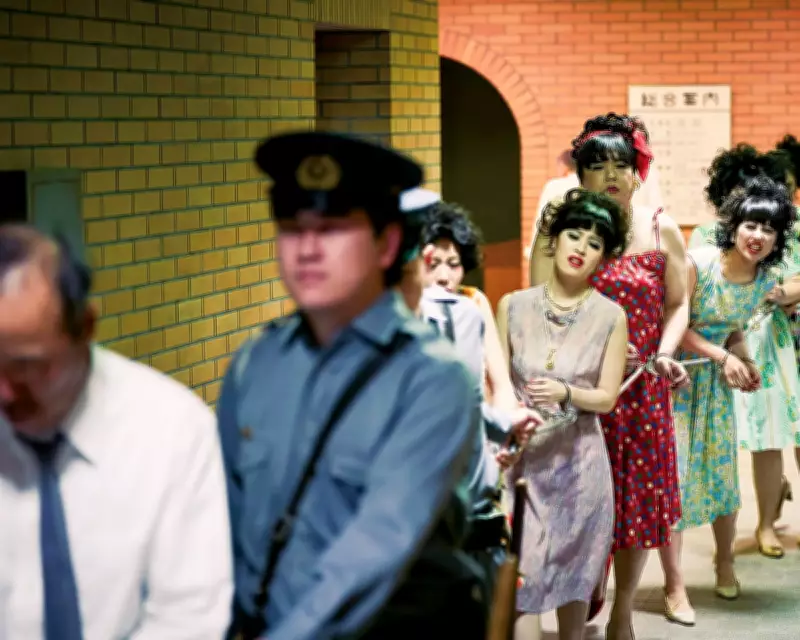
Blue Boy Trial Film Revives Japan's Transgender History and Sparks Cultural Dialogue
Kasho Iizuka's groundbreaking feature film Blue Boy Trial has emerged as a landmark work in Japanese cinema, casting transgender actors to revisit a notorious 1965 legal case that shaped transgender rights in Japan for decades. The film represents a significant step forward in authentic representation and historical awareness within Japan's commercial film industry.
The Historical Context Behind the Film
The original Blue Boy trial centered on a doctor prosecuted for performing gender reassignment surgery on transgender women during a period when law enforcement struggled to prosecute female-presenting transgender sex workers due to their legal male status. The doctor was convicted of violating Japan's eugenics laws, which prohibited surgeries resulting in sterilization if deemed non-essential.
"Blue Boy" was a slang term for transgender individuals assigned male at birth, and the 1965 verdict effectively outlawed gender reassignment surgery in Japan until 1998. Despite this restrictive outcome, the case significantly raised the domestic profile of transgender people and their struggles.

Iizuka's Personal Connection and Creative Vision
"The trial has slipped into obscurity in Japan, but I've known about it since I first became aware of my identity," explains Iizuka, a transgender man and one of very few queer filmmakers working in Japan's commercial film industry. "These days in Japan you can hear the term LGBTQ in everyday conversation. Back in the 60s, when no such terms were used, there were still people who bravely lived openly queer lives. I felt that present-day Japanese people ought to know that these people existed."
Iizuka made his feature film debut in 2011 but initially struggled to secure support for transgender stories. Later in the decade, films about transgender individuals became somewhat trendy, with works like Naoko Ogigami's Close-Knit and Eiji Uchida's Midnight Swan bringing attention to trans issues. However, Iizuka notes problems with this trend: "Transgender tragedy was used as entertainment, and their existence was depicted in a one-dimensional, othered way."
Authentic Representation and Historical Research
Unlike previous Japanese films that cast cisgender men in transfeminine roles, Blue Boy Trial features transgender actors—many non-professional—in transgender roles and seeks to represent a broad spectrum of experiences. "The characters are equally inspired by present-day transgender women and those of the 1960s," says Iizuka.
The filmmaker faced challenges with limited archival material, turning instead to weekly magazines and newspapers to understand the era's characters. "As I researched, I found that transgender women of the 1960s had similarly varied attitudes towards their own identities. Some were open; some treated their trans identity as a secret," he explains.
Iizuka observed significant differences in how transgender women navigated society across eras: "Transgender women in 1960s Japan tended to overexpress their femininity to be accepted as women. But it was important to us to emphasise the commonality between then and now."
Exploring Opposition and Historical Context
Iizuka and his co-writers grew equally interested in those opposed to transgender people, with deeper research pointing to Japan's wartime experience as a potential reason for backlash. "Men should be men, and strong—they internalised these values," says Iizuka. "I don't think the blame lies with the individual, I think it was a wider problem."
Cultural Momentum and Legal Progress
The film arrives during a period of significant cultural momentum for transgender representation in Japan. A biopic of transgender TV personality Ai Haruna, This Is I, is currently streaming on Netflix, with director Yusaku Matsumoto consulting queer voices for sensitivity and accuracy. "I do think this is a wave," says Iizuka. "I've received proposals for new projects that would cast transgender actors. There's momentum."

This cultural shift coincides with domestic advances in transgender rights. In 2023, Japan's supreme court deemed mandatory sterilization for trans-identifying individuals unconstitutional—a milestone decision. However, Iizuka notes ongoing challenges: "The 2023 rulings were milestones for the transgender community, but we've faced a backlash. There have been fears around how we maintain safety for women's spaces, and there are difficulties around changing gender markers on family registers. We're in a transitional phase."
Looking Toward the Future
Distributed by major studio Nikkatsu, Blue Boy Trial represents a landmark achievement in Japanese cinema. Iizuka sees the film as his personal contribution to social change: "Blue Boy Trial is my gesture as a transgender artist. I hope this film will help society change in a positive direction."
The film is currently touring the United Kingdom as part of the Japan Foundation touring film programme, with screenings scheduled through March 26, bringing this important chapter of Japanese transgender history to international audiences.