This week's art roundup spans from the battle against fascism in the 1930s to the horrors of the Khmer Rouge, with stops for early Netherlandish drawings, vibrant floral paintings, and a mesmerizing nude portrait.
Exhibition of the Week: Comrades in Art: Artists Against Fascism
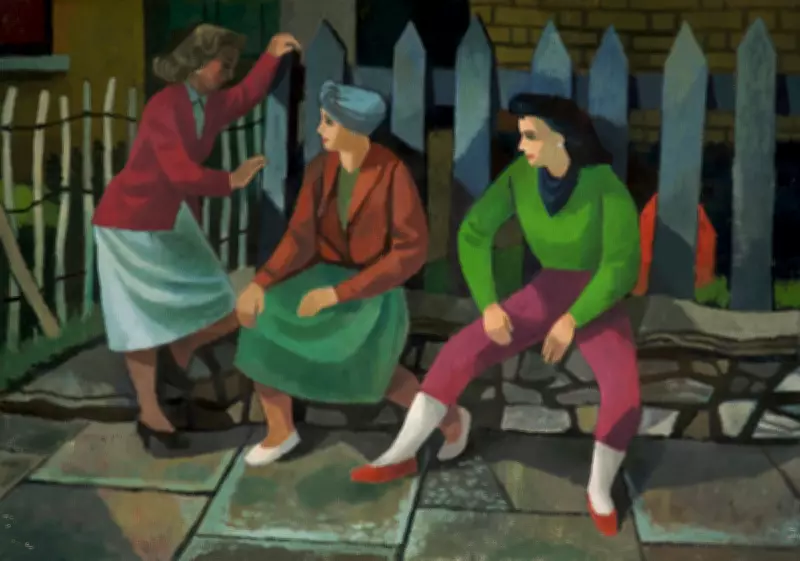
In the 1930s, as Europe descended into extremism, artists, poets, and intellectuals united to resist fascism. This exhibition at Towner Eastbourne (until 18 October) draws on a recent book about the Artists International Association (AIA), revealing how creativity became a weapon against tyranny.
Also Showing
- Hidden: Photography and Displacement Under the Khmer Rouge – A photographic story of survival and memory preservation under the Khmer Rouge, by Charles Fox and Prum Sisaphantha (Pantha). The Wiener Holocaust Library, London, until 15 May.
- Early Netherlandish Drawings – Newly attributed drawings from the workshop of 15th-century master Rogier van der Weyden highlight this collection of northern Renaissance wonders. British Museum, London, until 20 September.
- Katharina Grosse: I Set Out, I Walked Fast – Sprawling Technicolor installations and paintings by the German artist. White Cube, London, until 31 May.
- Handpicked: Painting Flowers from 1900 to Today – A celebration of the flower in modern art featuring Vanessa Bell, Henri Rousseau, and others. Kettle’s Yard, Cambridge, until 6 September.
Image of the Week
Sylvia Sleigh’s The Bridge (Johanna Lawrenson) (1963) is a mesmerizing portrait of an elegant brunette with enviably long legs, inspired by Sleeping Venus. Sleigh painted friends, critics, and strangers she found interesting and attractive. A new show brings together seven of her beautiful subjects.

What We Learned
- From a new pier to 1.3 tonnes of hotel bed linen, Lydia Ourahmane’s work speaks of Venice itself.
- Ukraine’s defiant origami deer has made it to the Venice Biennale.
- The mystery sitter in a Holbein portrait might be Anne Boleyn.
- Gagosian London will create a lost “cloud” by Christo.
- Multisensory installations could make original artworks less exciting for children.
- “Politics of hate” should exclude the US from Venice Biennale, says Anish Kapoor.
- A stained-glass treasure by Edward Burne-Jones and William Morris has been restored.
- An anarchist illustrator drew Spain’s civil war from the frontline.
- One of the last residents of Gaudí’s masterpiece Casa Milà is “used to all the visitors”.
- Venice Biennale artist Lubaina Himid is not feeling very establishment.
- Photographer Eric Lusito has been on a scientific journey through space and time.
Masterpiece of the Week
Christ Carried to the Tomb by Sisto Badalocchio (after 1609) is a tiny painting on copper. The dead body of Christ has a silvery shine like the full moon, a terrible pallor that dominates the scene. The hard metal surface intensifies the stark narrative: Christ’s followers carry his corpse to be buried by dead of night. This intimate image invites contemplation of mortality with pity and love. National Gallery, London.