London Fashion Week Makes Historic Move with First Official Ramadan Integration
For the first time in its storied history, London Fashion Week has officially incorporated Ramadan and the sacred act of fast-breaking into its programming, according to an announcement from the British Fashion Council. This groundbreaking moment unfolded during British-Yemeni designer Kazna Asker's presentation, which deliberately paused at sunset to share iftar with models, staff, and guests.
A Deliberate Pause in Fashion's Fast-Paced World
The 29-year-old designer, speaking from her London studio, explained that she intentionally built her collection around the themes and rhythms of Ramadan. "As soon as I discovered that fashion week would coincide with this period, I knew I had to incorporate it," Asker stated. Her presentation, titled Hour of the Sunset, centered on what she describes as the "energy-shifting" moment when Muslims break their daily fast from dawn to dusk during the ninth month of the Islamic calendar.
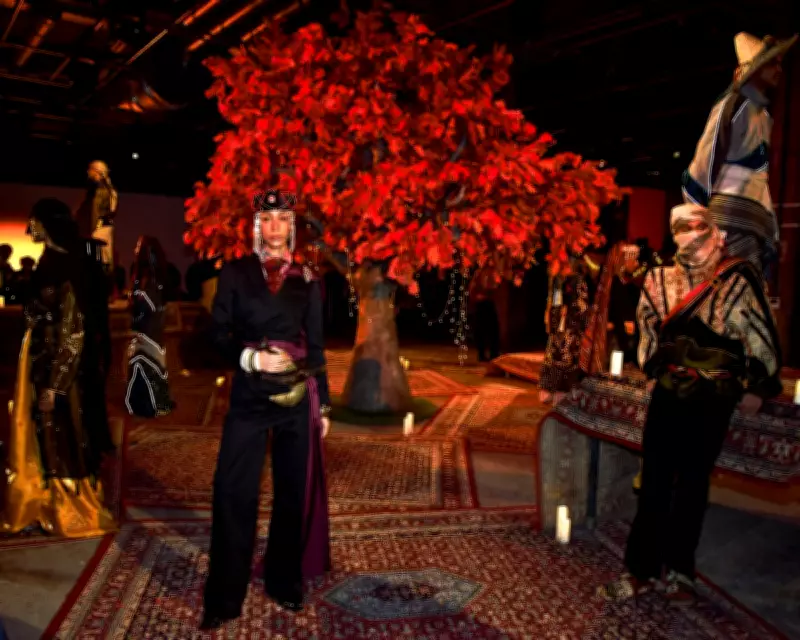
Programming this meaningful pause into one of the fashion industry's most tightly scheduled weeks was a deliberate act of cultural integration. Asker transformed the British Fashion Council's NewGen space—a platform designed to spotlight emerging British talent—into a traditional majlis, or Arab living room. Guests sat on floor cushions inspired by her grandmother's lounge in Yemen, where communal meals are traditionally shared on the floor.
Cultural Celebration Through Fashion and Community
Halfway through the showcase, the instrumental Arab soundtrack softened, lights dimmed, and woven baskets containing dates and water circulated through the room. Sudanese-Australian writer Yassmin Abdel-Magied addressed attendees, reading Mary Oliver's poem The Sun followed by a supplication marking the breaking of the fast. Models descended from Persian-carpeted platforms to join the iftar meal, which featured Iraqi dishes from Juma Kitchen and Palestinian dates.
"It's going to be wholesome celebrating together," Asker remarked before the presentation. Guest Naailah Khalifa echoed this sentiment, noting: "It's refreshing to be in spaces like this without feeling 'othered.' This gives me hope that work like hers is happening and that Muslims and people of color aren't lost in the background."
Fashion That Challenges Traditions and Boundaries
Models rotated across platforms wearing garments that masterfully blended tailored pieces with futuristic silhouettes and traditional Yemeni dress. Gold coin headpieces and face coverings framed the models, while henna-inspired body art by the collective HuqThat traced sun motifs across their skin. Asker intentionally disrupted traditional gender codes, placing a jambiya—the Yemeni dagger belt historically reserved for men—on a female model wearing a structured power suit.
"We decided to put the jambiya on a woman to showcase the power of Muslim women," Asker explained. Meanwhile, a male model's imamah headwrap featured sunset-colored flowers inspired by tribes along the Yemeni-Saudi border where grooms traditionally adorn their headwear.
From Sheffield to Global Recognition
As a Central Saint Martins student, Asker made history by sending hijabi models down the runway during the 2022 MA showcase—a moment shaped by her childhood in Sheffield where she rarely saw modest fashion represented "in a cool way." Her research took her across Egypt, Oman, Qatar, Zimbabwe, and India, observing how Yemeni communities reinterpret tradition across borders. Fabrics were sourced from a Yemeni market in Egypt, with her grandmother, father, and uncle contributing additional materials.
"Almost everywhere I traveled, I found a Yemeni community," Asker observed. "You witness how the country they're in inspires and interprets their culture."
A Legacy of Community and Cultural Exchange
The showcase marked both the conclusion of the day and Asker's participation in the British Fashion Council's NewGen initiative. "It's the end of the day and the end of this chapter in my life," she reflected. "I accomplished everything I wanted without regrets." At the center of the room stood an orange tree, referencing the Persian folklore tale The Man Who Planted Trees, which Asker saw as an allegory for her work: planting seeds for future generations of designers.
British Fashion Council CEO Laura Weir emphasized that "London Fashion Week isn't a single-format showcase. It's a cultural platform designed to support how designers choose to express themselves today." Asker, aware she might be framed as a political designer, maintains that "if you believe in community, then you should believe in politics." Her guiding principle remains simple yet profound: "Build sideways, not upwards."
"My community already understands the spirit of Ramadan," Asker concluded. "So it's a blessing to invite those unfamiliar with it. I hope they become immersed in what we feel." This historic presentation not only broke new ground in fashion week programming but also created a powerful space for cultural celebration and understanding within one of the world's most influential fashion capitals.