Australia's Fashion Brain Drain: A Deep Dive into Talent Exodus
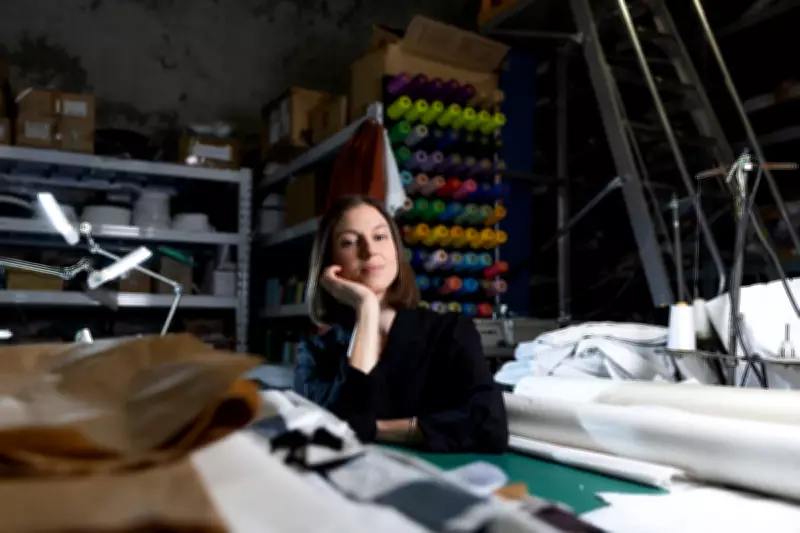
Australia's fashion industry faces a stark reality: it produces world-class designers but often loses them to international markets. Natalia Grzybowski, creative director at swim and resort brand Bondi Born, asserts, "[Australia] can have a fantastic industry, so I'm always going to encourage people to stay." However, data shows a significant brain drain, with only three out of 19 Australian Fashion Foundation (AFF) scholarship winners between 2009 and 2019 holding design roles in local businesses.
The International Pull: Why Designers Seek Opportunities Abroad
Vlad Kanevsky, a senior designer at Thom Browne in New York, exemplifies this trend. He notes that while studying in Melbourne, international runway shows seemed like a "fever dream," but now, "things that didn't seem possible in Australia have become a reality." Kanevsky highlights geographic isolation and limited career options as key factors, stating, "I love Australia, but being so geographically far away and isolated, there aren't that many career options, which is why I haven't considered returning yet."
The AFF scholarship, established in 2009 by Australians Malcolm Carfrae and Julie Anne Quay, offers $20,000 and internships at luxury fashion houses, initially in New York and later expanding to Europe. Carfrae explains, "The philosophy of the foundation is to help young Australians gain world-class, hands-on international experience. It serves to further expand and enrich the future of Australian fashion." Yet, analysis reveals that nine of the 19 winners still work in fashion capitals like New York, Paris, London, or Milan.
Challenges in the Local Industry: Jobs and Manufacturing
Carfrae attributes the low return rate to job scarcity. The Australian Fashion Council estimates 364,000 people are employed in Australia's $27.2 billion fashion industry, but Jobs and Skills Australia data suggests only about 3,700, or roughly 1%, are designers. Additionally, manufacturing capacity has dwindled, with only 3% of garments sold in Australia made onshore. Talisa Trantino, a 2013 scholarship winner now based in Paris, expresses conflict: "It's such a conflict of mine because I love Australia but leaving now feels like turning your back on something you've worked so hard to build. I don't know if there is an opportunity that could excite me enough to bring me home."
Trantino points to differences in artisanal capabilities, questioning if Australia can match the "really fine-tuning craft into products" seen in European luxury houses. In response, the Australian Fashion Council launched a 10-year manufacturing strategy on 12 March aimed at rebuilding the sector.
Optimism and Innovation: Those Who Stay and Return
Despite challenges, some designers find creativity in constraints. Natalia Grzybowski, who built her career in Australia after winning a scholarship in 2011, says, "Working within constraints requires a different type of creativity." She emphasizes, "There is opportunity here. I partly stayed because I wanted to create that for other people. If everyone leaves, you don't have anyone here."
Georgia Lazzaro, the first AFF winner, returned to a design role at Matteau in Sydney after 15 years in New York. She notes, "It's really exciting to come back," and praises the local industry's "sense of pride." However, others face hurdles. Set designer Athanasia Spathis, who worked with brands like Louis Vuitton and Dior in Europe, describes her Australian work as "diluted both financially and creatively," citing smaller budgets and less collaboration.
Balancing Global and Local: The Future of Australian Fashion
Jewellery designer Seb Brown, who founded his business in Melbourne in 2009, opened an arm in Paris in June 2024 to access global buyers and media. He observes, "In Australia, there is just sort of this get up and go, let's give it a crack attitude," but felt a "ceiling" in the local market. Brown adds, "I felt I had to explore outside of Australia to grow and be taken a little more seriously. I guess I'll always have to be travelling back and forth."
Conservative, mid-market retail chains dominate Australia's fashion landscape, impacting creativity. Yet, Brown's experience shows independent designers can benefit from Australia's entrepreneurial spirit while seeking international growth. The industry's future hinges on rebuilding manufacturing and fostering local opportunities, as Grzybowski advocates, to stem the brain drain and cultivate a vibrant, sustainable fashion ecosystem.