Matz Skoog: The Modest Swede Who Transformed British Ballet
Matz Skoog, the former artistic director of English National Ballet who championed contemporary choreography and saved the company from financial collapse, has died of cancer at age 68. His journey from a reluctant ballet student to one of Britain's most influential dance figures spanned five decades across three continents.
From Stockholm to London: An Unlikely Beginning
"I didn't start dancing out of burning desire for it. I did it because I was a well-behaved little boy," Skoog told journalist Ismene Brown in 2022. At just eight years old in Stockholm, his mother suggested he audition for the Royal Swedish Ballet school. Being obedient, he agreed. By age 12, however, "there was never any doubt that I was going to become a dancer."
His mother's instincts proved prescient. Skoog would become a star principal dancer with London Festival Ballet (now English National Ballet) in the 1980s, launching a multifaceted career that included dancing, teaching, directing companies worldwide, and eventually becoming a professional development coach for artists and executives.

Steering English National Ballet Through Crisis
Skoog is perhaps best remembered in the UK for his tenure as artistic director of English National Ballet from 2001 to 2005, a period of significant financial instability when the company's very existence was threatened. The modest, mild-mannered, bespectacled Swede was often contrasted in the press with his more outspoken predecessor, Derek Deane, though Skoog later clarified they were never adversaries.
During his relatively short leadership, Skoog secured crucial rescue funding for the company, though he could not save his own position. Yet his impact on British dance proved lasting and profound.
A Champion of Innovation and Risk-Taking
Upon joining ENB, Skoog immediately advocated for artistic risk-taking and promised to elevate the company's "intellectual game." He demonstrated this commitment by revamping The Nutcracker with designs by satirical cartoonist Gerald Scarfe—a choice some board members found too unconventional.
More significantly, he actively sought out and promoted young choreographers, evidently inheriting his mother's eye for talent. He gave contemporary choreographer Wayne McGregor his first commission for a ballet company with the piece 2Human. McGregor has since become an influential global ballet figure.
Skoog also championed choreographers including Christopher Hampson, later artistic director at Scottish Ballet, and Cathy Marston, currently artistic director at Ballet Zurich. "He took a risk on giving me a very early chance," Marston recalled. "I felt a great trust from him. He was calm, listened to my ideas and supported them."
From Dancer to Director to Coach
Before his directorial career, Skoog was celebrated as a fine dancer. The Financial Times described him as "a valuable acquisition" when he joined London Festival Ballet in 1979 from Royal Swedish Ballet. He humorously noted that his relatively short stature among tall Swedes limited his chances for leading male roles at home, prompting his move abroad.
With strong classical technique, clean high jumps, and charismatic stage presence, he quickly rose to principal dancer. He secured coveted leading roles, including in Rudolf Nureyev's production of Romeo & Juliet. While dancing Prince Siegfried in Swan Lake, he met his future wife, Amanda Price, a New Zealand dancer new to London performing in the corps de ballet.
"He was the star and I was the swan in the back row and everybody said it would never work," Price told the NZ Listener in 2006. Yet it did—they married in 1991. Price later pursued a successful career in arts administration and currently serves as executive director at English National Ballet School.
Artistic Versatility and Legacy
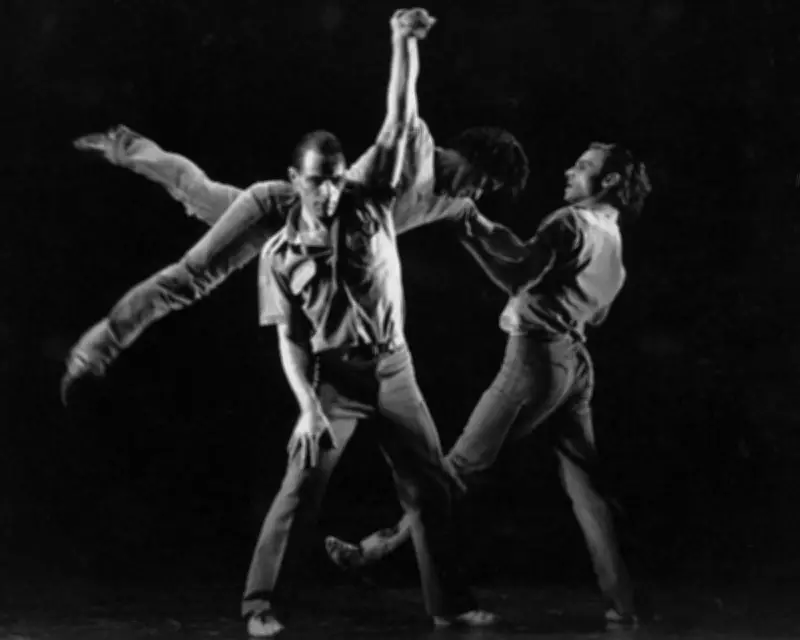
As a dancer, Skoog gravitated toward modern repertoire, which suited his talents perfectly. He originated roles in Glen Tetley's Pulcinella (1984) and memorably in Christopher Bruce's powerful Swansong, portraying one of two quietly menacing guards interrogating a prisoner.

"Matz Skoog had a rare gift," Bruce said. "He was a dancer blessed with a beautiful classical technique alongside an ability to take on contemporary work. He was an instinctive artist who always brought a natural acting ability to a role."
Global Career and Later Years
Born into an artistic Stockholm family in 1957, Skoog's father Nils was a jazz musician and artist, while his mother Jane was an actor and dancer. He had one brother, Pierre. Beyond his Royal Swedish Ballet school training, he spent a year in what was then Leningrad through an unofficial exchange program his parents arranged at the Vaganova school and Kirov theatre.
After dancing with Royal Swedish Ballet from 1973 to 1979, he joined London Festival Ballet until 1989, with one season at the contemporary Nederlands Dans Theatre. He then worked as a freelance dancer, producer, and ballet master across Europe, including a year with Rambert in London.
In 1996, Skoog became artistic director at Royal New Zealand Ballet, revitalizing a company in dire financial straits. He introduced more adventurous choreography and oversaw the company's move to Wellington's St James theatre.
A decade later, he returned to New Zealand when his wife was appointed RNZB's general manager in 2005. He taught at the company while developing his coaching practice, expanding into executive coaching when the family returned to Europe in 2015.
A Gentle Leader Remembered
Reflecting on Skoog's transition to career coaching, Cathy Marston observed: "This was completely in line with the way he had directed, holding the space and drawing out creativity from those he employed rather than dictating particular directions. He was kind, compassionate and gentle in his leadership style, with a deep integrity that felt tangible."
Christopher Bruce fondly recalled creating Swansong with Skoog: "He was a lovely man to work with because we were able to combine a serious approach with a gentle humour. I have to admit there were times at ENB when containment was impossible, but I do treasure those precious moments of wonderful, hysterical laughter and Matz wiping tears from his eyes before finally getting back to work."
Matz Skoog is survived by his wife Amanda, their two sons Sam and Louis, and his brother Pierre. His legacy extends beyond the stages he graced to the countless artists he nurtured and the institutions he preserved through visionary leadership.