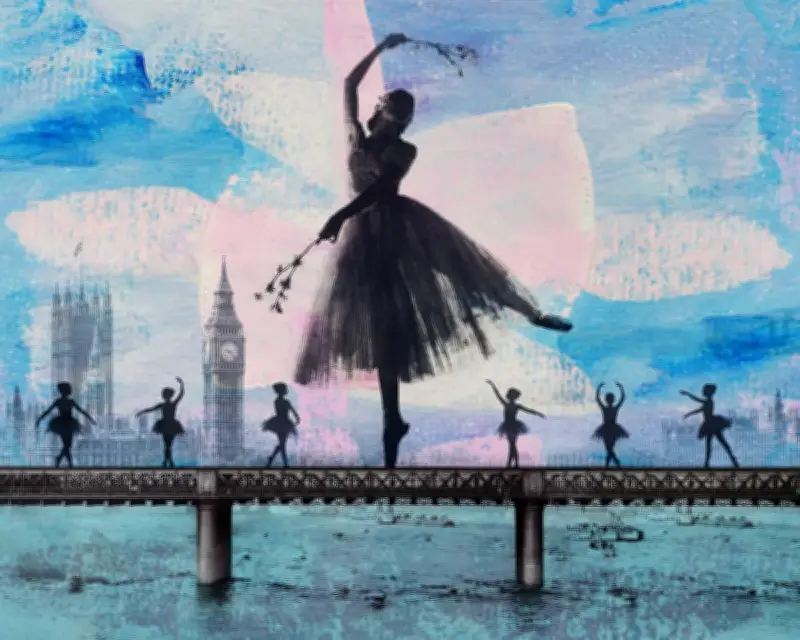
In the early 1960s, a young girl living in suburban London found a new language in ballet. The first time her mother took her to see the London Festival Ballet (now the English National Ballet) at the Royal Festival Hall, she felt a sense of rapture. Watching the dancers, she realized the body could express what words could not. It was like discovering a new language she immediately wanted to speak.
From the balcony to the living room
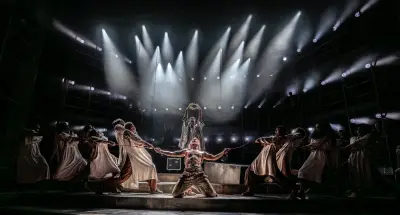
At least twice a year, they travelled by train from Wimbledon to the South Bank. From their usual seats in the balcony, she watched performances of The Nutcracker, Swan Lake, Les Sylphides, and Giselle. She loved the anticipation—the audience's fidgety excitement, the orchestra settling into place, and how out of the darkness came illumination, colour, sound and movement.
Often, when her parents were out, she would play the LP bought for their new record player: An Album of Ballet Melodies by Mantovani and His Orchestra. Hearing the opening bars of Tchaikovsky's Waltz of the Flowers from The Nutcracker, her body responded to the rise and fall of the music. It felt natural, as though she were channelling something that had been inside her, waiting to come out. Dancing alone in the living room, she felt completely herself.

Dance through the decades
As a girl, dancing became a way of expressing her inner world—the restlessness and longing of growing up. She had attended ballet and tap classes when very young, but now enjoyed it with a new sense of autonomy. In her teens, dancing to jazz and rock music in clubs made her feel free. Later, as a mother, she shared that joy with her children at home. In her 50s, she set up a dance group for women over 50, where they could express themselves through movement without feeling self-conscious.
Now in her eighth decade, dance is how she returns to herself. Every couple of weeks, she puts on music and dances alone in her living room, just as she did then. It is one of her greatest pleasures, the best thing she knows for her mind and body.
A lifelong language
Recently, when she started thinking about ballet's lifelong effect on her life, she took out that old LP for the first time in years. The cover—pointed feet in pink ballet shoes—is torn now, but after she set the needle down and heard the first few notes, she responded with the same gestures and movements as always. It was as if she was remembering a language.
Though she no longer leaps or jumps, when she listens and moves to that music, she feels something rise up—like sap in spring, an irrepressible urge towards life. She feels that young girl's energy, twirling, stretching and jumping in her parents' living room, discovering what it means to feel alive in her own body.
Did a cultural moment prompt you to make a major life change? Email us at cultural.awakening@theguardian.com.