Shen Yun Bomb Threat Evacuates Australian Prime Minister, Igniting Cultural Conflict
A bomb threat emailed to the classical Chinese dance and music company Shen Yun has led to the evacuation of Australian Prime Minister Anthony Albanese from the Lodge, directly linking the security incident to opposition against the group's performances. The sender explicitly threatened to detonate explosives if Shen Yun proceeded with its Australian tour, forcing authorities to take immediate action. This event marks the latest in a series of controversies surrounding Shen Yun, but it underscores a far deeper and increasingly consequential struggle over culture, representation, and political voice within the transnational Chinese community.
At its core, this is not merely about a dance performance; it raises profound questions about who holds the authority to represent Chinese culture on the global stage. The bomb threat, although authorities found no evidence connecting it to the Chinese government, illustrates how cultural expressions can rapidly become entangled with national security concerns, transforming artistic venues into geopolitical battlegrounds.
Who is Shen Yun Performing Arts?
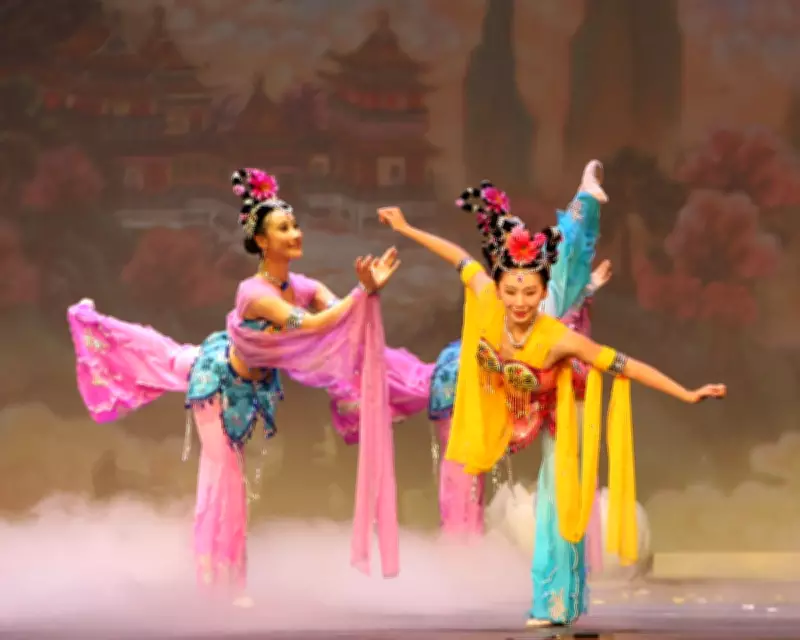
Shen Yun, short for Shen Yun Performing Arts, translates to divine rhythms and was established in 2006 by the Falun Gong spiritual movement. Based in New York and touring globally across 36 countries, the company markets itself as a revival of traditional Chinese culture and pre-communist China. Its productions combine high-production dance, orchestral music, and digital backdrops with narrative elements that often depict the persecution of Falun Gong practitioners in China.
Falun Gong, founded in 1992, is a new religious movement rooted in qigong meditation practices and moral teachings from Buddhism and Daoism. Banned by the Chinese government since 1999 as an illegal organization, it has evolved into a transnational dissident movement with religious, political, and cultural dimensions. Shen Yun serves as one of Falun Gong's key media and culture outreach organizations, alongside The Epoch Times newspaper, and is best understood as a hybrid cultural-political formation.
- It operates as a cultural performance enterprise.
- It functions as a diasporic religious movement.
- It acts as a political messaging vehicle.
- It engages in cultural diplomacy from exile.
Criticism and Geopolitical Tensions
Shen Yun faces significant criticism from officials in the People's Republic of China, who label it an evil religion and a cult with destructive power, accusing it of presenting a distorted version of Chinese culture. Outside China, critics have raised concerns about poor treatment of dancers, including a lawsuit alleging exploitation and forced labor schemes. However, the Chinese government's sensitivity reflects broader strategic worries about cultural soft power.
Since the early 2000s, Beijing has heavily invested in initiatives like Confucius Institutes and state-sponsored media to position itself as the primary custodian of Chinese civilization, aligned with President Xi Jinping's Chinese dream narrative of patriotism and global dominance. Shen Yun disrupts this premise by offering an alternative representation of Chinese culture, one that emphasizes struggle, survival, and resistance rather than state-approved positive energy.
Cultural Diplomacy and a New Geopolitics
Traditionally, cultural diplomacy has been state-led, with nations using ballet companies, orchestras, and cultural institutes to project soft power abroad. Shen Yun inverts this model by operating as a non-state actor that uses dance to advance a narrative directly contesting the Chinese state's definitions. Its performances, staged in elite Western venues with tickets ranging from $100 to $300, are protected under norms of artistic freedom but have become theaters for geopolitical tensions.
The Shen Yun controversy is a symptom of a new geopolitical condition where culture, religion, and political legitimacy are increasingly entangled across borders. In an era of transnational media and diaspora mobilization, cultural performances like classical dance can carry significant political weight. Shen Yun's success relies on its hybridity—blending performing arts, religious outreach, commercial enterprise, and political messaging into a single entity.
This case highlights the fragmentation of cultural sovereignty, with competing actors engaged in ongoing struggles to define authentic Chinese culture. Western cultural venues, and now even political spaces like the Lodge, have emerged as key battlegrounds in this contest, signaling that liberal democracies like Australia may face more such disputes in the future.