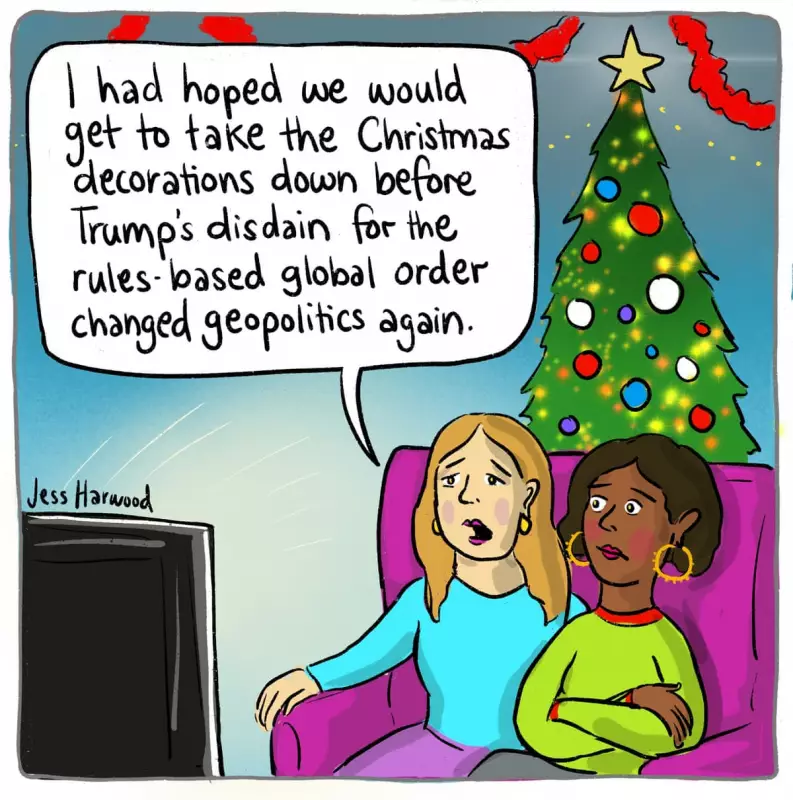
In an era where many seek a digital detox or a respite from the relentless 24-hour news cycle, one figure consistently ensures such a break remains a fantasy. As of January 2026, former President Donald Trump continues to dominate headlines with a calculated media blitz that makes disengagement virtually impossible.
The Architecture of Attention
The core of Trump's enduring media presence lies in a multifaceted strategy. He expertly utilises a combination of provocative public statements, strategic legal appearances, and a constant stream of social media commentary. This approach is not random; it is a deliberate engine designed to capture attention and set the daily news agenda, often forcing other stories to the periphery.
This creates a phenomenon where even those attempting to avoid political news find themselves confronted by his latest controversy. Whether through snippets on radio news bulletins, headlines on newspaper stands, or discussions overheard in public spaces, the Trump narrative permeates the public sphere. The strategy effectively turns every citizen, willing or not, into a potential audience member.
Impact on Public Discourse and Media Fatigue
The consequence of this non-stop coverage is a form of collective media fatigue, coupled with a distorted public discourse. Important domestic issues in the UK and elsewhere can struggle for airtime against the gravitational pull of Trump-related drama. This saturation raises critical questions about editorial priorities and the health of democratic dialogue.
Furthermore, it normalises a certain tone and style of political communication, one built on confrontation and spectacle. For the average person seeking a balanced information diet, the task becomes increasingly arduous. The news ecosystem, incentivised by clicks and engagement metrics, finds itself locked in a cycle of reaction and amplification.
Looking Ahead: A Permanent Feature of the Landscape?
As we move deeper into 2026, there is little indication this dynamic will change. Trump's ability to command attention appears undiminished, suggesting that his presence in global media will be a persistent feature for the foreseeable future. This presents a unique challenge for consumers of news: how to stay informed without being overwhelmed by a single, dominant narrative.
Experts suggest that media literacy—the ability to critically assess sources, understand framing, and consciously curate one's news intake—is no longer just useful but essential. The era of passively consuming a broadly agreed-upon news agenda is, for now, suspended. In its place is a fragmented landscape where one figure can, through sheer force of personality and strategy, dictate the tempo for a significant portion of the world's media.
Ultimately, the situation underscores a profound shift in the relationship between media, politics, and the public. Taking a break from the news, it seems, first requires taking a break from Trump—a feat that his entire 2026 strategy is meticulously designed to prevent.