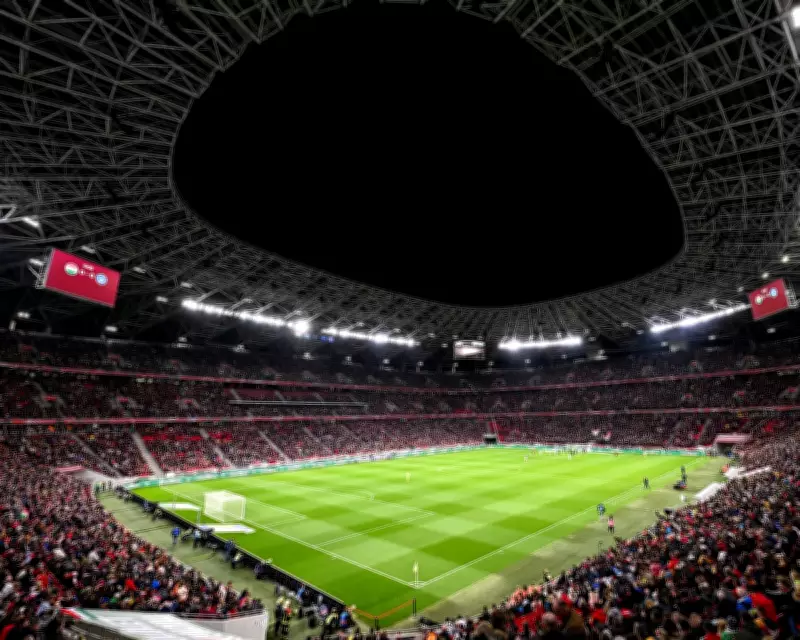
Budapest's Puskas Arena will stage Saturday's Champions League final between Paris Saint-Germain and Arsenal. The Hungarian capital is the perfect setting for Europe's premier club competition, but the tournament remains a closed shop, argues former Germany captain Philipp Lahm.
The Finalists: PSG and Arsenal
Before the final, Lahm spares a thought for eliminated semi-finalist Diego Simeone. For 15 years, Simeone has pushed the boulder up the mountain with Atletico Madrid, using inferior means. He deserves a Champions League title. Instead, PSG and Arsenal, both coached by meticulous tacticians, meet in the final. Luis Enrique has turned PSG from a collection of individualists into a cohesive unit, while Mikel Arteta has rebuilt Arsenal step by step over six years, winning their first league title since 2004.
Arsenal's Defensive Strength
Arsenal's strength lies in their organisation. In 14 Champions League matches, they have conceded only six goals and remain unbeaten. They are the counterpart to Bayern Munich, who conceded 20 goals under Vincent Kompany's high-intensity man-marking system. PSG exploited Bayern's defensive gaps in the semi-final second leg, while Arsenal defeated Bayern 3-1 in the group stage.
Budapest as Host
The final takes place in Budapest, a city with a rich football tradition. Hungary has produced great players like Ferenc Puskas and Nandor Hidegkuti, and twice reached World Cup finals (1938 and 1954). The nation also gave football innovative coaches who spread their ideas across Europe. However, Budapest has no chance to participate in the Champions League as a club. The tournament remains a gated community dominated by clubs from Spain, Italy, Germany, France, and England. Since Porto's win in 2004, no club from outside these five nations has won.
The Problem of Competitiveness
The decisive reason is a geographical accident: clubs from small countries cannot compete because their leagues are too small. Former giants like Benfica and Ajax can no longer compete internationally. Metropolises like Copenhagen, Vienna, Prague, Kyiv, Glasgow, and Warsaw—and now Budapest—offer similar lifestyles to Paris or London, but their clubs lack the resources to keep top players. Lahm calls for addressing this inequality, stating that Europe is about participation and equal opportunities, which is the political imperative of the present.
This column was produced in partnership with Oliver Fritsch at the German online magazine Die Zeit.