What does it mean to pass time? For Taiwanese-American artist Tehching Hsieh, this fundamental question became the driving force behind some of the most radical and physically demanding performance art ever created. From living in a cage for a year to being tied to another person with an eight-foot rope, his work pushes the boundaries of endurance and conceptual practice.
A Life Measured in Years: The Radical Actions
Hsieh's most famous works are a series of five one-year performances executed between 1978 and 1986. The first, known as Cage Piece, began on 30 September 1978. For 365 days, he confined himself to a wooden cell measuring 11ft 6in by 9ft in his New York studio. He did not speak, read, write, or consume any media. A friend delivered food and removed waste, but otherwise, Hsieh was alone with the passing hours.
Just months after emerging from his cage, he embarked on his Time Clock Piece. Starting on 11 April 1980, he punched a worker's time clock in his studio every single hour, on the hour, for a full year. This gruelling regimen meant his sleep was constantly interrupted, documenting a year of his life in 8,760 photographs—one for each punch.
Perhaps his most physically punishing work was Outdoor Piece (1981-1982), where he vowed not to enter any building or sheltered vehicle for a year. He survived the 20th century's worst winter in New York, sleeping in parks and car parks, and was once arrested for vagrancy, famously shouting "I cannot go inside!" to police officers.
The Philosophy of an Outsider Artist
Born in 1950 in Nanzhou, Taiwan, Hsieh arrived in the United States in 1974 as an undocumented migrant with no English. Working menial jobs, he existed on the fringes of society and the art world. He cites existentialist writers like Kafka and Dostoevsky as influences, but insists his work is not overtly political or autobiographical.
"The kind of art I make is about how I understand the world," Hsieh explains. "It's how I mark the passing of time. That's all life is... we're all just passing time." He rejects labels like 'masochist' or 'martyr', framing his extreme discipline as a chosen method of exploration, not suffering.
His status as an outsider forced self-reliance. "I was very stubborn and had to survive," he says, comparing his journey to the protagonist in Kafka's The Castle, struggling to gain access to a closed world. Renowned performance artist Marina Abramović has since hailed him as the "master" of durational art.
Legacy and the Final Performance
A major retrospective, Tehching Hsieh: Lifeworks 1978-1999, at the Dia Beacon museum in New York, showcases the meticulous documentation of his ephemeral acts. Visitors can see the reconstructed cage, the pile of time-card chads, and maps tracing his outdoor year.
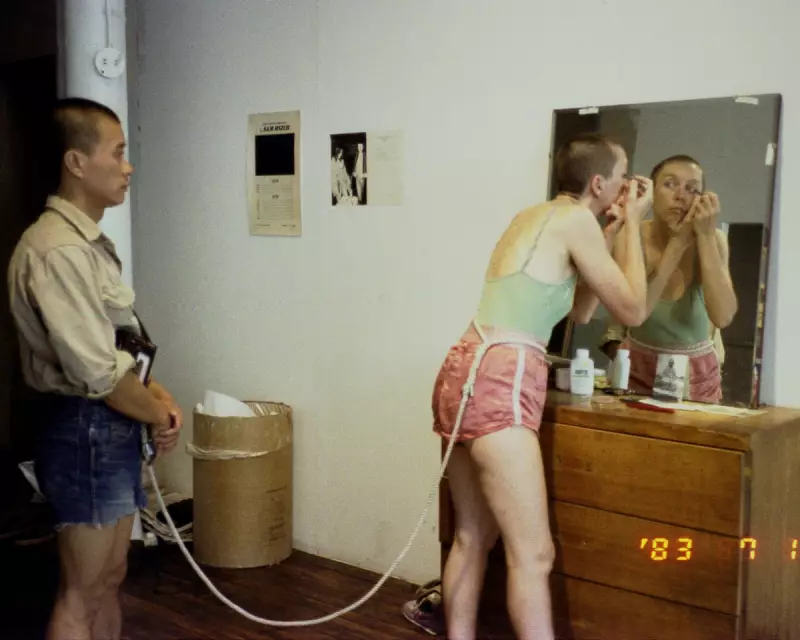
His fourth one-year performance, Rope Piece (1983-1984), involved being tied to fellow artist Linda Montano with an eight-foot rope. They were never allowed to touch, yet were perpetually connected—a powerful commentary on human relationships.
Hsieh concluded his public practice with the Thirteen Year Plan (1986-1999), a vow to make art but not show it publicly. He released a statement on 31 December 1999, his 49th birthday, declaring: "I kept myself alive. I passed the Dec 31, 1999."
He has not created new performance work since, a decision he frames not as retirement but as completion. "I only ever wanted to do what I wanted to do … and I did that," he states, embodying a philosophy where life itself, in its most raw and measured form, becomes the ultimate artwork.