Philip Castle, Visionary Airbrush Artist Behind Iconic Film Posters, Passes Away at 83
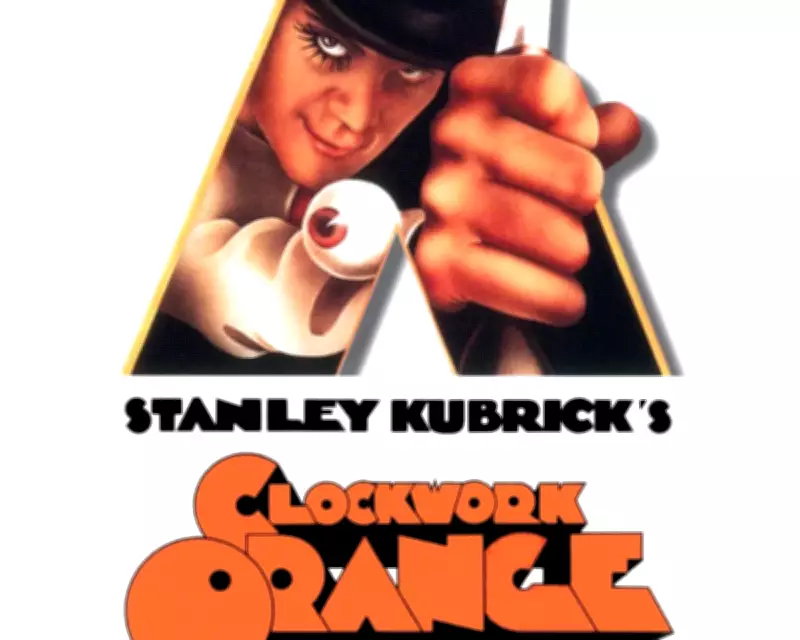
The British art world has lost one of its most distinctive visual creators with the passing of Philip Castle at age 83. Castle achieved lasting fame as the airbrush artist who created the iconic poster for Stanley Kubrick's 1971 cinematic masterpiece, A Clockwork Orange, along with numerous other significant contributions to film, music, and advertising.
The Kubrick Collaboration That Defined a Career
One of the most recognizable British film posters of the twentieth century originated in Stanley Kubrick's Borehamwood residence, where the director invited the recent Royal College of Art graduate to view a rough cut of his forthcoming film. Castle, who had advertised his services in the Daily Express, found himself in Kubrick's home theater watching a silent version of what would become A Clockwork Orange.
"It was just incredible," Castle recalled to the Times in 2000. "My favourite film was Dr Strangelove, followed by 2001 [A Space Odyssey]. I was just the biggest fan."
In that private screening room, Castle sketched initial concepts in his notebook featuring Malcolm McDowell as the menacing gang leader Alex DeLarge. These early drawings, which included McDowell holding a knife with a floating eyeball nearby, contained nearly all the elements that would appear in the final poster. Castle's notebook was later displayed at two major London exhibitions: Daydreaming With Stanley Kubrick at Somerset House in 2016 and Stanley Kubrick: The Exhibition at the Design Museum in 2019.
Mastering the Airbrush Technique
Castle developed his signature style using an airbrush, a tool typically employed for painting automobiles and aircraft. Connected to an air compressor, this instrument allowed for exceptionally smooth paint application without visible brushstrokes, creating the futuristic sheen that became his trademark.
"I realised this was the technique the Pontiac artists had used," Castle wrote in the foreword to his 1989 book Airshow. "And Vargas, who did the wartime pin-ups, which were copied on bomber fuselage. So I started doing the same thing, to get the beautiful finish I had been seeking."
He discovered an antique 1940s airbrush in the Royal College of Art basement during his studies in 1964, recognizing it as the perfect instrument to achieve the polished aesthetic he sought.
Expanding Influence Across Music and Media
Following his breakthrough with Kubrick, Castle's distinctive style attracted numerous commissions across popular culture. In 1974, he contributed shimmering effects and spray-painted the tear resting in David Bowie's clavicle on the legendary Aladdin Sane album cover. His portfolio expanded to include poster designs for the Rolling Stones' It's Only Rock and Roll But I Like It campaign and artwork for Paul McCartney's group Wings.
In 1994, Castle created the hyperreal portrait of Pulp for their breakthrough album His 'n' Hers, along with imagery for their first Top 40 single Do You Remember The First Time? and their EP The Sisters. His continued collaboration with Kubrick yielded the powerful poster for the director's 1987 Vietnam war film Full Metal Jacket, for which Castle kept a helmet from the production as a memento.
"The Kubrick legacy greets me wherever I go, and so I'm eternally grateful," Castle reflected in a 2011 interview. "It's opened a lot of doors."
Early Life and Artistic Development
Born in Huddersfield, West Yorkshire, to Margaret (née Goldthorpe), a cleaner, and Wilson Castle, a joiner, Philip grew up in the nearby village of Ainley Top with his elder brother John. His childhood fascination with sketching airplanes led him to cycle to local RAF bases to practice drawing aircraft.
After initially failing his 11-plus exam at South End primary school, Castle retook the test at age 13 and attended Elland grammar school. A serious cycling accident at 17, which left him with significant concussion, prompted his previously skeptical parents to support his artistic ambitions. They allowed him to enroll at Huddersfield School of Art, followed by illustration studies at the Royal College of Art in London in 1964.
Diverse Career and Lasting Legacy
During his student years, Castle worked for publications including Woman's Mirror under the pseudonym Eli Beans. His career gained momentum with his inclusion in a 1967 Royal College of Art showcase of five emerging artists and a Sunday Times commission for a feature called Dream Cars. Subsequent projects included advertisements for the QE2 and Concorde, along with work for Vogue magazine.
Beyond his Kubrick collaborations, Castle created theatrical posters for Ken Russell's The Boy Friend, Jack Nicholson's Goin' South, and Mike Hodges' Flash Gordon. His album artwork extended to Mott the Hoople's Rock and Roll Queen and Elkie Brooks' Shooting Star.
Castle's extensive portfolio included Time magazine covers and book jackets for significant publications like the 1970 paperback edition of Nik Cohn's pop music history Awopbopaloobop Alopbamboom and the 1979 edition of Jann Wenner's Lennon Remembers. Solo exhibitions of his work were held at London's Francis Kyle Gallery in 1978 and 1979, with a 2000 exhibition at Sho Gallery dedicated specifically to his A Clockwork Orange creations.
His childhood passion for aviation and automobiles manifested in design work for events including the 1997 Indianapolis 500 and several Royal International Air Tattoos. Even in his final decade, film directors continued to seek his distinctive style, with Paul Thomas Anderson commissioning promotional material for his 2017 psychological drama Phantom Thread, and Luca Guadagnino inviting Castle to work on a poster for his 2024 film Queer.
Castle met his wife Jennifer Dew, a fellow student, at the Royal College of Art in the 1960s, marrying her in 1967. He is survived by Jennifer, their daughters Nicolette, Alice, and Amy, and five grandchildren. Philip Castle's innovative airbrush technique and iconic visual creations have left an indelible mark on twentieth-century popular culture, ensuring his artistic legacy will continue to influence generations of designers and filmmakers.