Catherine Opie's 'To Be Seen' Exhibition: A Queer Portrait Revolution at National Portrait Gallery
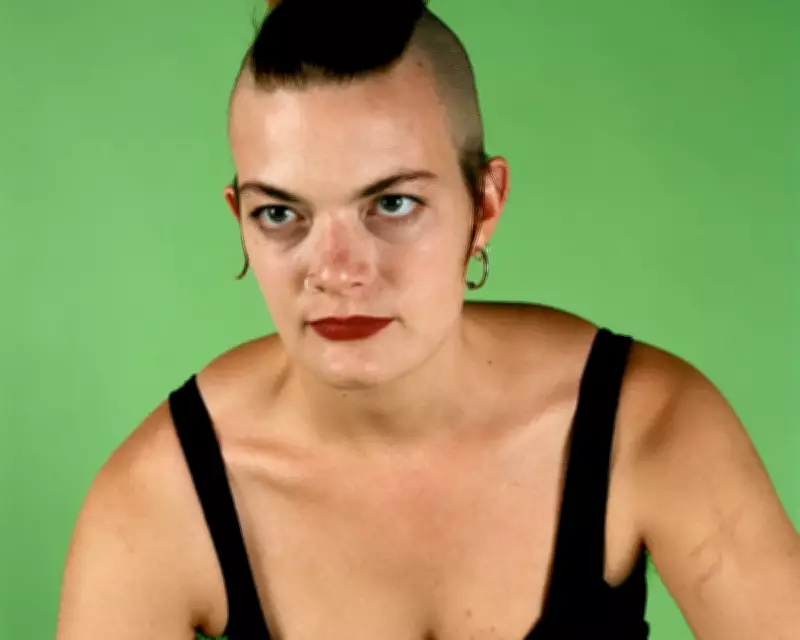
American photographer Catherine Opie has achieved for butch lesbians what Hans Holbein the Younger accomplished for Tudor nobility. Her powerful new exhibition, To Be Seen, now open at London's National Portrait Gallery through May 31st, presents a stunning collection of portraits that demand visibility for queer communities through masterful photographic techniques.
Historical Techniques Meet Contemporary Queer Narratives
Since graduating in the late 1980s during the devastating AIDS crisis, Opie has dedicated her career to documenting her community, friends, and family. She deliberately employs the unflinching realism, saturated colors, and dramatic tonal contrasts characteristic of 16th-century portrait painters. This conscious stylistic choice serves as a powerful declaration that her subjects deserve recognition and visibility, as emphasized by the exhibition's title.
Opie's fascination with identity construction permeates the entire exhibition. The show celebrates transformation through costume, posture, pose, and role-play, with particular emphasis on tattoos, piercings, and body modifications. Her 1991 series Being and Having, among the earliest works displayed, remains one of her most iconic projects. In this series, Opie photographed thirteen lesbian friends dressed as their masculine alter egos, complete with visible fake moustaches against vibrant yellow backgrounds.
Portraits of Power and Vulnerability
The exhibition features Opie's larger-scale baroque-inspired portraits displayed in a carmine-painted room with black velvet drapes. These works lend classical gravitas to subjects including fellow artists Mary Kelly and John Baldessari, positioning them alongside historical oil paintings throughout the gallery. Beyond the dedicated exhibition space, Opie's photographic portraits are strategically installed among 19th and 20th-century paintings of "inspiring people," creating seamless integration that challenges traditional notions of importance and influence.
Two self-portraits from different periods perfectly embody the exhibition's central tensions. Self-Portrait/Cutting (1993) shows Opie's scarred back with a childlike drawing etched into her skin, while Self Portrait/Nursing (2004) presents her as a modern Madonna breastfeeding her son Oliver. This juxtaposition reveals Opie's complex navigation between rebellion and domesticity, violence and care, tradition and subversion.
Expanding the Portrait Tradition
The exhibition unfolds through intimate gallery spaces that allow close engagement with diverse aspects of Opie's practice. Visitors encounter semi-abstract landscapes of Dover's cliffs created during the Brexit referendum, alongside portraits of lesbian couples and families documented during cross-country American road trips. The collection includes powerful documentation of protests and rallies, including poignant handwritten posters from USC campus following sexual assault allegations.
Other series capture surfers emerging revitalized from ocean waters and a tender image of Opie's toddler son Oliver wearing a tutu in their Los Angeles kitchen. Taken during the Bush administration, this photograph preserves a moment of playful safety and possibility, contrasting with external societal tensions.
A Testament to Visibility and Protection
Ultimately, To Be Seen transcends mere visual representation to address fundamental human necessities: family, love, care, and protection. Opie's work safeguards private worlds that remain untouched by external violence, at least within the photographic frame. The exhibition serves as both historical document and contemporary manifesto, insisting that queer lives deserve the same artistic reverence traditionally reserved for nobility and historical figures.
The National Portrait Gallery exhibition represents a significant moment in both photographic history and LGBTQ+ cultural representation, demonstrating how portrait traditions can expand to include previously marginalized communities while maintaining artistic excellence and emotional depth.