The United States was founded in 1776 but began to see itself in 1839 when daguerreotypes reached American cities. Photography answered the democratic promise of 1776, allowing ordinary people to leave a trace of their existence. The gold rush became one of the first great American dramas captured by the camera, with miners squinting into the lens, embodying the American Dream.
Photography as the Nation's Mirror
The camera moved from studios to the frontier, where Carleton Watkins invented the story of the West as America's destiny. Lewis Wickes Hine, Dorothea Lange, and Gordon Parks turned labor, poverty, and segregation into evidence. Robert Capa landed at Omaha Beach on D-day, dying a decade later with his camera in hand. Photography did not just record history; it interpreted and created it.
Truth and Myth in the Same Frame
Even the most truthful images mix fact with invention. In The Scourged Back (1863), a whip-scarred man's body became evidence of slavery's brutality, but magazine editors merged him with another escapee to create a single abolitionist hero. The cruelty was real; the narrative partly made up.
In the 1869 Champagne Photo of the transcontinental railroad, two locomotives meet, but Chinese workers who laid much of the track are absent. A few decades later, two men posed on a mountain of bison skulls, mistaking extinction for triumph.
From Dust Bowl to Civil Rights
The Dust Bowl deepened the Great Depression, photographed through victims like Florence Owens Thompson in Dorothea Lange's Migrant Mother (1936). Thompson resented the image that made her the face of poverty. The photo gave the nation an icon but not control over its meaning.
In 1955, Emmett Till's mother chose an open casket to force white America to look at her son's murder. When mainstream press refused to print the photos, she found a Black photographer. The image testified to racial violence.
War and Its Aftermath
Alexander Gardner's 1862 photos of Antietam's dead brought the battlefield to New York streets. In 1972, Nick Ut's The Terror of War showed Phan Thi Kim Phúc fleeing a napalm attack, increasing public revulsion against the Vietnam War. The photo's authorship was disputed in 2025, but the child remains beyond dispute.
In 2020, Julio Cortez photographed a protester carrying an upside-down flag after George Floyd's murder, turning a patriotic symbol into a signal of distress. The image asks whether showing violence is a betrayal or the only way to keep the nation's promise.
Iconic Moments of Joy and Grief
Workmen eating lunch on a girder high above New York in 1932 symbolize aspiration, even if staged. The sailor kissing a woman in Times Square on V-J Day holds joy, now shadowed by her words: 'It wasn't my choice.' Woodstock was mud, hunger, and hope.
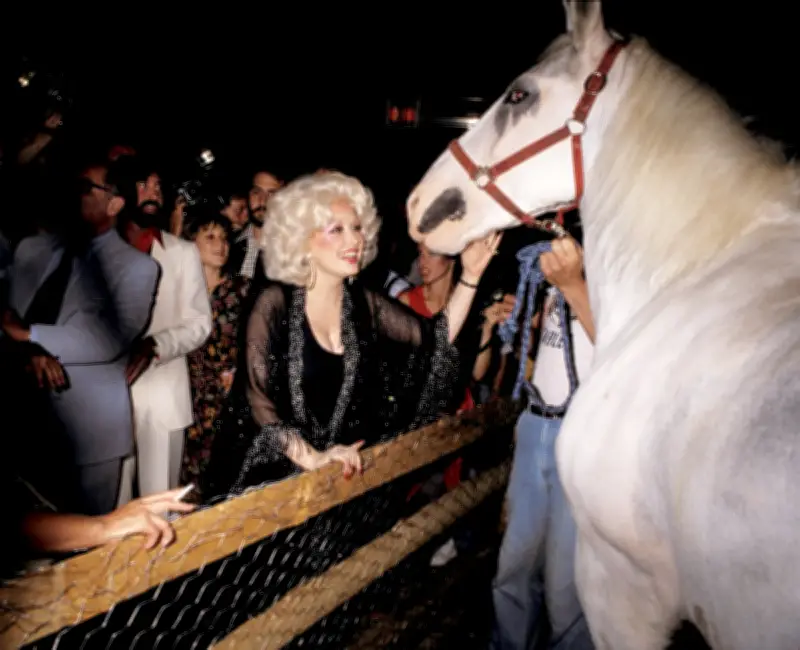
Other images capture the moon landing (1969), watched by 650 million people; Michael Jordan's gravity-defying dunk (1987); and Dolly Parton at Studio 54 (1978), embodying the American Dream.
Contemporary Reflections
In 2025, the three richest men—Elon Musk, Jeff Bezos, and Mark Zuckerberg—sat prominently at Trump's inauguration, illustrating tech's dominance. Carol Guzy's photo of a family separated by ICE shows children clinging to their father as agents take him away. Guzy said, 'I lost my dad when I was six, so I know the hole it leaves.'
These 48 images show the US inventing itself from evidence, denial, desire, and grief. Every image asks what was made visible and what a nation needed it to mean.