Inside the £600 Million Glacier-Inspired Skyscraper Set to Tower Over Kazakhstan's New City
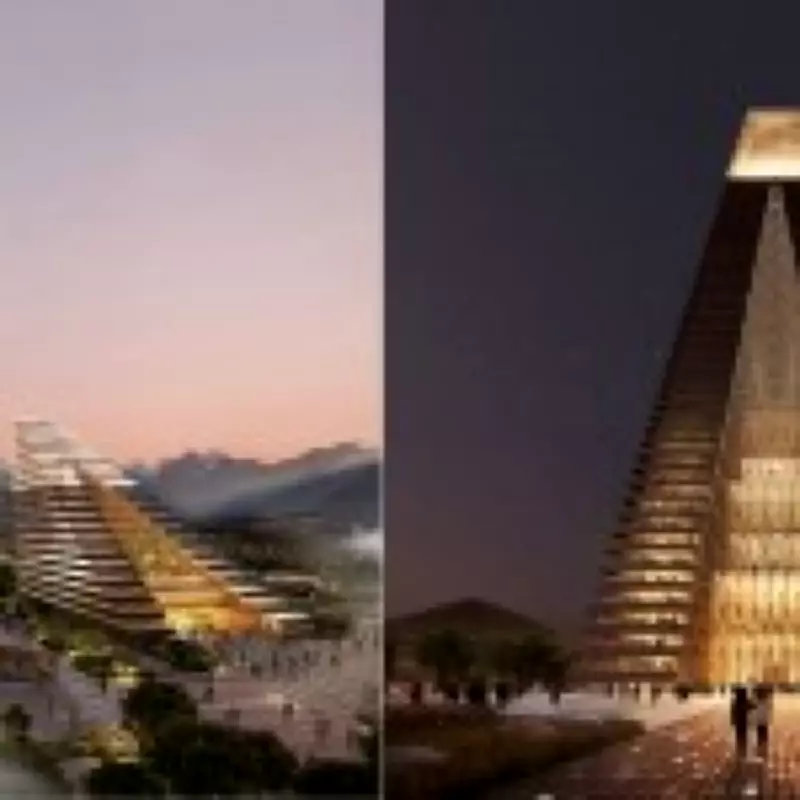
Rising from the mountainous landscape in a shimmer of reflective glass, these futuristic twin towers could easily be mistaken for a new addition to Dubai's iconic skyline. However, this monumental $800 million (£600 million) development is set against the dramatic backdrop of the Trans-Ili Alatau mountain range in Kazakhstan, where it will serve as the gateway to an entirely new city by 2029.
A Visionary Project for Alatau
The ambitious project, officially named the Alatau Iconic Complex and Gateway District, will form the centerpiece of Alatau, a new city being constructed just outside Kazakhstan's former capital, Almaty. At the heart of the scheme are two strikingly asymmetrical towers, meticulously designed to resemble wedges, drawing direct inspiration from the rugged valleys and ancient glaciers of the nearby mountains.
Spanning an impressive 276,800 square metres, the development is being led by the globally renowned architectural firm Skidmore, Owings & Merrill (SOM), the masterminds behind Dubai's Burj Khalifa and New York's One World Trade Center. This connection underscores the project's grand aspirations and international significance.

Architectural and Engineering Marvels
The main tower will soar to a height of 272 metres, making it the tallest building in the entire region upon completion. It is designed to house a mix of premium office spaces and high-end residential apartments. A secondary, smaller tower reaching 80 metres will accommodate a luxury hotel along with additional residential units.
The base of the towers will feature a three-storey podium enveloped in lush greenery, containing shops, cultural venues, and versatile events space. Designers aim to create a dense, vertical neighbourhood that prioritises community and connection, incorporating vast central atriums to flood interiors with natural light, cascading terraces, and sweeping, unobstructed views of the surrounding mountains.
Given the region's high seismic activity, engineers are implementing advanced structural solutions to ensure resilience and safety. These include sophisticated Japanese-style damping systems and robust American high-strength steel frameworks, showcasing a blend of global engineering expertise.
Timeline and Broader Impact
Preparatory work on the site is already underway, with major excavation operations scheduled to commence in May. The entire complex is projected for completion by the end of 2029, strategically timed to coincide with the Asian Winter Games, which have been relocated to Almaty from Saudi Arabia.
Once finished, Alatau is master-planned to become home to approximately 1.87 million residents and attract up to 4 million tourists annually. Initial infrastructure is slated for completion in 2030, with a comprehensive masterplan guiding development through to 2050.
The project is conceived as a major economic and administrative hub, integral to Kazakhstan's participation in the New Silk Roads initiative, which aims to enhance connectivity between Central Asia, Europe, and China. Over the past two decades, Kazakhstan, the world's ninth-largest country, has invested billions in modernising its infrastructure, notably transforming its capital, Astana, with futuristic structures like the Kazakhstan Pavilion from Expo 2017 and the distinctive Baiterak monument.
Despite these significant strides in economic modernisation and global positioning, Kazakhstan continues to face international criticism regarding its human rights record, a context that contrasts with its architectural ambitions. This development represents not just a construction milestone but a symbol of the nation's complex journey on the world stage.