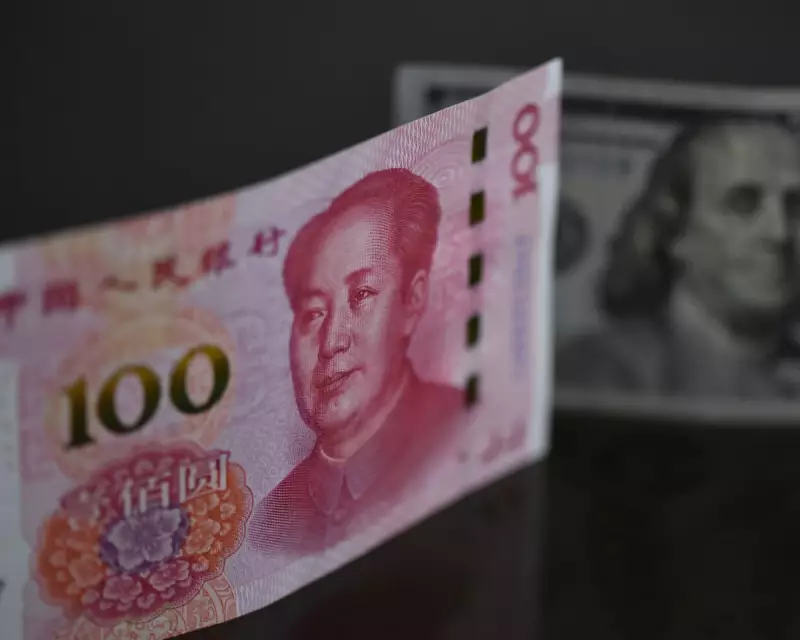
China has posted a record-breaking annual trade surplus, surpassing a staggering $1.189 trillion in 2025, according to official customs data released on Wednesday. This monumental figure, equivalent to the entire economic output of a nation like Saudi Arabia, underscores the resilience of Chinese exporters in the face of renewed trade tensions with the United States under the returned Trump administration.
Exports Defy Geopolitical Headwinds
The data reveals that outbound shipments grew by 6.6% in value terms year-on-year in December, accelerating from a 5.9% rise in November and soundly beating economist forecasts. Imports also saw a robust increase of 5.7% in December. This performance has been partially underpinned by a weakened yuan, with monthly export surpluses exceeding $100 billion on seven occasions in 2025, a sharp increase from just once the previous year.
Chinese producers have adapted to the challenging environment by pivoting to new markets. With US tariffs on Chinese goods standing at 47.5% following a year-long truce struck in October, firms have aggressively sought customers in Southeast Asia, Africa, and Latin America. This strategic shift has meant that while US-bound shipments have been curbed, China's trade with the wider world remains robust.

Industrial Strength and Global Concerns
Key sectors demonstrated remarkable strength. The automotive industry, a focal point of overcapacity concerns, saw overall exports jump 19.4% to 5.79 million vehicles, with pure electric vehicle shipments soaring by 48.8%. Economists note that China is likely to retain its crown as the world's top auto exporter for a third consecutive year.
However, this massive surplus risks further unsettling global economies already worried about China's trade practices, industrial overcapacity, and their own dependency on Chinese manufactured goods. Beijing itself has shown signs of recognising the need for moderation. Premier Li Qiang recently called for "proactively expanding imports" to promote balance, and China scrapped contentious export tax rebates for its solar industry.
Market Reaction and Future Trajectory
Financial markets responded positively to the strong data. The benchmark Shanghai Composite and blue-chip CSI300 indices both rose more than 1% in morning trading following the release. The Chinese yuan held steady against major currencies.
Looking ahead, economists expect China to continue gaining global market share. This will be driven by Chinese firms establishing overseas production hubs to circumvent tariffs, as well as sustained international demand for electronics, including lower-grade chips. The rapid passage of revisions to China's foreign trade law in December is also seen as a signal to trading partners of a potential shift towards freer trade practices.
Vice-Minister of Customs Wang Jun acknowledged that the external environment remains "severe and complex," but emphasised that with more diversified trading partners, China's "ability to withstand risks has been significantly enhanced." The record surplus, while a testament to export prowess, also highlights the persistent challenges of weak domestic demand and a slumping property sector that Beijing continues to navigate.