Wall Street Banks Rake In $42bn Despite Mounting Economic Concerns
Wall Street's leading financial institutions are celebrating an extraordinary first-quarter performance, with combined net income surpassing $42 billion. This remarkable achievement, however, is tempered by significant caution from banking executives, who highlight that these record profits were fueled by market volatility rather than sustainable economic strength.
Record Profits Driven by Equities Trading Surge
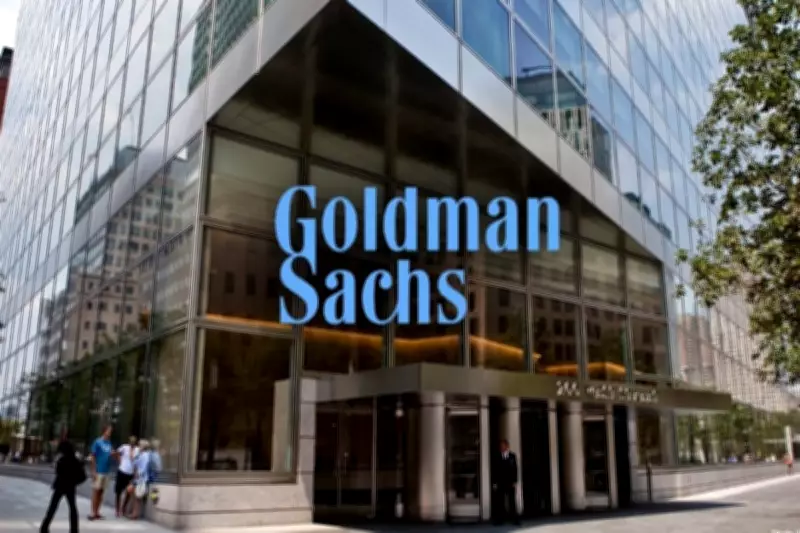
JP Morgan emerged as the standout performer, reporting a net income of $16.5 billion for the first quarter of 2026, marking a substantial 13 percent increase compared to the same period in 2025. Goldman Sachs followed with an impressive $5.6 billion, representing a nearly 20 percent uplift. The collective earnings of the big five Wall Street banks—JP Morgan, Goldman Sachs, Citigroup, Morgan Stanley, and Bank of America—exceeded $42 billion.
This financial windfall was primarily generated by explosive growth in equities trading divisions and investment banking activities. The market frenzy, triggered by escalating conflict in the Middle East, provided a significant boost. Morgan Stanley witnessed a 25 percent jump in equity revenue, reaching $5.2 billion, while Citigroup's equity revenue soared by 40 percent to $2.1 billion, driven by derivatives and prime services.
Goldman Sachs, however, stole the spotlight with its stock division setting new revenue records, amassing $5.3 billion in the first quarter alone.
Geopolitical Turmoil Fuels Trading Desk Activity
The substantial cash hauls followed a period of intense market disruption caused by the war in the Middle East. Attacks on Iran by the United States and Israel prompted investors to rapidly reduce their exposure to stock markets, triggering a series of global sell-offs. London's FTSE 100 index, for instance, fell by approximately eight percent in the weeks following the outbreak of war in late February, relinquishing the 10,000 mark.
Despite Goldman Sachs surpassing its previous revenue peak by an impressive $1 billion, the achievement failed to reassure nervous investors. The bank's own shares declined by around two percent following the earnings announcement. This reaction was partly attributed to weakness in the fixed income division, where revenue dropped 10 percent to just over $4 billion due to slowdowns in interest rate trading, mortgages, and credit products.
Banking Chiefs Sound Alarm on Economic Outlook
Axel Rudolph, chief technical analyst at IG, emphasized that the "bigger issue" is that Goldman's results "feel like a snapshot of a world that may already be fading." He pointed to surging oil prices, mounting inflation fears, and re-emerging recession risks as factors creating uncertainty for dealmaking and capital markets activity.
This sentiment was echoed by top banking leaders during the latest reporting season. JP Morgan chief Jamie Dimon, widely regarded as the world's most influential banker, issued a stark warning: "There is an increasingly complex set of risks—such as geopolitical tensions and wars, energy price volatility, trade uncertainty, large global fiscal deficits, and elevated asset prices."
Bank of America chief Brian Moynihan acknowledged "healthy client activity" and a "resilient" economy but emphasized the need to remain "watchful of evolving risks."
Investment Banking Activity Remains Robust
Despite the cautious tone, investment banking activity accelerated throughout the quarter. Citigroup's Jane Fraser, the only British chief on Wall Street, noted in March that corporate activity was "very strong at the moment," adding that "large cap M&A is not missing a beat right now." Citigroup achieved a record first-quarter advisory revenue of $505 million after advising on three of the largest M&A deals, including Paramount's landmark takeover of Warner Bros.
JP Morgan's investment banking fees surged 28 percent to $2.9 billion, exceeding expectations by approximately $260 million.
London Banking Sector Awaits Similar Updates
The impressive US banking results set the stage for similar announcements from London's financial sector. The big four UK banks—Barclays, Natwest, Lloyds, and HSBC—are scheduled to release their first-quarter updates in the coming weeks. They are expected to report increased market activity, though the forward outlook is likely to be clouded by uncertainty.
Rudolph concluded that the caution expressed by leaders like Dimon is "hard to ignore," stating, "The economy may be holding firm for now, but the growing list of geopolitical and macro risks means the outlook is far from straightforward."