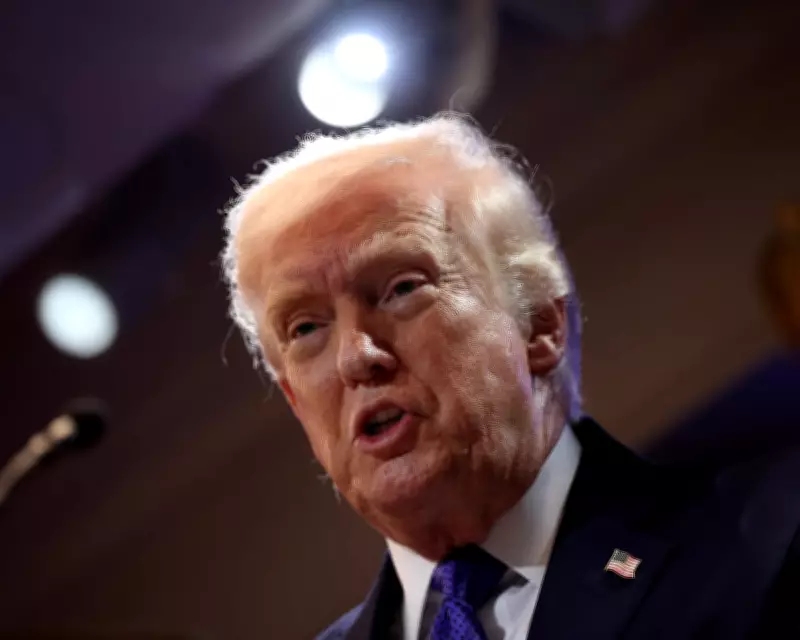
Trump Defies Supreme Court with Sweeping 15% Global Tariffs, Triggering Market Turmoil
In a bold move that defied a recent Supreme Court ruling, former President Donald Trump announced on Saturday that he would impose temporary tariffs of 15% on all imports entering the United States from every country worldwide. This decision has sent shockwaves through international trade circles and financial markets, creating significant uncertainty about the future of global commerce.
Stock Markets Stumble Amid Trade War Fears
Global stock markets experienced substantial declines on Monday as investors reacted to Trump's tariff announcement and the ongoing uncertainty surrounding international trade agreements. The Dow Jones Industrial Average tumbled by 1.4% during morning trading sessions, while the S&P 500 fell 0.9% and the Nasdaq 100 dropped 1.1%. These losses followed similar declines in UK and European stock markets earlier in the day.
Shareholders and financial analysts are struggling to predict the next developments in Trump's escalating global trade war. The uncertainty stems from Friday's Supreme Court decision, which ruled that Trump had overstepped his legal authority by using emergency measures to impose tariffs on multiple countries last year.
Trump's Defiant Response and Escalating Threats
Despite the Supreme Court's ruling, Trump proceeded over the weekend to announce his intention to implement temporary tariffs on US imports from all nations. He initially declared a 10% tariff rate before increasing it to 15%, citing a rarely-used section of the Trade Act of 1974 as his legal justification.
On Monday, Trump used his Truth Social platform to issue a stark warning to world leaders, suggesting he could impose tariffs in what he described as a "much more powerful and obnoxious way." He specifically threatened countries that might reconsider trade deals in light of the court's decision, stating: "Any Country that wants to 'play games' with the ridiculous supreme court decision, especially those that have 'Ripped Off' the U.S.A. for years, and even decades, will be met with a much higher Tariff, and worse, than that which they just recently agreed to. BUYER BEWARE!!!"
Growing Domestic Opposition to Trump's Trade Policies
Trump's tariff announcement comes despite mounting evidence of domestic opposition to his trade war policies. A YouGov poll conducted immediately after Friday's Supreme Court decision revealed that approximately 60% of Americans supported the court's ruling to strike down Trump's sweeping tariffs regime.
This support crossed traditional political boundaries, with 88% of Democrats, 63% of independents, and a significant 30% of Republicans approving of the court's decision. The poll results reflect growing public concern about the economic impact of Trump's trade policies, with most Americans reporting that the tariffs have forced them to pay higher prices for goods and services.
Additional polling data shows Republicans are four times more likely to say Trump's tariffs have increased consumer prices than to claim they have reduced costs. This sentiment was evident even before Friday's court ruling, with a Fox News poll showing 63% of registered voters disapproving of Trump's handling of tariffs, compared to just 37% who approved.
Political Implications and Economic Concerns
The growing public dissatisfaction with Trump's trade policies is likely to raise significant concerns among Republican strategists as the party prepares for midterm elections in November. The combination of judicial setbacks, market volatility, and public opposition creates a challenging political landscape for candidates supporting Trump's economic agenda.
Financial analysts warn that continued uncertainty about global trade relationships could lead to prolonged market instability and potentially hinder economic growth. The immediate market reaction suggests investors remain deeply concerned about the potential for escalating trade conflicts and their impact on corporate profits and consumer prices.
As the situation develops, international leaders and trade negotiators will be closely monitoring Trump's next moves and assessing how to respond to this latest escalation in global trade tensions.