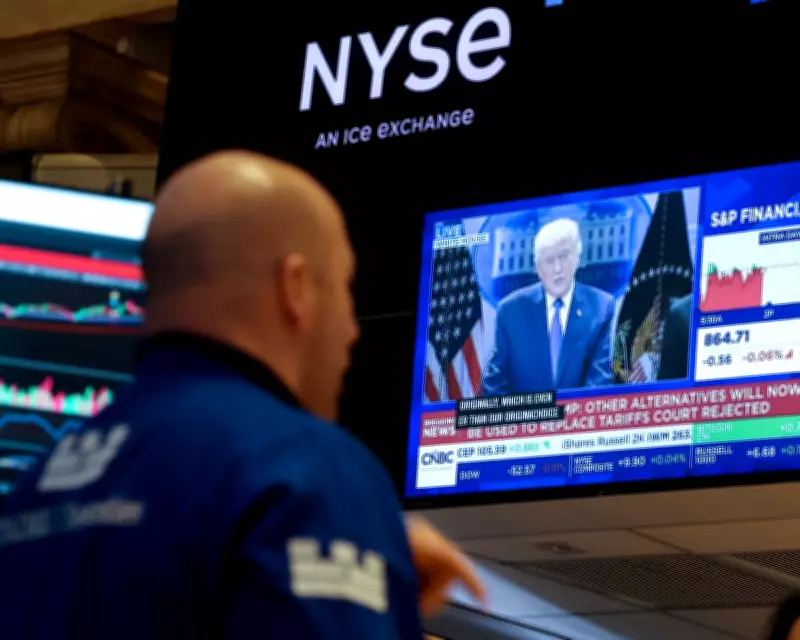
Good morning, and welcome to our ongoing coverage of business, financial markets, and the global economy. We are entering a new phase of trade war uncertainty following a landmark decision by the US Supreme Court last Friday, which blocked former President Donald Trump's sweeping global tariffs.
Supreme Court Ruling Sparks Market Turmoil
The Supreme Court declared tariffs imposed under the International Emergency Economic Powers Act to be illegal, triggering immediate market reactions. The US dollar has fallen by 0.4% against a basket of other currencies today, adding to losses sustained on Friday. US stock market futures are also lower, indicating anticipated declines on Wall Street, while bitcoin has weakened in response to the heightened uncertainty.
White House Persists with Tariff Strategy
Despite the court ruling, the White House is persisting with its policy of using trade levies to gain leverage over other countries. Over the weekend, President Trump announced a new temporary global tariff, starting at 10% and rising to 15%, in a clear pushback against the judicial setback. This move has reignited fears of escalating trade tensions, with ING economists warning that uncertainty is back and the risk of escalation is now higher than it was a year ago.
As ING economists caution: "Announcements since the Supreme Court's ruling strongly confirm that Trump has no intention of removing his 'most beautiful word' from the English dictionary. Uncertainty is back, and given the latest muscle-flexing by European leaders, the risk of escalation is now higher than it was a year ago."
Trade Deals Under Scrutiny
US Trade Representative Jamieson Greer sought to reassure markets, insisting that deals made with other countries remain intact and should be honored. In an interview with CBS's Face the Nation, Greer stated: "We want them to understand these deals are going to be good deals. We're going to stand by them. We expect our partners to stand by them." He also clarified that the new 15% global tariff is distinct from bilateral agreements struck with about 20 countries over the past nine months.
This indicates that the deal announced by Trump and UK Prime Minister Keir Starmer in May last year will continue to stand, preventing the UK's tariff from rising to 15%. However, UK Education Secretary Bridget Phillipson admitted on Sunday that UK businesses face "uncertainty" following these latest developments, highlighting the broader economic impact.
Economic Agenda and Key Data Releases
Today's economic agenda includes several key data points that could further influence market sentiment:
- 9am GMT: German IFO investor confidence survey
- Noon GMT: Mexico's Q4 2025 GDP report
- 1.30pm GMT: The Chicago Fed National Activity Index
- 3pm GMT: US factory orders for December
As trade war fears resurface, investors are closely monitoring these indicators for signs of global economic health amid the renewed tensions. The combination of legal challenges and policy persistence suggests a volatile period ahead for financial markets.