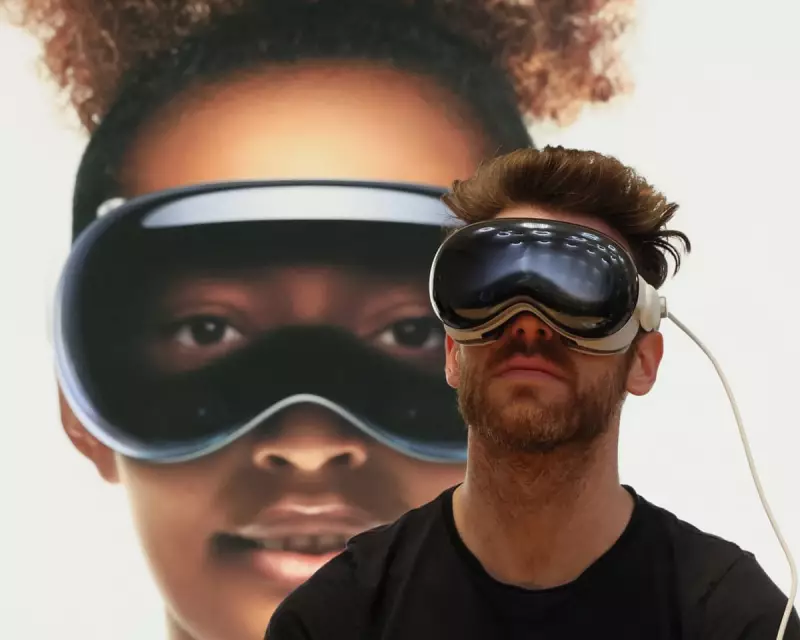
Tech giant Apple has reportedly made significant cuts to the production of its high-end Vision Pro headset following disappointing sales figures, marking a rare commercial setback for the company.
A Strategic Retreat from Spatial Computing
According to market intelligence from Sensor Tower, first reported by the Financial Times, Apple reduced its marketing spend for the Vision Pro by more than 95% last year. This retreat comes after the company had positioned the device as the herald of a new 'spatial computing' era upon its launch in 2023.
Apple's Chinese manufacturing partner, Luxshare, is said to have halted production of the headset at the start of 2025. Furthermore, Apple has not expanded direct sales beyond an initial selection of 13 countries, limiting its global reach.
The High Cost of Niche Appeal
The Vision Pro's commercial struggles are attributed to several key factors. Foremost is its premium price point, starting at a hefty £3,199 ($3,499). While technologically advanced, reviewers criticised the device for being heavy, uncomfortable, and offering a somewhat isolating user experience.
Market research from International Data Corporation (IDC) estimates that Apple sold only around 45,000 units in the final quarter of 2024. This pales in comparison to the millions of iPhones, iPads, and Macs the company shifts each quarter.
Morgan Stanley analyst Erik Woodring summarised the core issues: "We can say the cost, form factor and the lack of VisionOS native apps are the reasons why the Vision Pro never sold broadly." Although Apple states 3,000 apps are available, this is a fraction of the ecosystem developed for other Apple products post-launch.
The Industry Pivot Towards AI Wearables
The apparent cooling on the Vision Pro reflects a broader industry shift. Reports in the tech press indicate Apple has paused plans for a next-generation virtual reality headset, choosing instead to focus resources on developing wearable artificial intelligence (AI) devices.
This mirrors moves by competitors. Meta, led by Mark Zuckerberg, is also recalibrating its ambitions, confirming it is "shifting some of our investments from metaverse towards AI glasses and other wearables." Meta's Quest headsets, though less advanced, have captured roughly 80% of the market thanks to a much lower price of around £419.
Counterpoint Research predicts the wider virtual reality headset market will see a 14% reduction in annual sales, underscoring the sector's challenges.
Apple has declined to comment on the reports of production cuts. The company is still expected to release a more affordable version of the Vision Pro later this year, but the strategic emphasis for the future of wearables now clearly lies with AI.