Whirlpool Faces Backlash Over Job Cuts in Iowa Amid Production Shift to Mexico
Workers at Whirlpool, the largest appliance manufacturer in the United States, are voicing strong criticism against the company for cutting hundreds of jobs at a plant in Amana, Iowa, while simultaneously expanding production in Mexico. This move comes despite Whirlpool's public endorsement of former President Donald Trump's tariff policies, which were touted as a boost for American manufacturing.
Job Losses and Offshoring Trends
Effective March 9, Whirlpool is eliminating 341 positions at its Amana facility, following a previous cut of 250 jobs in July 2025. According to officials from the International Association of Machinists and Aerospace Workers union, the company has warned that additional layoffs are expected later this year. The plant manufactures refrigerators under well-known brands such as Whirlpool, KitchenAid, Maytag, and Amana.
Sandra Freytag, a plant chair with 31 years of experience at the facility, reported that production lines have been gradually moved to Mexico over several years. She noted that the workforce has plummeted from nearly 3,000 employees to around 1,300, with further reductions likely. Freytag expressed concern about the devastating impact on local communities, stating, "Whirlpool is the only big facility around this area. So there are about seven small towns that it's going to devastate when those people lose their jobs."
Tariff Policies and Corporate Support
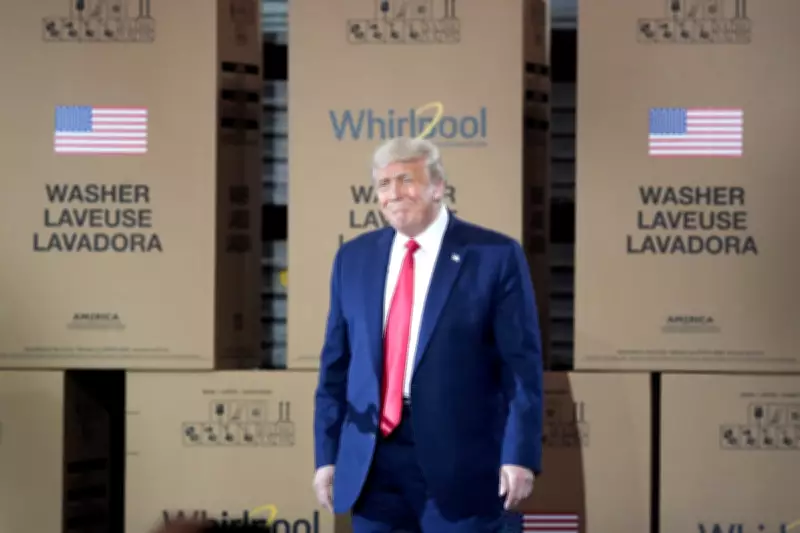
During Trump's presidency, Whirlpool actively sought and received tariffs on imported washing machines, framing it as a victory for American workers. In 2020, Trump delivered a speech at a Whirlpool plant in Clyde, Ohio, praising the company as a "shining example" of his "buy American and hire American" agenda. However, analysis from the Heritage Foundation indicates that these tariffs increased appliance prices by $1.5 billion annually, reducing consumer demand.
In 2025, Whirlpool credited Trump's tariffs for a $300 million investment in Ohio, which was projected to create 400 to 600 jobs. CEO Marc Bitzer emphasized the company's support for tariff policies in media appearances, yet Whirlpool's recent earnings call revealed that tariffs cost them $300 million in 2025. The company maintains that 80% of its U.S. sales are produced domestically.
Union and Worker Criticisms
Sam Cicinelli, a vice-president for the IAM union, condemned the layoffs as "an absolute slap in the face to every American worker," accusing Whirlpool of a pattern of corporate abandonment after receiving subsidies and tax credits in Iowa. He argued that the job cuts violate the spirit of the United States-Mexico-Canada Agreement, which was intended to protect employment.
Kerry Waddell, a union business agent and former Whirlpool employee, highlighted the harsh conditions for affected workers, including no severance agreements, immediate loss of health insurance, and reduced unemployment benefits due to Iowa's policy changes. Waddell asserted, "What they're actually doing is taking jobs out of Iowa, moving them to Mexico, and those very refrigerators are being brought back into the U.S. for sale."
Worker Sentiments and Company Response
Sandy Lorenz, a plant chair with 33 years at the facility, shared her distress, saying, "They could keep these products here, and they could keep these people working, but it just comes down to that they are greedy and want to make a little more money." Workers noted that tariffs have not prevented the offshoring of jobs.
In a statement, Whirlpool described the job cuts as part of a multi-year modernization plan to transform the Amana plant, incorporating warehousing and parts production. The company reaffirmed its support for Trump's tariff policies, expressing confidence that U.S. trade actions will benefit domestic manufacturing. Whirlpool did not address union complaints about offshoring, and the White House declined to comment on the issue.
This situation underscores ongoing challenges in the U.S. manufacturing sector, where corporate strategies and policy impacts often diverge from worker experiences.