The petrol forecourt empire controlled by City veteran Gerald Ronson has achieved a profit approaching £100 million, driven significantly by an expansion of its partnership with bakery chain Greggs. GMR Capital, the parent company of forecourt operator Rontec, recorded a pre-tax profit of £98.4 million for the fiscal year ending September 2025. This represents a notable 6 percent increase compared to the previous year, even as turnover declined by 7 percent over the same period.
Greggs Franchise Expansion Drives Growth
During the financial year, GMR Capital expanded its Greggs franchise operations by 13 percent, bringing the total number of stores to 43. The company emphasized its strategy to "continue to extend existing site footprints to accommodate larger convenience stores and additional food partnerships." This move highlights a broader trend in the forecourt sector toward diversifying revenue streams beyond traditional fuel sales.
Property Portfolio Valuation Soars
The most substantial financial boost for GMR came from a significant upward revision in the valuation of its extensive property holdings. The company's portfolio includes 267 leasehold and freehold sites, encompassing more than 200 petrol stations. A fresh valuation conducted by Colliers International Property Consultants increased the portfolio's value by a staggering £310 million, pushing it above £1.5 billion. This revaluation played a crucial role in bolstering the firm's overall profitability despite the dip in operational turnover.
Strategic Pivot to Electric Vehicle Infrastructure
Despite the long-term expectation of fewer petrol cars on the roads, GMR is positioning itself for future growth by attracting electric vehicle (EV) drivers. The company plans to enhance revenue at its forecourts through the installation of faster car charging points. "Our focus remains on Ultra-Fast charging, ensuring that our sites remain the preferred choice for time-sensitive customers," GMR stated in its report.
The group is committed to scaling its EV and hybrid infrastructure offerings in response to growing consumer demand. Currently, six ultra-fast EV charging hubs are operational, with an additional six scheduled for completion within the next nine months. GMR has outlined plans to continue this rollout across its network. However, the company acknowledged that its EV charger installation plans have been "constrained by delays" in connecting to the high-powered electrical grid, highlighting infrastructure challenges in the transition to greener transport.
Corporate Asset Transactions
In related corporate developments, GMR disclosed that the Ronson family yacht, previously owned by a subsidiary of the business, was sold to a partnership led by Gerald Ronson's wife, Gail, for 2 million euros. Meanwhile, the family's private jet remains under company ownership and is leased out to Mr. Ronson for personal use.
Historical Context and Legacy
The release of GMR's financial results coincides with the 40th anniversary of the Guinness share trading scandal, a significant chapter in Gerald Ronson's career. Ronson was one of four businessmen, collectively known as the "Guinness Four," accused of conspiring to inflate the share price of the London-listed brewer. He was subsequently jailed for one year and fined £5 million for charges including false accounting, conspiracy, and theft.
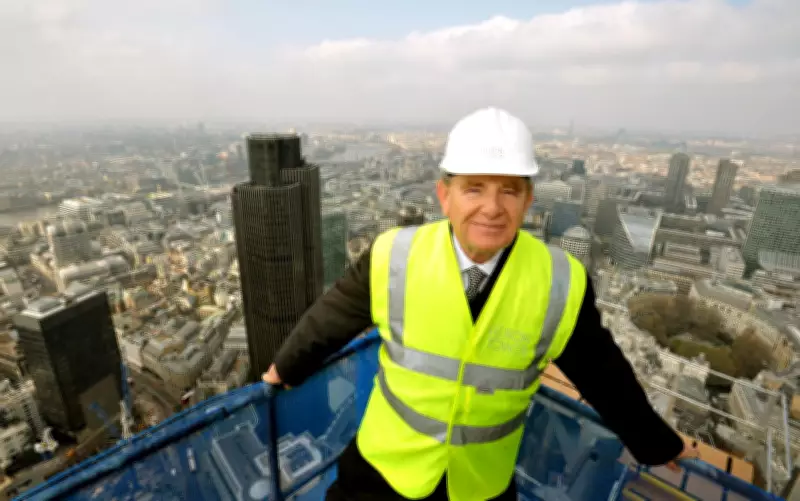
Following his conviction, Ronson went on to develop the Heron Tower, a prominent skyscraper in London's Square Mile. Now in his eighties, he has been knighted for his extensive charity work, marking a redemption arc in his public life. His forecourt business's current profitability underscores his enduring influence in the corporate and property sectors.