Nissan Issues Dire Warning Over Sunderland Plant's Future Amid EU Rule Changes
The Japanese automotive giant Nissan has declared that its Sunderland manufacturing facility, the largest car factory in Britain, could be compelled to cease operations if the United Kingdom is not fully incorporated into the European Union's newly proposed "Made in Europe" regulations. This alarming statement underscores the profound potential repercussions for the UK's automotive sector, which is already grappling with significant challenges.
Critical Threat to Cross-Channel Trade and Employment
Nissan's cautionary message emerges concurrently with grave concerns voiced by the UK's primary automotive trade representative group. The Society of Motor Manufacturers and Traders (SMMT) has expressed deep apprehension that the EU's Industrial Accelerator Act (IAA), unveiled by Competition Commissioner Stéphane Séjourné, could inflict severe damage on the annual £70 billion cross-channel trade relationship. The proposed legislation aims to accelerate the development of electric vehicles by offering public subsidies exclusively to EVs manufactured within European plants, a move designed to shield the EU from inexpensive Chinese competition.
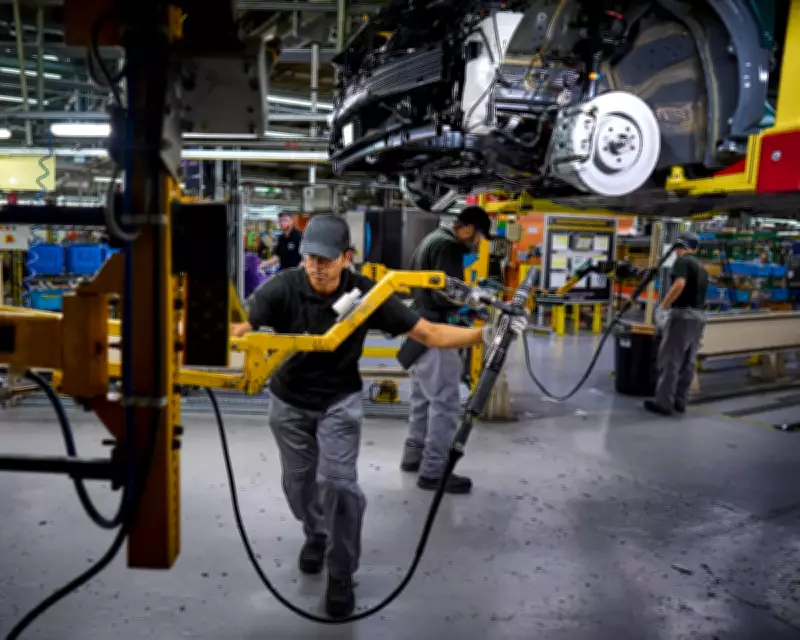
According to confidential reports, Nissan has privately alerted the UK government that the enactment of these proposals could pose an existential threat to its Sunderland operations. An industry executive conveyed to the Financial Times that exclusion from EU incentives might force Nissan into a precarious position, potentially leading to closure. The Sunderland site, which employs 6,000 workers and possesses the theoretical capacity to produce 600,000 vehicles annually, is currently operating well below its full potential due to diminished market demand.
Industry and Government Responses to the Proposed EU Regulations
Mike Hawes, Chief Executive of the SMMT, articulated the sector's distress, stating that the "Made in Europe" initiative, as currently drafted, discriminates against UK-manufactured vehicles and components. He emphasized that this could systematically disadvantage UK manufacturers in the EU market and might contravene the EU-UK Trade and Cooperation Agreement established post-Brexit. Hawes urgently called for collaborative efforts between the British government and European counterparts to resolve the situation by granting the UK auto sector full trusted partner status.
In response, a UK government spokesperson affirmed the nation's commitment as a close and trusted European partner, dedicated to fostering shared security and economic cooperation. The government expressed a desire to work collaboratively with like-minded partners to enhance growth, resilience, and economic security. Business Secretary Peter Kyle recently visited Brussels to advocate for the UK's inclusion in the 'Made in Europe' initiative, although he did not meet with Commissioner Séjourné during his discussions.
EU Clarifications and International Implications
Commissioner Séjourné clarified that third-party countries with existing trade agreements with the EU would not be automatically excluded from the IAA's benefits. However, this status could be revoked if such nations implement policies favoring domestic industries, such as "buy Canadian" or "buy American" initiatives. A European Commission spokesperson further explained that under the EU-UK trade deal, products originating in the UK would be treated equivalently to those of EU origin for the purposes of the IAA's schemes and auctions, unless the UK reciprocally excludes EU products.
Professor Simone Tagliapietra, a senior fellow at the Bruegel think tank in Brussels, noted that the final version of the IAA has shifted from a strict "Made in Europe" approach to a more inclusive "Made with Europe" framework, welcoming third countries. This adjustment is viewed as a positive step toward aligning EU industrial and trade policies. EU officials also highlighted that the UK and Japan, due to their open supply chains, could be considered domestic producers for public procurement of electric vehicles under the World Trade Organization's government procurement agreement, which ensures reciprocal access among its members.
The ongoing deliberations over the EU's "Made in Europe" rules represent a critical juncture for the UK automotive industry, with Nissan's Sunderland plant symbolizing the high stakes involved in post-Brexit trade relations and industrial policy.