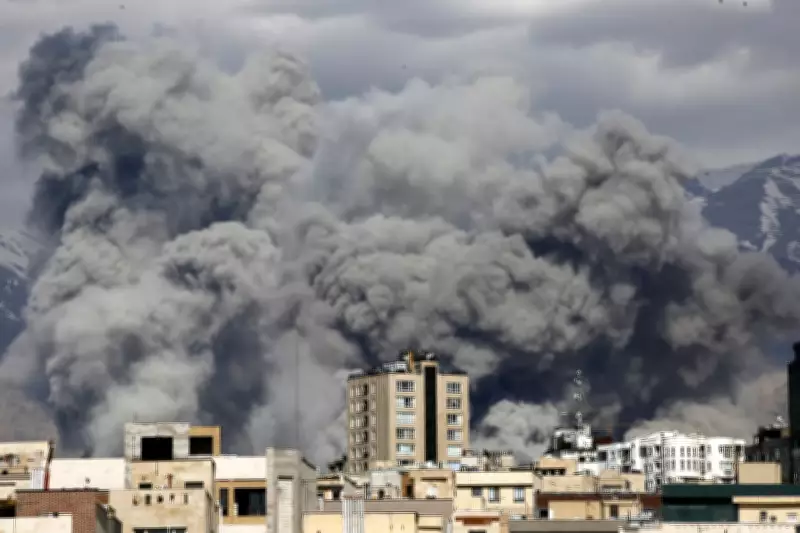
A Rude Awakening: How the Iran Conflict Could Dent Banks' Middle East Growth Plans
The escalating conflict in Iran is sending shockwaves through the global financial sector, posing a significant threat to major banks' ambitious growth strategies in the Middle East. As geopolitical tensions rise, financial institutions that have heavily invested in the region's burgeoning markets are facing a rude awakening, with potential disruptions to their expansion plans and profitability.
Geopolitical Tensions and Financial Instability
The ongoing conflict in Iran has created a climate of uncertainty that is directly impacting the Middle East's economic landscape. Banks, which have long viewed the region as a key area for growth due to its wealth of natural resources and increasing financial sophistication, are now grappling with heightened risks. The instability threatens to derail investments in infrastructure, technology, and consumer banking services that were central to their strategic objectives.
Regional operations could face severe setbacks, including delays in project financing, increased regulatory scrutiny, and a potential exodus of international capital. This environment makes it challenging for banks to maintain the momentum needed to achieve their growth targets, forcing many to reconsider their risk assessments and contingency plans.
Impact on Investment and Expansion
Banks have poured billions into the Middle East, aiming to capitalize on opportunities in countries like the United Arab Emirates, Saudi Arabia, and Qatar. However, the Iran conflict introduces new variables that could stifle this progress. Key areas of concern include:
- Disruption to cross-border transactions and trade finance, which are vital for regional economic integration.
- Increased volatility in currency and commodity markets, affecting loan portfolios and investment returns.
- Potential sanctions or regulatory changes that could limit banking activities in affected areas.
These factors not only jeopardize short-term gains but also cast doubt on the long-term viability of expansion plans. Banks may need to pivot their strategies, possibly scaling back operations or seeking alternative markets to mitigate losses.
Broader Implications for Global Finance
The ripple effects of the Iran conflict extend beyond the Middle East, influencing global financial stability. As banks reassess their exposure to the region, there could be a shift in capital flows, impacting everything from stock markets to international lending rates. This situation underscores the interconnectedness of geopolitics and finance, where regional conflicts can have far-reaching consequences for economic growth worldwide.
In response, financial institutions are likely to enhance their risk management frameworks, focusing on geopolitical analysis and scenario planning. However, the immediate challenge remains navigating the turbulent waters of the Middle East while safeguarding their growth ambitions.