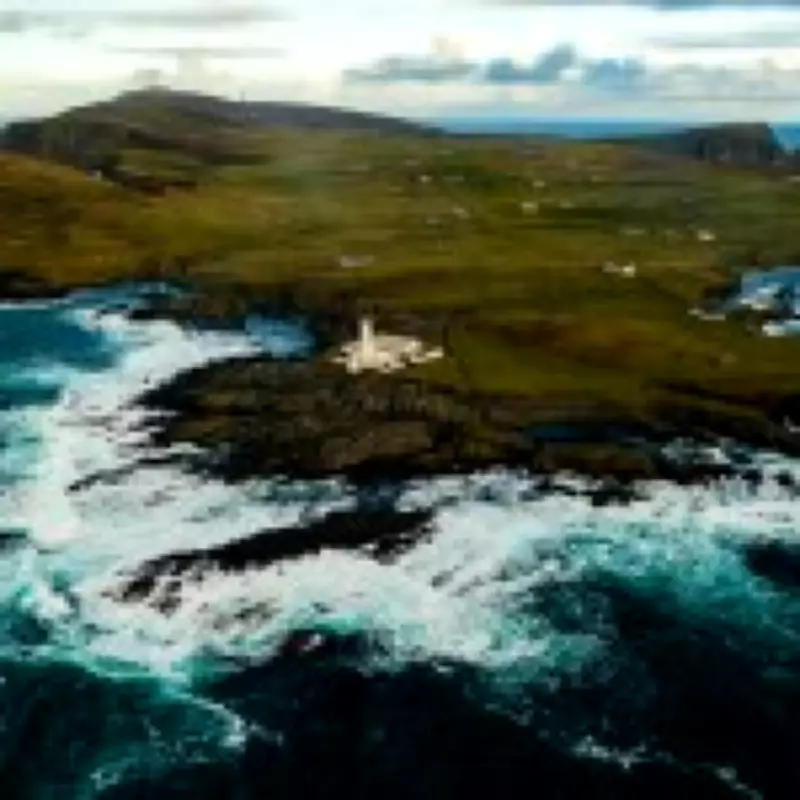
Remote Scottish Island Launches Search for Resourceful New Residents
If your vision of escaping modern life involves dramatic cliffs, circling seabirds, and a close-knit community where everyone knows your neighbors, the United Kingdom's most remote inhabited island might be your perfect destination. The rugged outpost of Fair Isle, situated in the North Sea, is actively seeking resourceful newcomers willing to embrace a life far removed from mainland conveniences.
The Island's Unique Character and Location
Home to approximately fifty residents, Fair Isle occupies a strategic position roughly halfway between Shetland's administrative center and the Orkney islands. This places it about eighty miles north of the Scottish mainland. Despite its significant isolation, the island has developed a reputation as a tourism favorite, celebrated for its tight-knit community, abundant wildlife, breathtaking vistas, and globally recognized knitting patterns.
Now, a rare opportunity has emerged for individuals or families to relocate to Fair Isle and contribute actively to its future development. The National Trust for Scotland, which owns the majority of the three-mile-long island, is advertising a tenancy for a fourteen-acre croft. This property includes shared pasture land, commonly referred to as 'common grazing,' suitable for raising livestock.
Property Details and Tenant Requirements
The smallholding features a comfortable four-bedroom house available for separate rental. The residence is equipped with oil heating, electricity supplied by the island's renewable power schemes, and essential phone and internet services. However, prospective tenants must meet specific criteria outlined by the National Trust for Scotland.
Applicants must demonstrate they are hard-working and enthusiastic, possessing both the practical experience and financial resources necessary to manage the croft effectively. Crucially, the trust requires the new resident to have a viable way to make a living on Fair Isle. This could involve island-based employment, remote working, or possessing trades and skills considered valuable to the local knitwear industry, which would be a significant advantage.
Understanding Crofting Duties and Island Life
Before applying, candidates are advised to fully comprehend the duties associated with croft ownership. According to the Crofting Commission, these responsibilities include:
- Being ordinarily resident on or within thirty-two kilometers of the croft.
- Cultivating and maintaining the croft to prevent misuse or neglect.
- Seeking permission from the landlord or Crofting Commission for any non-cultivation land use, which includes horticulture, livestock keeping, crop growing, or tree planting.
- Ensuring the croft meets the standards of Good Agricultural and Environmental Condition, with breaches subject to investigation.
Resilience is another key attribute for potential residents. While Fair Isle offers stunning landscapes and an escape from mainland hustle, daily life requires careful planning for supplies. The island, forming the southernmost part of the Shetland archipelago, is accessible by small aircraft or ferry services connecting to Aberdeen, Lerwick, and Orkney, with journeys typically lasting around two and a half hours. Travel can be disrupted by weather conditions, particularly during winter months when strong winds and rough seas are common.
Community Goals and Application Process
These challenges are balanced by an extraordinary quality of life for the right candidate, featuring daily immersion in breathtaking scenery, spectacular UK wildlife, and a supportive community. The tenancy scheme is explicitly designed to increase the number of settled, working-age residents on the island, where most inhabitants juggle multiple jobs and voluntary roles.
Eileen Thomson, director of the Fair Isle Development Company, expressed hope that a family might be attracted to the opportunity, which would help support the local school, currently attended by just four pupils. The long-term goal is to grow the island's population to about seventy people. Most of us have a croft but also work in the school, on the ferry, and in various community organizations as well, she told the BBC. It's so much better than having a nine to five.
Applications for this unique croft tenancy are open until Friday, April 10, 2026, via the Scottish Land Matching Service. Following the closing date, the National Trust for Scotland will create a shortlist, with the local committee participating in the interview process. A spokesperson for the matching service described this as an exceptionally rare opportunity to secure both a croft and a family home in one of Scotland's most remarkable island communities.
Angus Murray, NTS operations manager for Fair Isle, added: We are looking forward to welcoming new people to the island to become part of the crofting community of Fair Isle. We are inviting resourceful and enthusiastic people with the skills, creativity, and care needed to make a success of this unique opportunity.