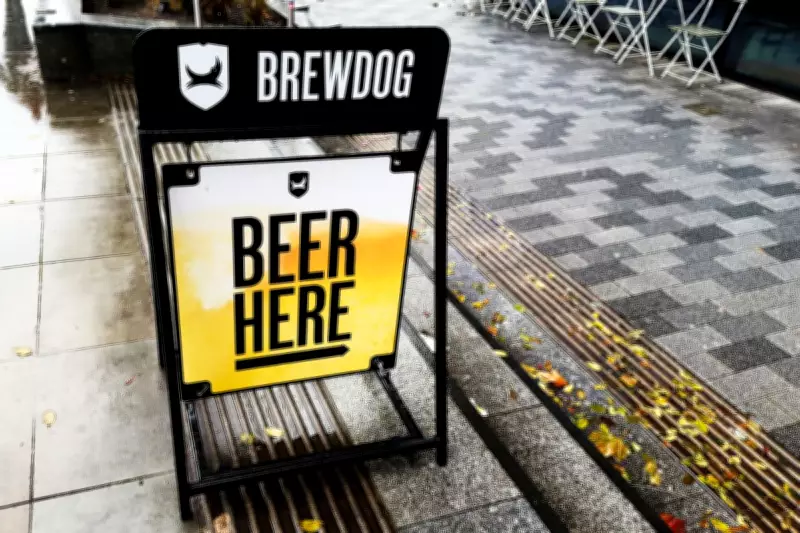
Brewdog's Dramatic Fall: From £2bn Valuation to £33m Rescue Sale
The once-thriving craft beer titan Brewdog faced a somber reality on Monday as its bars sat dark and empty, with beer taps dry and doors closed to patrons. This eerie silence followed weeks of intense speculation about the company's future, culminating in a rescue deal that saw the Glasgow-based brewer sold to American cannabis and alcohol conglomerate Tilray Brands for a mere £33m. This stark contrast to Brewdog's previous valuation of up to £2bn underscores the company's inability to fulfill its ambitious goals, driven by an irreverent, countercultural ethos that initially fueled rapid growth and kickstarted the British craft beer craze.
Immediate Closures and Job Losses Across the UK
The terms of the sale have delivered a heavy blow to Brewdog's workforce, with 38 bars in the UK shutting down immediately, leading to nearly 500 job losses. For the lucky venues that remain operational, staff are navigating a fundamentally transformed business landscape. Tilray's acquisition includes Brewdog's global brand, UK brewing operations, and a select number of UK bars. Patrons hoping to continue visiting Brewdog bars will find limited options, primarily concentrated in London, where five locations—Canary Wharf, Paddington, Seven Dials, Waterloo, and Great Tower Street in the Square Mile—have been spared. Additionally, two bars in England (Birmingham and Manchester Peter Street) and four in Scotland and Dublin will stay open, but the widespread closures signal deep challenges in the UK hospitality sector.
Broader Hospitality Crisis in the UK
Brewdog's struggles are not isolated, reflecting a broader crisis in the UK hospitality industry. Earlier this year, the owner of Revolution Bars appointed administrators, resulting in hundreds of job losses. Last week, Cornwall's Sharp's Brewery, producer of Doom Bar ale, announced its closure by its US owner, while four historic Cornish pubs also declared they are going under. AlixPartners, which advised Brewdog on the sale and now administers the unsold bars, confirmed that no offers could save the entire bar network. Clare Kennedy, managing director at AlixPartners, stated, "In Tilray, we have secured a purchaser with a passion for craft brewing who will be an excellent custodian and sponsor of the business." She urged other leisure and hospitality firms to help save jobs affected by the deal.
Impact on 'Punk Equity' Investors and Co-founders
Brewdog's unique 'punk equity' investors, who were integral to the company's disruptor model, face significant losses from the takeover. These everyday consumers invested £75m across seven rounds in exchange for perks like discounted pints, but will see no return on their investment. Despite speculation that private equity firm TSG might claim most sale proceeds, AlixPartners confirmed that no equity shareholders will benefit. Co-founders James Watt and Martin Dickie, who had already stepped away amid allegations of a culture of fear and a 'cult of personality'—which Watt denies—saw their influence wane further. Watt reportedly considered a comeback bid with £10m of his own money and funding from Hay Wain, linked to Modella Capital, but the Tilray deal dashed those plans. His bid would have offered 'equity punk' investors a 19.5% stake and protected over 65% of jobs.
Tilray's Vision for Brewdog's Future
Tilray Brands aims to revitalize Brewdog, projecting that the acquisition will add $200m in annual net revenue as part of its goal to reach $500m in annual revenue from its global beverage portfolio. Irwin Simon, Tilray's chief executive, emphasized, "As we begin a new chapter for this great brand, our priority is to refocus BrewDog on the craft beer excellence that made it beloved in the first place and strategically invest to return the operations to profitable growth. BrewDog's future is bright, and we are committed to ensuring the brand continues to lead and inspire the global craft beer movement." Meanwhile, Brewdog's bars in the US and Australia remain subject to separate negotiations, leaving their fate uncertain.